Let's be honest. That first time you're standing at the top of a run, staring at a sign with a green circle, a blue square, and a black diamond, it can feel like you're trying to read hieroglyphics. You're not alone. I remember my first real ski trip out west, thinking a blue square out there would be just like the blues back home. Yeah, that was a humbling—and slightly terrifying—mistake.
That's why understanding the ski trail markings chart isn't just about picking a fun run; it's a fundamental safety skill. It's the language of the mountain, and speaking it fluently is what separates a stressful day from an epic one. This isn't about memorizing a boring key. It's about learning to read the terrain like a local, knowing exactly what you're getting into before you push off.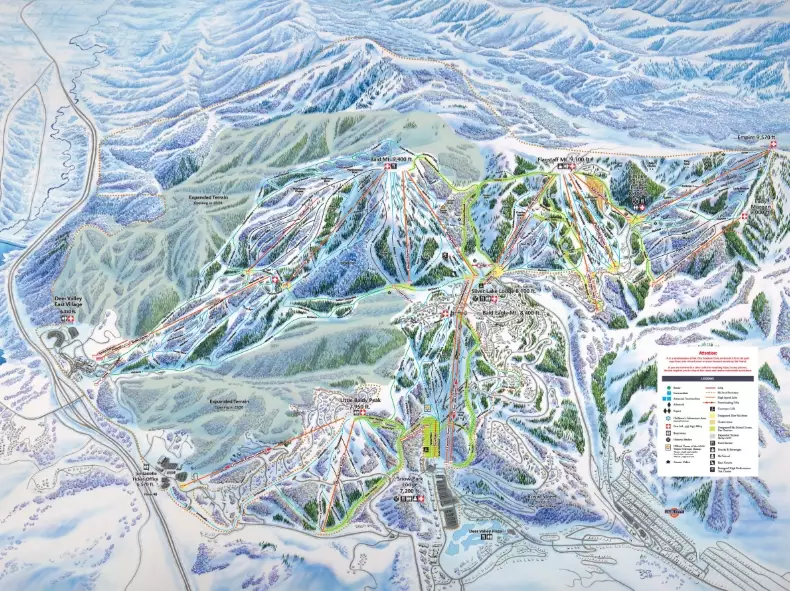
The Universal Language: The Color-Coded System
This is the backbone of every ski trail markings chart you'll ever see. Think of it as the mountain's traffic light system. It's pretty consistent across North America and most of Europe, which is a lifesaver.
| Color & Symbol | Difficulty Level | What to Expect (The Real Story) | Who It's For |
|---|---|---|---|
| ● Green Circle | Beginner / Easiest | Wide, groomed trails with gentle slopes (typically less than 25% grade). Perfect for learning turns and building confidence. Often called "bunny slopes" near the base. | First-timers, novice skiers/boarders, kids, and anyone wanting a relaxed, scenic cruise. |
| ■ Blue Square | Intermediate | The bread and butter of most resorts. Groomed, but with steeper pitches (25%-40% grade) and possibly narrower sections. You need solid control of linked turns here. | Skiers/boarders who can confidently link turns, control their speed, and stop on demand. This is where the fun really starts for most people. |
| ◆ Black Diamond | Advanced | Steep (40%+ grade), often ungroomed, and may have moguls, trees, or other challenging features. Requires expert-level skill and judgement. Not all black diamonds are created equal—some are just steep, others are minefields. | Experts only. You should be comfortable on all terrain, in all conditions, and be able to handle a fall without panicking. |
| ◆ Double Black Diamond | Expert / Extreme | The most extreme terrain on the mountain. Expect sheer cliffs, mandatory drops, dense trees, or exposed alpine conditions. Often involves route-finding, not just skiing. Avalanche gear and knowledge may be required outside resort boundaries. | Professional-level skiers/riders or highly experienced experts with specialized skills. This is "proceed at your own extreme risk" territory. |
| ● Orange Oval / Other | Freestyle Terrain | Terrain parks with jumps, rails, boxes, and halfpipes. Marked separately to warn non-park users and to indicate the level of features (small, medium, large). Always check the park's specific signage for feature details. | Park skiers and snowboarders. You should know park etiquette and how to inspect features before hitting them. |
Now, here's the critical personal takeaway that messed me up: a blue square in Vermont is not the same as a blue square in Colorado. The rating is relative to the overall difficulty of that specific mountain. A resort known for its steep terrain might have blues that feel like blacks at a family-friendly hill. Always warm up on an easy run to calibrate your personal "difficulty meter" for that day and that mountain.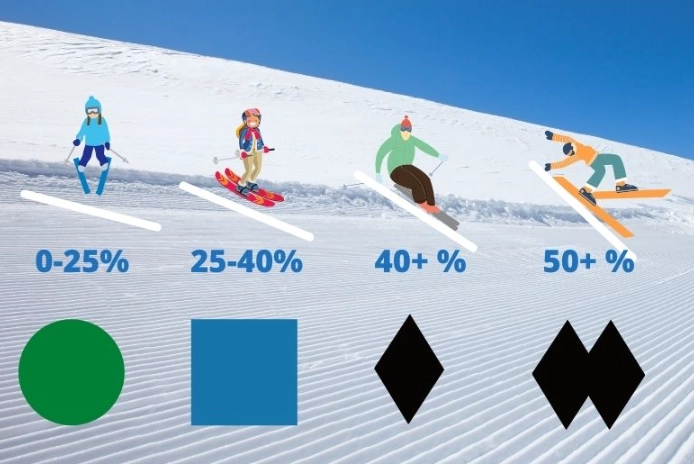
Beyond the Colors: Shapes, Symbols, and Secret Codes
If you really want to master the best ski trail markings chart, you need to look beyond just the color. The shape of the symbol and any extra icons give you the juicy details.
The Shape Tells a Story
You'll notice in the chart above that the shapes are consistent: circles for beginner, squares for intermediate, diamonds for advanced. This is a godsend for color-blind skiers. But sometimes, you'll see variations. A half-blue, half-black diamond might indicate a run that's mostly advanced but has a very tough section. Pay attention.
Supplementary Symbols: The Fine Print
This is where resorts add their own flavor. These little pictures are worth a thousand words of caution.
- Exclamation Point (!) or "Slow" Sign: Usually on a green or easy blue. It means this is a high-traffic area, a merging point, or a catwalk. Control your speed. This is where collisions happen.
- Uphill Arrow: Means you'll need to skate or walk. Often found on flat catwalks connecting two parts of the mountain. Nothing kills your flow like an unexpected flat section.
- Tree Icon: Pretty self-explanatory. Indicates gladed tree skiing. Even on a blue square, trees add a significant challenge. Spacing can be tight.
- Mogul Icon: Expect bumps. Lots of them. This might be on a black diamond, but sometimes moguls form on steeper blues.
- "Ungroomed" or "Natural" Text: The run won't be smoothed out by snowcats. It will have whatever natural snow conditions exist—crud, powder, ice. This dramatically changes the difficulty.
Numbers and Names: Your Trail Map's Best Friend
Every marked trail has a name and usually a number. This seems obvious, but it's your lifeline. That number corresponds directly to your trail map. If you get lost or disoriented, find a sign, note the trail number/name, and find it on your map. It's the simplest and most underutilized navigation trick.
Finding and Using the *Best* Ski Trail Markings Chart for Your Mountain
So, where do you get this magical chart? You won't find one perfect PDF for the world. You build it yourself from the best sources.
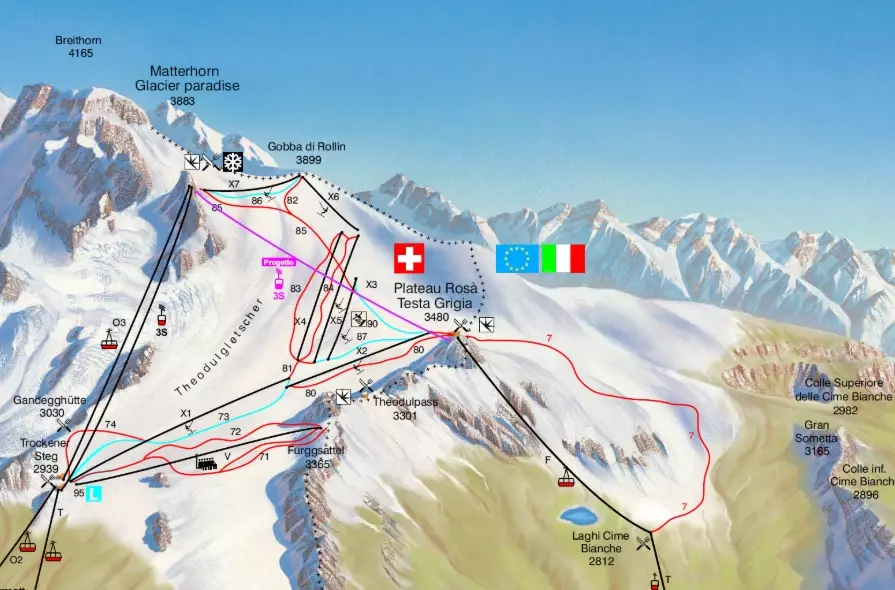
- The Resort Trail Map: This is your primary resource. The legend on the map is the official ski trail markings chart for that mountain. Study it before you go up. I make it a habit to look at the map on the lift ride up, planning my next two runs.
- On-Mountain Signage: The signs at every trail intersection are the real-time, updated version of the chart. Conditions change. A groomed blue in the morning can become a mogul field by afternoon. The signs, combined with what you can see from the top, give you the final go/no-go decision.
- Official Resort Websites & Apps: Most major resorts have interactive trail maps online that are more detailed than the paper version. Some, like Vail or Whistler Blackcomb, even show real-time grooming reports and lift status. This is next-level planning.
- Authoritative Reference Guides: For understanding the standards behind the signs, organizations like the International Ski Federation (FIS) publish guidelines for slope signage, which many resorts follow for consistency and safety.
International Variations: It's Not All the Same
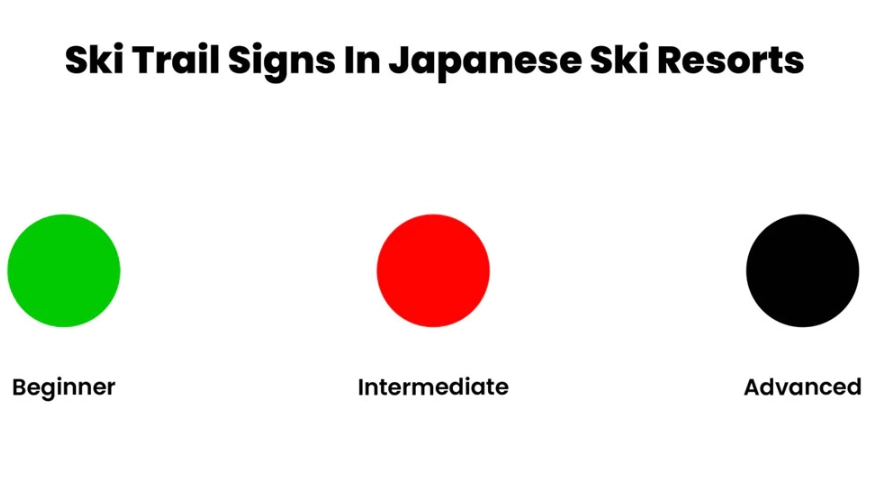
If you're skiing in Europe, Japan, or elsewhere, do your homework. The core green-blue-black system is widespread, but not universal.
In much of Europe, you might see a slightly different system:
- Green: Very easy (like a wide, flat road). Less common.
- Blue: Easy. The equivalent of a North American easy green/blue.
- Red: Intermediate. This is a key difference! A red run sits between a blue square and a black diamond. It's a crucial warning step.
- Black: Difficult. Expert terrain.
My first encounter with a European red run was a shock. I saw red and thought it was a black. A local skier saw my hesitation and explained the system. It was challenging but manageable. If I had assumed it was the same as back home, I might have skipped a fantastic run. Always check the local trail map legend first.
Skiing with Kids or Beginners: Reading Between the Lines
When you're responsible for others, reading the best ski trail markings chart becomes a superpower. Here’s what you’re really looking for:
- Long, uninterrupted greens: Avoid runs where a beginner might accidentally ski onto a more difficult trail. Look for networks of green runs that return to the same lift.
- Escape routes: Identify where a blue run has a "green bypass" or a catwalk that lets you bail out to an easier route. This is a safety net.
- Slow zones: Actively seek out runs marked with the "Slow" sign for kids. It means other skiers should be expecting slower traffic and exercising more caution.
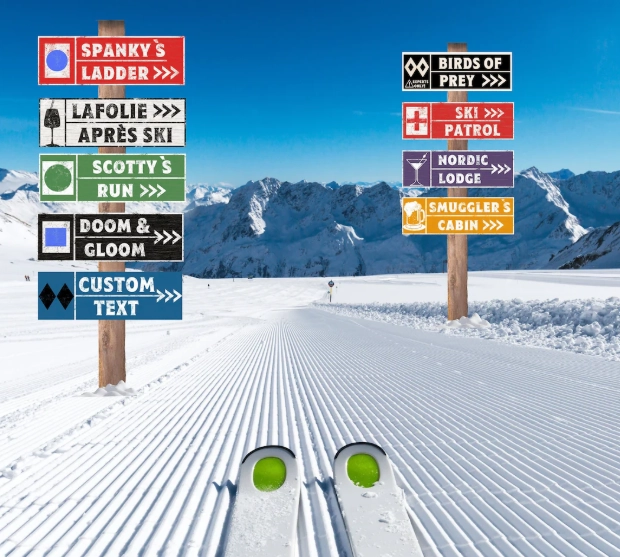
The mountain's signage is your co-instructor. Use it.
Common Questions (Stuff You Were Too Embarrassed to Ask)
What if a run has two colors on the sign?
This usually means the run has sections of different difficulty. For example, a green/blue sign might indicate a run that starts easy but has a steeper, intermediate section in the middle. Always prepare for the hardest part indicated.
Are off-piste/unmarked areas automatically double black diamond?
Worse. They are unrated and uncontrolled. No ski patrol sweeps them regularly, there may be unmarked hazards like cliffs or tree wells, and avalanche risk is a real factor. Never venture off-piste without the proper gear, knowledge, and a guide unless you are an expert in backcountry safety.
How accurate are the ratings? Can I trust them?
Generally, yes, for liability and safety reasons. However, as mentioned, they are relative to the mountain. A "hard" blue at a tough mountain is real. Weather and conditions also change the actual difficulty. An icy blue can feel like a black. The sign tells you the potential difficulty under ideal conditions. You have to assess the current reality.
Do I need to memorize all the symbols?
No. Just understand the core colors and be aware that extra symbols exist. When you see one you don't recognize (like a weird squiggle), just stop and figure it out. Ask another skier or a mountain host. It's better to look curious than to look reckless.
Putting It All Together: Your Pre-Run Checklist
So, you're at the top of a new run. Don't just follow the crowd. Do this:
- Look at the Sign: Color? Shape? Any warning symbols? Double diamond or single?
- Look at the Terrain: Can you actually see the run? Does it look groomed, bumpy, icy, or packed with people? Does the visible part match the sign's promise?
- Check Your Map: Where does this run go? Does it end where you want? Are there any tricky intersections or flat spots?
- Check Yourself: How are your legs? How's the visibility? Are you with someone slower who might struggle? Be honest.
That 30-second ritual is the difference between a great memory and a scary one. It turns the abstract best ski trail markings chart into concrete, actionable knowledge.