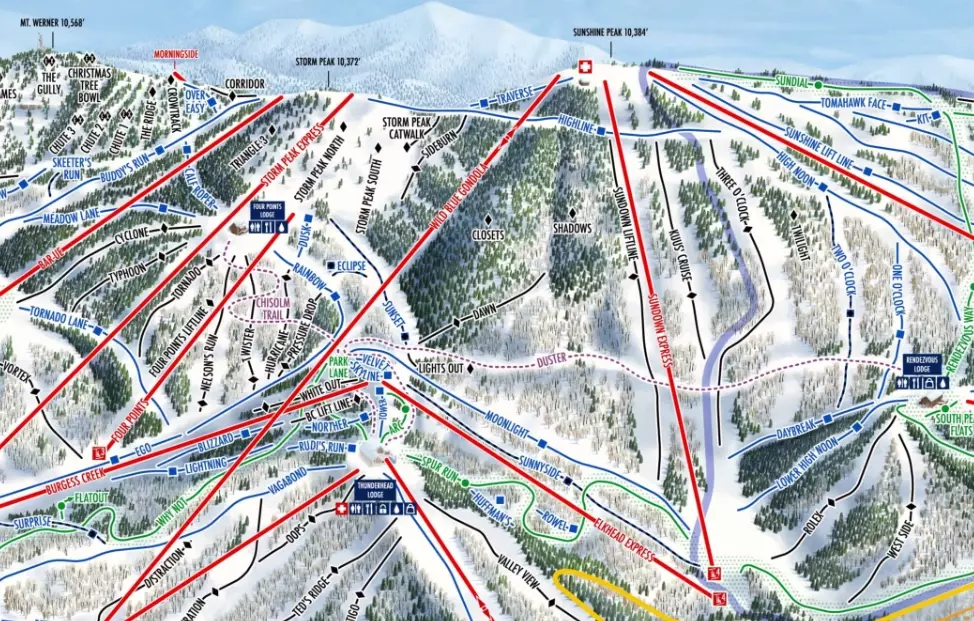
I remember staring at my first big-mountain ski trail map, the kind that unfolds like a treasure chart. All those squiggly lines, colors, and strange icons. I just wanted to know where the good snow was and how to avoid getting stuck on a run way over my head. I ended up wasting half the morning following crowds and making wrong turns.
That day taught me a lesson: a ski trail map isn't just a drawing. It's the blueprint for your perfect day. If you know how to read it, you control your experience—maximizing fun, minimizing lift lines, and finding those hidden gem runs. Let's break down this essential skill, moving beyond the basic green-circle, blue-square, black-diamond stuff everyone knows.
Your Quick Map to This Guide
The Core Elements of a Ski Trail Map
First, you need to speak the language. Most skiers glance at the difficulty colors and call it a day. Big mistake. The magic is in the subtleties.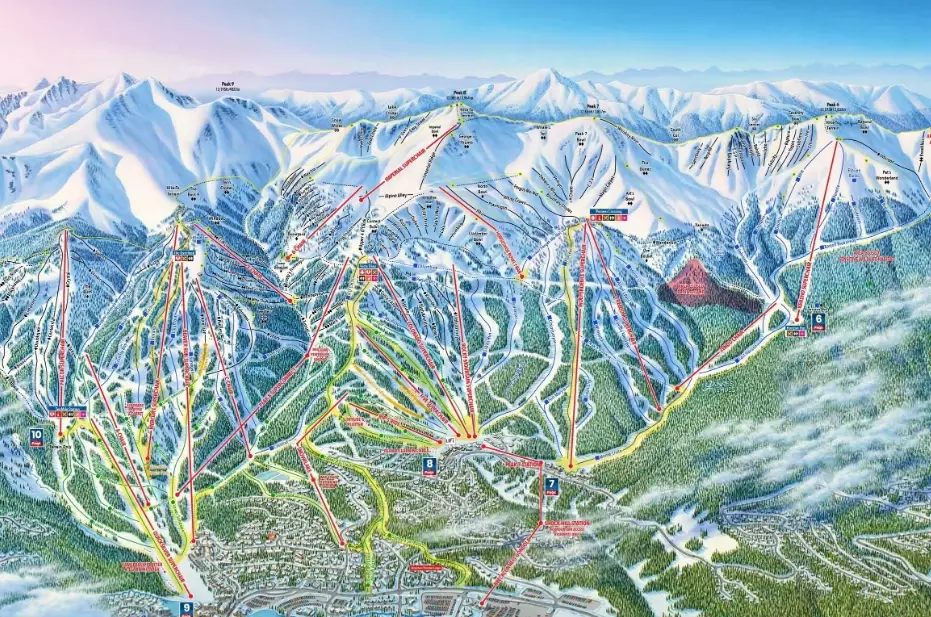
Difficulty Symbols: It's More Than Just Color
Yes, green is easy, blue intermediate, black advanced, and double-black expert. But here's what most maps don't shout about: the shape and density of the lines representing the trail. A wide, gently curving line on a blue run suggests a groomed cruiser. A thin, tightly zigzagging line on a black diamond hints at a steep, narrow chute or mogul field. Look at the lines themselves, not just the color they're printed in.
Lifts: Your Transportation Network
Lifts are highways. Their type tells you a lot. A fast, detachable six-person chairlift moving thousands uphill per hour services a high-traffic area. An old, fixed-grip double chair might access quieter, more challenging terrain. Note the lift names and their endpoints. Can you ski from the top of Lift A to the base of Lift B? The map shows this with trail connections.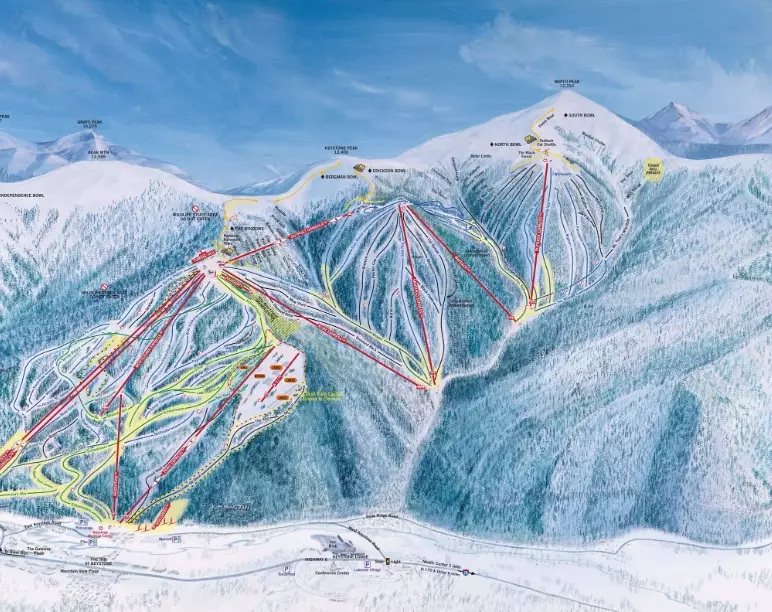
Terrain Parks and Special Features
These are usually marked with a specific icon (like a snowboarder in mid-air). Crucially, parks are often graded separately (small, medium, large features). A map might show multiple parks; one near a beginner area will have smaller jumps than one off a expert lift.
The Legend: Your Decoder Ring
Don't skip it! This is where you'll find icons for:
- Boundary Lines: Going past these is illegal and extremely dangerous. They're often marked with a dashed or dotted line and symbols like a pine tree with an X.
- Cliffs & Avalanche Terrain: Usually indicated by a jagged line or a icon of falling rocks. Respect these.
- Cat Tracks (Access Roads): Flat, wide paths used to traverse or connect areas. They are vital connectors but can be boring and require poling. Knowing where they are helps you avoid getting stranded without enough speed.
- Lodges & Facilities: Mark your lunch spots, restrooms, and ski school meeting points.
| Symbol/Color | What It Really Means | Planning Insight |
|---|---|---|
| Green Circle | Wide, gentle slopes. Often near base areas. | Great for warm-up, beginners, or low-visibility days. Can be crowded. |
| Blue Square | Moderate pitch. The resort's "bread and butter." | Look for clusters of blues off a single lift for efficient laps. |
| Black Diamond | Steep, may be ungroomed or mogulled. | Check if they're on a north-facing slope (holds snow better). Often accessed by specific lifts. |
| Double Black Diamond | Very steep, likely with natural obstacles. | Requires specific lift access and often a hike. Plan it as a dedicated mission. |
| Dashed Boundary Line | Resort boundary. Out-of-bounds area. | Do not cross without proper gear, knowledge, and a guide. It's a major red zone. |
| Yellow/Orange Route | Often a designated "easiest way down" from a peak. | Your safety valve. Identify it before going up a high lift, in case weather turns. |
Your Step-by-Step Strategy for Map-Based Day Planning
Now, let's build a plan. Do this the night before, not in the cold morning chaos at the base.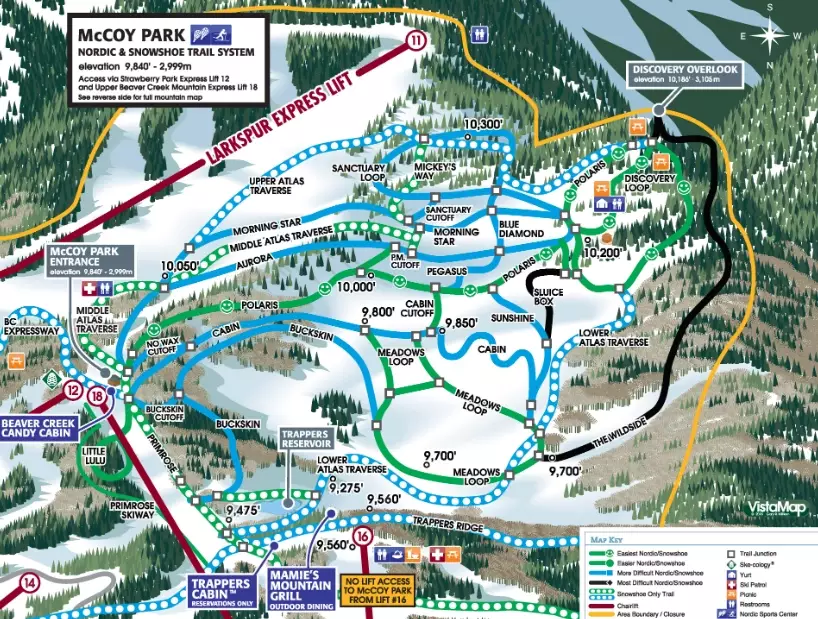
Step 1: Orient Yourself & Identify Key Zones
Find the main base area(s). Where are you starting? Then, look for natural divisions on the map—ridges, peaks, or distinct lift pods that separate terrain. Large resorts like Vail or Whistler are collections of these smaller "villages" or bowls. Mentally chunk the mountain.
Step 2: Match Zones to Your Group's Ability & Goals
Be brutally honest. If you're a solid blue skier, circling all the double blacks is a fantasy, not a plan. Instead, identify 2-3 zones that have a high concentration of suitable terrain. Look for a lift that serves a mix of high-interest runs. For example, a chair that has two blue cruisers and one easier black off the top gives everyone options.
Step 3: Sequence Your Day Like a Conductor
This is the heart of efficiency.
- Morning (9 AM - 11 AM): Start with a familiar, sun-facing slope (south or east) for a warm-up. Groomers are best early. Avoid starting at the absolute most popular base lift—everyone else is there. Can you start from a secondary base or a lift a short walk away?
- Mid-Day (11 AM - 1 PM): Move to your primary target zone. Lift lines peak around 10:30 AM. If you see a lift line snaking out of the corral on the map's webcam (more on that later), have a backup lift nearby that accesses similar terrain.
- Lunch (1 PM - 2 PM): Plan your lunch stop to be at a lodge that's logically positioned for your afternoon goals. Don't ski all the way back to the base if you plan to explore the upper mountain after eating.
- Afternoon (2 PM - Close): Sun shifts. North-facing slopes now have the best-preserved snow. This is the time for those runs. Also, identify a reliable, enjoyable run back to your finish point (your car or lodge). The last run of the day is notorious for tired legs and poor decisions.
Step 4: Mark Escape Routes & Bail-Out Points
Weather changes. Legs get tired. Always know the cat track or easiest route that can get you down from any high point. On the map, trace a green or blue line from the top of any lift you plan to take all the way back to a safe zone.
Putting It All Together: A Mid-Level Skier's Day at a Mega-Resort
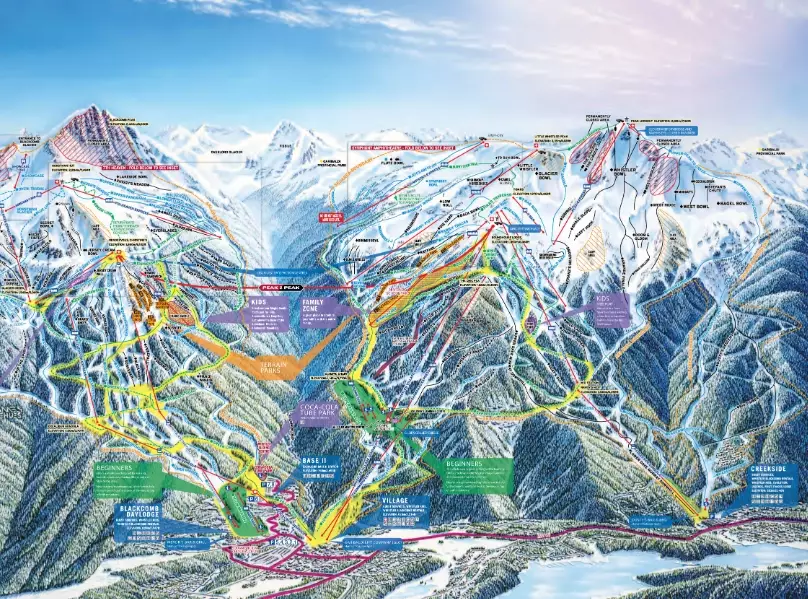
Let's say you're at Whistler Blackcomb, a vast resort. You're comfortable on blues and want to try an easier black. Your goal: see diverse terrain without excessive traversing.
Pre-Game (Night Before): You study the map. You see the Blackcomb side has a high concentration of long, rolling blues off the 7th Heaven Express lift. The Jersey Cream lift nearby also accesses similar terrain. You notice a black run called "Cloud Nine" that starts near the top of 7th Heaven but has a cat track escape route halfway down.
The Plan:
1. Start at the Excalibur Gondola base (slightly less crowded than the main Whistler Village Gondola).
2. Warm up on "Ego Bowl" (a wide blue) off the Excelerator Express.
3. Take the Peak 2 Peak Gondola over to Blackcomb (a scenic experience and strategic move).
4. Spend the late morning lapping the 7th Heaven Express area, trying "Cloud Nine" if conditions look good.
5. Lunch at the Rendezvous Lodge at the top of the Jersey Cream lift (perfectly positioned).
6. Afternoon: Explore the long, winding blues off the Crystal Ridge Express on the Blackcomb side.
7. Final Run: Take the well-marked "Green Line" cat track all the way back to the Blackcomb base, a relaxing end.
This plan uses map analysis to create efficient loops, identifies a logical lunch spot, and has a clear, easy finish.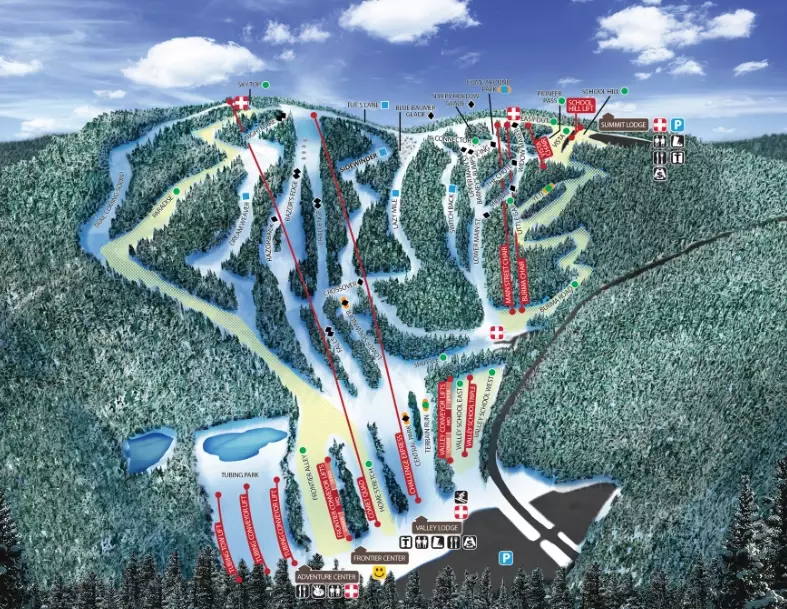
Beyond the Paper Map: Digital Tools and Live Data
The paper map is your foundation, but real-time info is king. Every major resort has an app (like EpicMix or Ikon). Use it to:
- Check Live Lift Status: Is your key lift on wind hold? The app tells you instantly, so you can pivot to Plan B.
- View Trail & Grooming Reports: The map shows what's there; the report tells you what was groomed last night. A groomed black diamond is a different beast from a mogul field.
- Access Webcams: Look at the base of the lift you're targeting. Is the line huge? Check the webcam for the next lift over.
- Use GPS Tracking: Never get lost. The app shows you as a dot on the digital trail map. It's invaluable in white-out conditions or vast bowls.
Combine the strategic overview from the paper map with the tactical, real-time data from the app. That's the modern skier's advantage.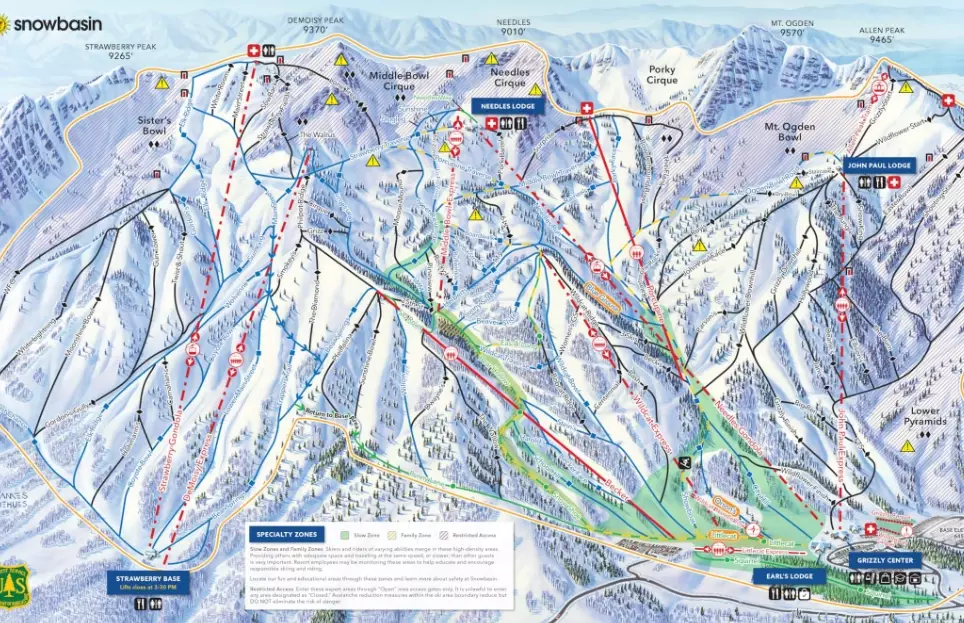
Your Trail Map Questions, Answered
How do I find less crowded runs on a busy day?
Look for lifts that service only blue and black runs, skipping the beginner areas. Also, seek out lifts that don't start at a main base lodge—they often require a short traverse or ski to reach, which filters out a lot of casual traffic. On the map, these are lifts tucked away from the central hub.
What's the biggest mistake beginners make when reading a trail map?
They assume all runs of the same color are equal. A green run at the top of the mountain might be steep for a first-timer, or it might be a long, flat cat track that requires poling. They also miss the scale. Two runs might look close on the map but require a 20-minute traverse. Always check for those connecting cat tracks and assess the elevation lines to understand flat sections.
How can I tell if a run will be sunny or shaded in the afternoon?
This requires a little geography. On most North American maps, north is at the top. South-facing slopes get the most sun all day. East-facing get morning sun, west-facing get afternoon sun, and north-facing are often in shade, preserving snow. If you want softer snow in the afternoon, head to a west-facing slope. For firmer, preserved snow, go north-facing.
Are double black diamonds ever groomed?
Almost never. The trail map's difficulty rating assumes natural, ungroomed conditions. A resort will sometimes groom a single black diamond, but a double black is left in its natural state—steep, with moguls, trees, and variable snow. Trust the map on this one. If you see a double black, prepare for a challenging, ungroomed experience.
What should I do if I'm lost and my phone is dead?
This is why the pre-planning matters. Always have a small paper map in your pocket. Ski to the nearest lift shack or patroller and tell them your last known lift. They can point you down an appropriate route. More broadly, if you're unsure, always ski down to a lift line—it's a guaranteed path to people and a way back to the map.
Related Articles

Comments
Join the discussion