Let's cut to the chase. If you're searching for the biggest ski resorts, you're not just looking for a hill. You want endless variety, terrain that takes days to explore, and the freedom that comes with knowing you won't ski the same run twice. Size, measured in skiable area (kilometers or miles of groomed and off-piste terrain), is the ultimate metric for the dedicated skier or snowboarder. Forget vertical drop or lift count for a second—total terrain is what gives you that epic, never-ending adventure feeling.
Based on that, the crown belongs to interconnected ski areas, not single mountains. Europe dominates this list because of a simple, brilliant concept: multiple villages and valleys linked by lifts, creating a single, massive ski ticket universe. North America has huge individual mountains, but for sheer interconnected scale, the Alps and Dolomites are in a league of their own.
So, here they are. The top five.
Your Quick Mountain Guide
- #1: Les 3 Vallées, France – The Undisputed King
- #2: Ski Arlberg, Austria – The Pioneering Powerhouse
- #3: Portes du Soleil, France/Switzerland – The Borderless Playground
- #4: Dolomiti Superski, Italy – The Scenic Circuit
- #5: Grand Massif, France – The Family-Friendly Giant
- How They Stack Up: A Side-by-Side Look
- Beyond the Map: An Expert's Take on Mega-Resorts
- Your Big Mountain Questions, Answered
#1: Les 3 Vallées, France – The Undisputed King
Skiable Area: 600 km² Lifts: 183+ Linked Resorts: 8
This isn't just the biggest; it's a different category of big. Imagine a ski area roughly the size of Singapore. That's Les 3 Vallées. The three valleys—Courchevel, Méribel, and Val Thorens/Belleville—are interconnected by a mind-bogglingly efficient lift system. You can start your day in ritzy Courchevel, have lunch in the charming wooden chalets of Méribel, and finish with après-ski at the highest resort in Europe, Val Thorens, without ever taking your skis off.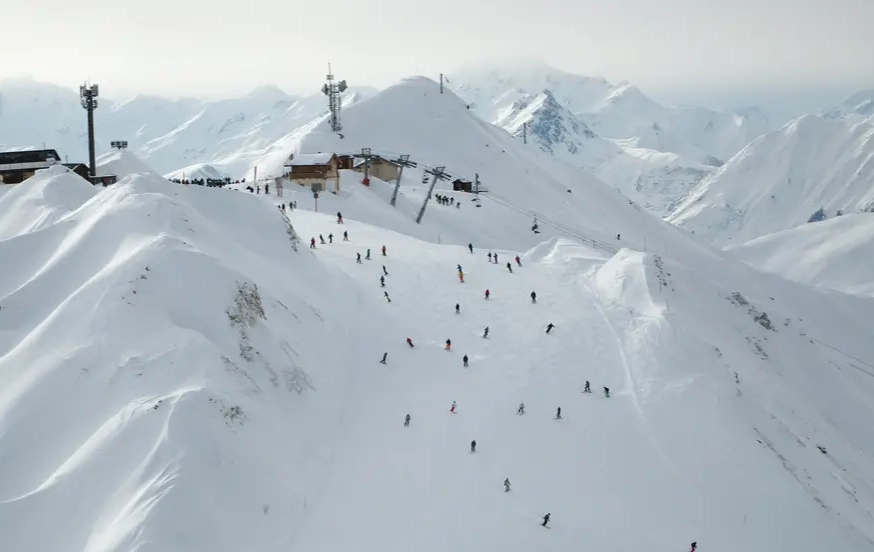
The vibe changes completely from valley to valley. Courchevel (1850) is glitzy, with Michelin-starred restaurants and designer shops. Méribel is more traditionally alpine and family-focused. Val Thorens is all about high-altitude, guaranteed snow and a vibrant, younger party scene. This variety is the real magic.
Planning Your Trip
Getting There: Fly into Geneva (GVA), Lyon (LYS), or Chambéry (CMF). Transfers take 1.5 to 3 hours. You can also take a train to Moutiers or Moûtiers, then a bus.
Ticket Window: A 6-day adult pass hovers around €350-€400. Yes, it's pricey, but per square kilometer, it's a bargain.
Where to Base Yourself: This is the key decision. For easy access to everything, pick a resort near the Saulire or Côte Brune gondolas. Méribel is geographically central. For snow certainty, Val Thorens can't be beat.
A Local's Tip: Most people stick to their home valley. If you want quieter slopes, use the lifts to cross into the Belleville valley (Les Menuires, Saint-Martin-de-Belleville) after 11 AM—the crowds thin out significantly.
#2: Ski Arlberg, Austria – The Pioneering Powerhouse
Skiable Area: 305 km² Lifts: 88 Linked Resorts: 7
Ski Arlberg is the birthplace of modern alpine skiing (thanks, Hannes Schneider!) and its recent interconnection completed in 2016 created a monster. It seamlessly links the famous villages of St. Anton, Lech, Zürs, and St. Christoph with Warth, Schröcken, and more. The terrain here is legendary for a reason: it's challenging, diverse, and blessed with huge amounts of snow.
St. Anton is the beating heart—famous for its intense off-piste, bump runs, and raucous après-ski at the MooserWirt. Lech and Zürs are more upscale and exclusive, with gentler, wide-open cruising terrain perfect for intermediates. The Flexenbahn gondola, which finally connected these worlds, is a game-changer.
Planning Your Trip
Getting There: Innsbruck (INN) is the closest airport (1h 15m drive). Zurich (ZRH) is about 2.5 hours by train or car. The train station in St. Anton is incredibly well-connected.
Ticket Window: A 6-day pass is around €340-€380.
Where to Base Yourself: St. Anton for the full experience, hardcore skiing, and nightlife. Lech for luxury, quieter charm, and fantastic intermediate skiing. For a balanced mix, consider staying in St. Christoph.
A Local's Tip: The off-piste here is no joke and claims unprepared skiers every year. If you want to explore the famous back bowls like the Valluga, hiring a guide isn't a luxury; it's a necessity. Don't be that person who ignores the closed signs.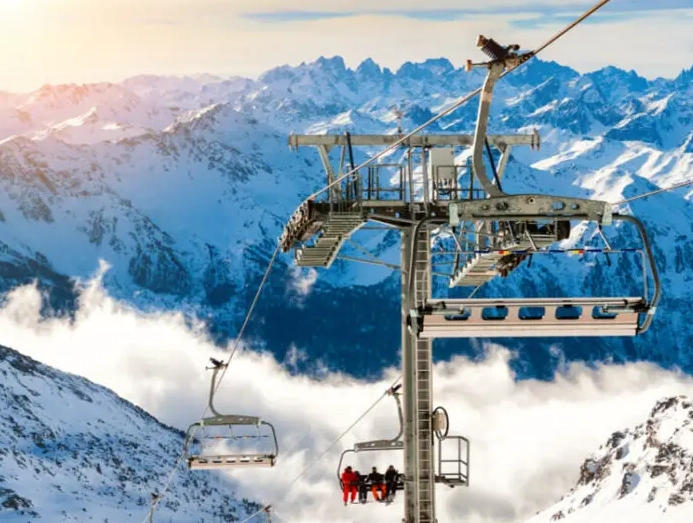
#3: Portes du Soleil, France/Switzerland – The Borderless Playground
Skiable Area: 290 km² Lifts: 196 Linked Resorts: 12+
Portes du Soleil feels more like a network than a single resort. It sprawls across the French-Swiss border, connecting a dozen major villages. The vibe is less curated and more rustic than the top two. It's fantastic for intermediates and explorers who love the idea of skiing between countries.
The circuit is famous. You can literally ski a giant loop, crossing the border multiple times. Key hubs include Avoriaz (car-free, modern, and perched high), Morzine (a bustling traditional town lower down), and Les Gets (very family-oriented). The Swiss side, like Champéry, offers steeper, more dramatic cliffs.
Planning Your Trip
Getting There: Geneva Airport (GVA) is your best bet, about 1-1.5 hours to most resorts.
Ticket Window: More affordable. A 6-day pass is roughly €280-€320.
Where to Base Yourself: Avoriaz for snow-sure convenience and easy access to the circuit. Morzine for a wider selection of restaurants, bars, and non-ski activities. Families adore Les Gets.
A Local's Tip: The circuit is long. Don't try to do it all in one day if you want to actually enjoy it. Start early, and plan a lunch stop. Also, watch the weather—the lower villages (Morzine, Les Gets) can suffer from rain when Avoriaz has snow.
#4: Dolomiti Superski, Italy – The Scenic Circuit
Skiable Area: 120+ km² Lifts: 450+ Linked Areas: 12
This one requires an asterisk. Dolomiti Superski isn't one fully interconnected area like the others. It's a consortium of 12 major ski areas (like Val Gardena, Alta Badia, Cortina) all accessible on one pass. You can't ski between all of them directly, but a network of buses and some lifts connect many. What you lose in seamless connection, you gain in mind-blowing scenery—the jagged, pale Dolomite peaks are a UNESCO World Heritage site.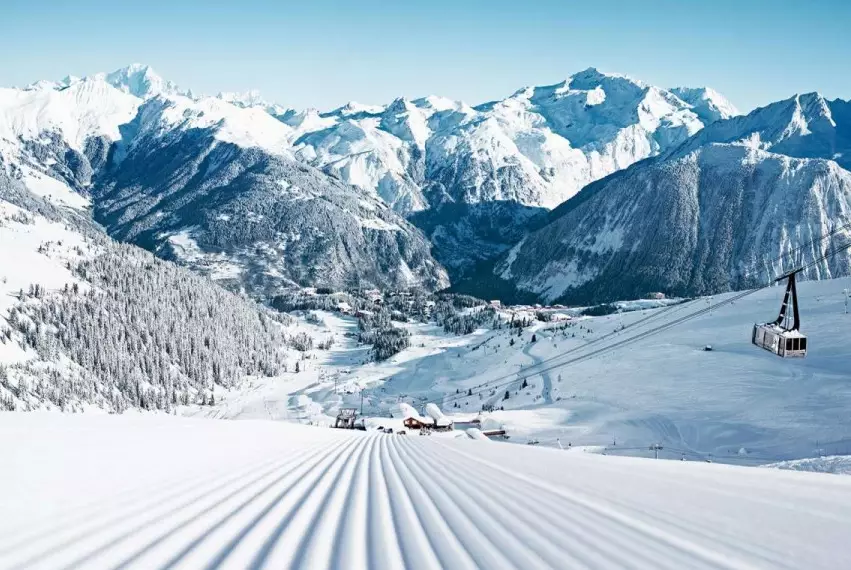
The skiing culture here is uniquely Italian: long, sunny cruising runs, fantastic mountain restaurants (rifugios), and a focus on enjoying la dolce vita. The Sella Ronda is the famous day-tour, a 26km circuit around the Sella massif that takes you through four passes and three languages (Italian, German, Ladin).
Planning Your Trip
Getting There: Bolzano, Innsbruck, or Venice airports. Bolzano is closest for Val Gardena.
Ticket Window: The 6-day Superski pass is about €300-€350, giving you access to all 12 areas.
Where to Base Yourself: Val Gardena (Selva, Santa Cristina) is the most central for exploring multiple areas. Cortina d'Ampezzo is glamorous and historic but a bit more isolated.
A Local's Tip: Don't get obsessed with skiing the whole Superski area. Pick 2-3 base valleys and explore them deeply. The bus connections, while good, eat into your ski time. And for heaven's sake, book a table for a long, wine-filled lunch at a rifugio. That's the real highlight.
#5: Grand Massif, France – The Family-Friendly Giant
Skiable Area: 265 km² Lifts: 78 Linked Resorts: 5
Often overlooked by international crowds heading to the giants further east, the Grand Massif is a hidden treasure. It links Flaine, Les Carroz, Samoëns, Morillon, and Sixt-Fer-à-Cheval. The terrain is incredibly varied, from the purpose-built, brutalist architecture of Flaine (great for beginners and intermediates) to the stunning, tree-lined runs above Samoëns and the remote, beautiful valley of Sixt.
It feels more authentic and less frenetic than the mega-resorts. The views of Mont Blanc are spectacular. The connection from Flaine all the way down to Sixt is one of the longest continuous descents in the Alps.
Planning Your Trip
Getting There: Geneva Airport (GVA) is just an hour away.
Ticket Window: Excellent value. A 6-day pass is often under €270.
Where to Base Yourself: Flaine for ski-in/ski-out convenience and modern amenities. Samoëns for a beautiful, traditional village with great charm (though you'll need a short bus or cable car ride to the slopes).
A Local's Tip: The run from the top of the Grandes Platières (2480m) all the way down to Sixt (900m) is a must-do. It's a 14km journey with a 1580m vertical drop. Do it in the morning when your legs are fresh, and take the bus back from Sixt. The village of Sixt is a preserved natural site, stunningly beautiful.
How They Stack Up: A Side-by-Side Look
| Resort | Skiable Area | Key Strength | Best For | Approx. 6-Day Pass |
|---|---|---|---|---|
| Les 3 Vallées | 600 km² | Sheer size & variety | Everyone (Luxury to Party) | €350-€400 |
| Ski Arlberg | 305 km² | Challenging terrain & snow | Advanced Skiers, Off-Piste | €340-€380 |
| Portes du Soleil | 290 km² | Border-hopping circuit | Intermediates, Explorers | €280-€320 |
| Dolomiti Superski | 120+ km²* | Scenery & food culture | Scenic Cruisers, Foodies | €300-€350 |
| Grand Massif | 265 km² | Value & authentic vibe | Families, Value-Seekers | Under €270 |
*Network of areas, not fully interconnected.
Beyond the Map: An Expert's Take on Mega-Resorts
Here's something most listicles won't tell you: bigger isn't always better for your trip. A common mistake is being seduced by the biggest number and ending up in a resort that doesn't match your group's skill level or vibe.
For example, a beginner family choosing St. Anton in Arlberg will be overwhelmed and possibly intimidated. They'd have a far better time in the Grand Massif or the gentler valleys of Les 3 Vallées (like Courchevel 1650).
Also, the lift count and area size can be misleading. A resort with 100 old, slow drag lifts feels much smaller than one with 50 high-speed gondolas and chairs. Always look at the lift system quality and the percentage of terrain suited to your level. A resort with 300km of slopes but 70% black runs is useless if you're an intermediate.
My advice? Use size as the first filter, but then dig into the terrain breakdown, village atmosphere, and accessibility. A well-matched 250km² resort will give you a better week than a poorly matched 600km² one.
Your Big Mountain Questions, Answered
Hands down, Les 3 Vallées. That's its superpower. You can put beginners in the dedicated, gentle zones of Courchevel (like the Jardin Alpin) or Méribel's Altiport area. Intermediates have an endless playground of perfectly groomed blues and reds connecting all three valleys. And experts can seek out the steep couloirs above Val Thorens or the off-piste in Courchevel. The lift system makes it easy to split up and meet for lunch. Portes du Soleil is also a great, more affordable option for mixed groups.
Look at Grand Massif first. It has massive terrain at a significantly lower price point for lift passes, accommodation, and food compared to the glitzy names. Portes du Soleil is another strong contender for value. If you're willing to trade seamless interconnection for a pass that gives you options, the Dolomiti Superski pass offers insane variety for its price. A pro-tip for any resort: stay in a less famous linked village. In Les 3 Vallées, Saint-Martin-de-Belleville is cheaper than Méribel. In Portes du Soleil, Chatel is often better value than Avoriaz.
Absolutely, but you need a strategy. The secret is lateral movement. Most crowds cluster near the main village lifts before 10 AM and on the famous, easy runs between major hubs. Your goal is to get to the peripheral areas of the ski domain. In Les 3 Vallées, head to the fourth, often-forgotten Maurienne valley. In Ski Arlberg, use the lifts to get to Warth-Schröcken—it gets far less traffic than the St. Anton-Lech corridor. In any mega-resort, if you see a lift line, take the chair or gondola going in a different direction, even if it's not "toward" your intended destination. You'll often find empty powder stashes and quiet runs by embracing a bit of exploration.
Related Articles
Comments
Join the discussion