In This Guide
- The Universal Language of the Mountain: Green, Blue, Black, and Beyond
- Breaking Down Each Level: What You're Actually Signing Up For
- Why "What Are the Different Levels of Ski Trails?" is a Trick Question
- A Quick Global Comparison: North America vs. Europe
- How to Choose the Right Trail for YOU (A Practical Checklist)
- Beyond the Basics: Other Markings You Need to Know
- Common Questions Skiers Have About Trail Levels
- Final Thoughts: It's a Guide, Not a Gospel
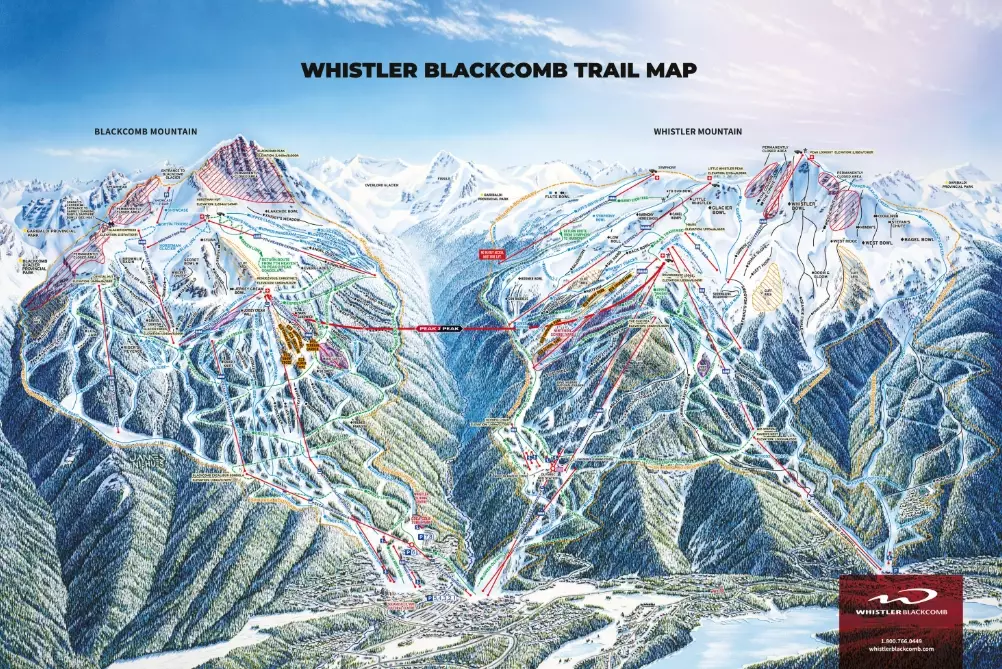
You're standing at the top of a lift, map in hand, staring at a web of lines marked with green circles, blue squares, and what looks like a scary black diamond. It's easy to feel a bit lost. What are the different levels of ski trails, really? And more importantly, which one won't send you tumbling down the mountain in a panic?
I remember my first real ski trip as a young adult. I'd done the tiny bunny hills before, but this was a proper mountain. I confidently followed a friend onto what the map called a "Blue Square." Let's just say it was a very long, very humbling walk down a section that felt more like a cliff. The trail was icy, narrower than expected, and full of people who clearly knew what they were doing. That day taught me a hard lesson: understanding ski trail ratings isn't just advice—it's essential for your safety and enjoyment.
So let's break it down, without the jargon. This system exists for one reason: to tell you what you're getting into before you push off from the lift. But here's the catch—it's not perfectly consistent from one resort to the next. A blue square in Colorado might feel different than a blue square in Vermont. I'll get into that messy reality too.
The Universal Language of the Mountain: Green, Blue, Black, and Beyond
In North America and most parts of the world, resorts use a shape-and-color coding system. It's meant to be intuitive. The U.S. largely follows standards suggested by the National Ski Areas Association (NSAA), though it's not a strict law. The Canadian system is very similar. Over in Europe, you'll often see a color-coded shape system (blue, red, black) or sometimes just numbers. The core idea is the same: progression from easy to expert.
The Golden Rule: These ratings are for the easiest way down a particular trail. A black diamond run might have a steep, scary headwall at the top but then mellow out into a long, cruising blue-section halfway down. The rating reflects the toughest sustained part you have to ski.
It sounds simple, right? Yet, this is where many skiers, myself included in the early days, get tripped up. We see a symbol and make assumptions. The real story is in the details.
Breaking Down Each Level: What You're Actually Signing Up For
Let's walk through each level, from the gentle slopes to the expert-only zones. I'll throw in what the marketing brochures say, and then what you might actually experience.
The Beginner's Playground: Green Circle Trails
● The Official Description: These are the easiest trails on the mountain. They have the gentlest slopes (typically with a gradient of less than 25%), are wide, and are meticulously groomed to a smooth, corduroy finish. They're designed for first-timers and novices to learn basic turns, stops, and controlling their speed without fear.
The On-Snow Reality: Green circles are your best friend when you're learning. But be aware—"gentle" is relative. Some resort green runs are cat tracks (flat, narrow connector paths) that require constant poling, which can be exhausting for a new skier. Others might be wide open bowls that feel easy but can become tricky in low light or if they get choppy later in the day.
My personal take? Don't be in a rush to leave the greens. Mastering control, linked turns, and confidence on these runs is the single best thing you can do for your skiing future. A common mistake is moving to blues before you can comfortably control your speed on a green in all conditions.
Pro Tip for Beginners: Look for greens labeled "Easiest Way Down" on the trail map. These are often longer, winding routes designed specifically to get less experienced skiers from the top to the bottom safely. They're gold.
The Heart of the Mountain: Blue Square Trails
■ The Official Description: Intermediate terrain. These are steeper than greens (usually a 25% to 40% grade) and may be groomed or left in a more natural, moguled state. They require the ability to make linked, controlled turns and to control speed on a moderate incline. This is where most recreational skiers spend their time.
The On-Snow Reality: Ah, the blue square. This is the most variable category on the mountain, and the source of my early walking debacle. A groomed blue on a sunny day is pure joy—a perfect pitch for carving and feeling the wind. An ungroomed, moguled blue after a freeze-thaw cycle can be a brutal leg-burner that feels closer to a black.
The width matters too. A wide-open blue cruiser is forgiving. A narrow blue trail through the trees feels much more demanding because the margin for error is smaller. This is why asking "what are the different levels of ski trails?" isn't enough. You need to ask, "What's the condition of the blue run I'm looking at?"
Expert Terrain: Black Diamond Trails
◆ The Official Description: Advanced terrain. These trails are steep (often 40% slope and above), may be narrow, and are likely to have moguls, glades (tree skiing), or other challenging natural features. They are not always groomed. Skiers should be confident in their ability to handle variable conditions and make short-radius turns on demanding slopes.
The On-Snow Reality: This is where the mountain gets serious. A black diamond demands respect. It's not just about steepness; it's about commitment. Fall lines are more consequential, recoveries are harder, and the terrain often dictates your turn shape. I've stood at the top of many a black diamond, heart pounding, questioning all my life choices.
Here's a piece of advice I wish I'd gotten earlier: not all black diamonds are created equal. Some are steep but wide and groomed (sometimes called "groomed blacks")—these are a fantastic step up from difficult blues. Others are narrow chutes or endless mogul fields. The trail map often gives hints, but sometimes you just have to peek over the edge.
Critical Safety Note: Do not attempt a black diamond trail unless you are absolutely confident in your abilities on the most difficult blue terrain. If you find yourself on a black by accident, look for the easiest line (usually the side with the least pitch or smallest moguls), take it slow, and consider sidestepping or traversing if you need to. There's no shame in a cautious descent.
The Extreme Frontier: Double Black Diamond and Beyond
◆◆ The Official Description: For experts only. This terrain is extremely steep (often exceeding 50% slope), littered with obstacles like cliffs, large boulders, tight trees, and may involve mandatory air (jumps you can't avoid). It is almost never groomed. Avalanche mitigation may be minimal, and conditions can be highly variable and dangerous.
The On-Snow Reality: This is the realm of professional skiers, extreme athletes, and very talented locals. It requires not just advanced technique but expert-level judgment, mountain awareness, and often, specialized equipment. These runs frequently access out-of-bounds or backcountry-style terrain within the resort boundary.
I'll be honest—I've skied a handful of double blacks in my life, and each time I was acutely aware that I was at the absolute limit of my skill. The margin for error is virtually zero. One misjudged turn, one patch of hidden ice, and you're in for a long, dangerous fall. Resorts use these ratings as a serious warning.
Respect the double black. It's not a badge of honor to be collected recklessly.
Why "What Are the Different Levels of Ski Trails?" is a Trick Question
Here's the big secret the trail map doesn't always tell you: the ratings are subjective and relative. They are set by the ski patrol and mountain operations team for that specific resort. This leads to some notorious inconsistencies.
A blue square at a challenging, expert-focused resort in the Rocky Mountains (think Jackson Hole, Whistler) will likely be steeper and more demanding than a blue square at a smaller, family-friendly hill in the Midwest. The local clientele sets the baseline. At a hardcore mountain, the average skier is better, so the ratings get "stiffer."
Furthermore, conditions change everything. That lovely, groomed blue you skied in the morning can transform into a bumpy, icy track by afternoon. A green run in three feet of fresh powder is a dream; that same run after a rain freeze is an ice rink. The rating is static, but the mountain is alive.
I once skied a run in Utah marked as a blue that had a pitch that would easily qualify as a single black diamond back East. I spent the whole run muttering to myself about the misleading rating. Later, a local laughed and said, "Yeah, around here we call that 'intermediate.'" Lesson learned.
A Quick Global Comparison: North America vs. Europe
If you're heading across the pond, the symbols change, but the music is similar. Here’s a rough equivalence to help you translate.
| North America (US/Canada) | Europe (Common System) | What to Expect |
|---|---|---|
| ● Green Circle | Blue Piste | Easiest, groomed, gentle slopes for beginners. |
| ■ Blue Square | Red Piste | Intermediate. Can be quite broad in difficulty—some are easy cruisers, others are steep and challenging. |
| ◆ Black Diamond | Black Piste | Advanced/Expert. European blacks can be very steep, narrow, and are often left ungroomed. |
| ◆◆ Double Black Diamond | Often Orange or Double Black | Extreme, off-piste, or itinerary routes. May involve avalanche risk and unmarked obstacles. |
European "off-piste" (outside the marked trails) is a whole different ballgame and is not patrolled or controlled for avalanches the same way North American in-bounds terrain is. Always go with a guide if you're venturing off-piste in Europe.
How to Choose the Right Trail for YOU (A Practical Checklist)
Forget just looking at the symbol. Use this mental checklist before you drop in:
- Look at the Pitch: Can you see the entire run from the top? Does it look terrifyingly steep, or manageably sloping?
- Check the Width: Is it a wide boulevard or a narrow alley? Narrow trails feel harder and limit your turn options.
- Assess the Conditions: Is it groomed corduroy, chopped-up powder, bulletproof ice, or a field of moguls? Be honest about what you can handle.
- Watch Other Skiers: Hang back for a minute. Watch people come down. Do they look comfortable and in control, or are they struggling, snowplowing, and falling?
- Listen to Your Gut: If you're feeling a deep sense of dread, it's okay to turn around. Find another way down. The mountain will be there another day.
What are the different levels of ski trails for you? That's the only question that matters. Your personal green circle might be someone else's blue square, and that's perfectly fine. Skiing is about your own journey, not comparison.
Beyond the Basics: Other Markings You Need to Know
The shapes and colors are the main event, but trail maps are covered in other symbols. Ignoring these can lead to trouble.
- Orange Oval / Slow Skiing Zone: Usually near base areas and beginner slopes. Speed is strictly monitored. Don't be that person flying through here.
- Boundary Lines: Often marked with a rope, fence, and signs saying "CLOSED" or "AREA BOUNDARY." Going beyond these lines means leaving the ski area's patrolled and avalanche-controlled terrain. This is backcountry skiing and requires specific knowledge, equipment (beacon, probe, shovel), and partners. People die every year ignoring boundary closures.
- Terrain Parks: Marked with a unique symbol (often a rectangle with a triangle). These contain jumps, rails, and other features. Only enter if you are there to use the features and understand park etiquette.
- Gladed Areas: Marked by tree symbols. These are trails through the trees. They are rated (green, blue, black) just like open runs, but add the complexity of navigating around trees. They are fantastic in good snow but require quick, precise turns.
Common Questions Skiers Have About Trail Levels
Final Thoughts: It's a Guide, Not a Gospel
Learning what are the different levels of ski trails is your first step to mountain literacy. Those green circles, blue squares, and black diamonds are a fantastic communication tool created to keep you safe and help you find fun.
But don't worship them. Use them as your primary guide, but always augment that information with your own eyes, the current conditions, and an honest assessment of your own energy and skill level on that particular day. Some of my best days have been exploring every nook and cranny of blue square terrain, and some of my most memorable moments (good and bad) have been on black diamonds.
The mountain doesn't care about the symbol on the map. It just is.
Your job is to match your ambition to its reality. Start slow, work your way up, and never stop being a little bit scared—that's how you know you're still learning. Now grab your skis, check the map one more time, and go find your perfect run.
Related Articles


Comments
Join the discussion