Quick Navigation
- The Universal Language: Trail Difficulty Colors
- Beyond Colors: Decoding the Symbols and Lines
- The Map's Supporting Cast: Lodges, Parking, and More
- Your Action Plan: How to Use the Map on the Mountain
- Answering Your Questions: The Beginner's Ski Map FAQ
- Putting It All Together: A Quick Mental Checklist
Let's be honest. That first time you unfold a ski trail map, it can look less like a guide to fun and more like a confusing abstract painting. All those squiggly lines, weird shapes, and colors that don't seem to match anything. I remember my first time at a big resort. I just stared at it, nodded like I understood, then followed the crowd hoping for the best. Not the best plan, as I ended up on a run that was... let's say, more exciting than I'd bargained for.
That's why learning how to read a ski trail map for beginners is one of the most important skills you can pick up before your boots even touch the snow. It's not just about finding your way. It's about safety, planning your day, and making sure you're skiing terrain that matches your ability so you actually have a good time. This isn't a complex puzzle. Once someone explains the simple code, it all clicks into place.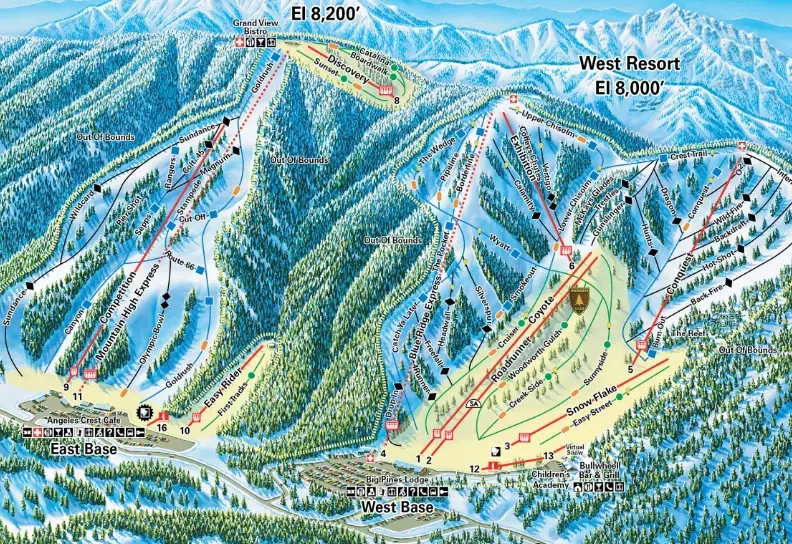
The core idea is this: A ski trail map is a safety and planning tool first, a artistic brochure second. Its main job is to show you two things: how difficult a run is and how to get from point A to point B without getting lost or in over your head.
The Universal Language: Trail Difficulty Colors
This is the most important part of learning how to read a ski trail map. The color system is mostly standardized across North America and many parts of the world, which is a huge relief. You can go from Colorado to Vermont to the Alps and the basic idea is the same.
Think of it as a stoplight for your skis or snowboard.
Green Circle: The Beginner's Best Friend
These are the easiest runs on the mountain. They're wide, groomed (meaning machines smooth out the snow), and have a very gentle slope. If you're just starting out, spending your first few days here is the smart move. They're perfect for practicing your pizza wedge (snowplow) and getting comfortable with your edges. Don't let the term "beginner" fool you into thinking they're boring—a long, cruising green run through the trees can be absolutely magical. Most ski schools and beginner areas are filled with green circle runs.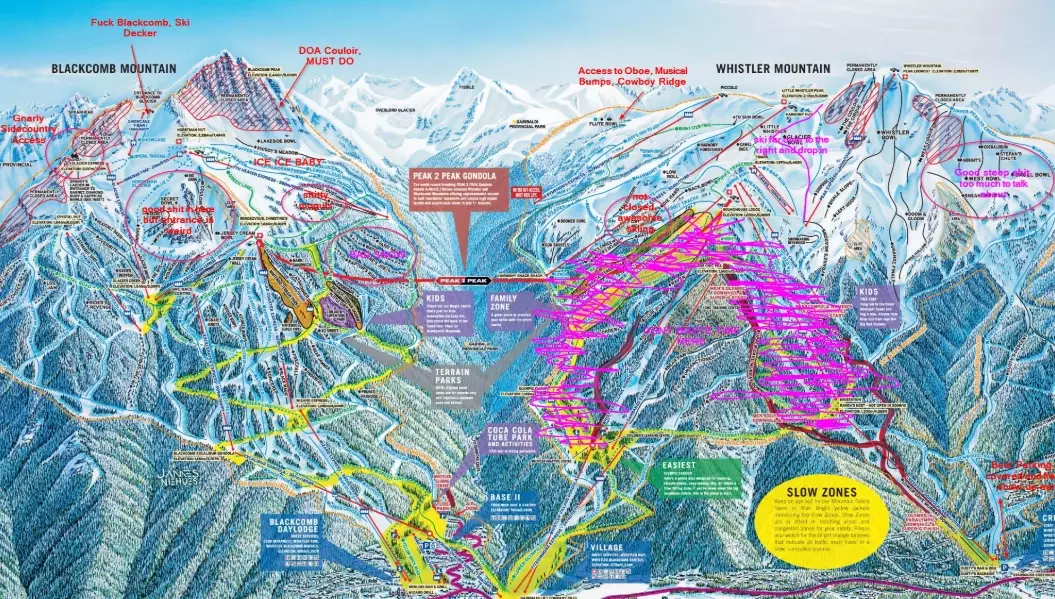
Blue Square: The Comfort Zone for Most Skiers
This is where the majority of recreational skiers and riders spend their time. Blue square runs are intermediate. They're steeper than greens, but still generally groomed and wide. You'll need to be able to link turns with reasonable control. If you can confidently get down a green run without falling, you can probably try a blue. My advice? Pick a blue that starts from the same lift as a green you know, so you have an escape route if it feels like too much.
Black Diamond: For Advanced Riders
Here's where things get serious. Black diamond runs are advanced. They are significantly steeper, may be narrower, and might have moguls (those bumps you see experts zipping through), trees, or other challenging features. They are often groomed less frequently, if at all. A single black diamond is challenging. A double black diamond is expert-only terrain—extremely steep, likely with cliffs, tight trees, or exposed rocks. Do not attempt these as a beginner. The map is giving you a very clear warning.
A crucial point about difficulty: Difficulty is relative to the mountain. A blue square at a tough, expert-focused resort might feel like a black diamond at a smaller, family-friendly hill. Always scope out the first run of a new difficulty level cautiously.
Other Colors You Might See
- Orange / Yellow Oval: Sometimes used for terrain parks with jumps and rails. These are for freestyle skiers and snowboarders.
- Brown / Dotted Lines: Often indicates a hiking route or a backcountry access gate. This is outside the resort's patrolled boundary. This is not a marked ski run. Venturing here requires avalanche gear, training, and a partner.
Beyond Colors: Decoding the Symbols and Lines
Okay, so you know green means easy and black means hard. But what about all those other markings? This is where the real navigation begins. Learning how to read a ski trail map for beginners means becoming a symbol detective.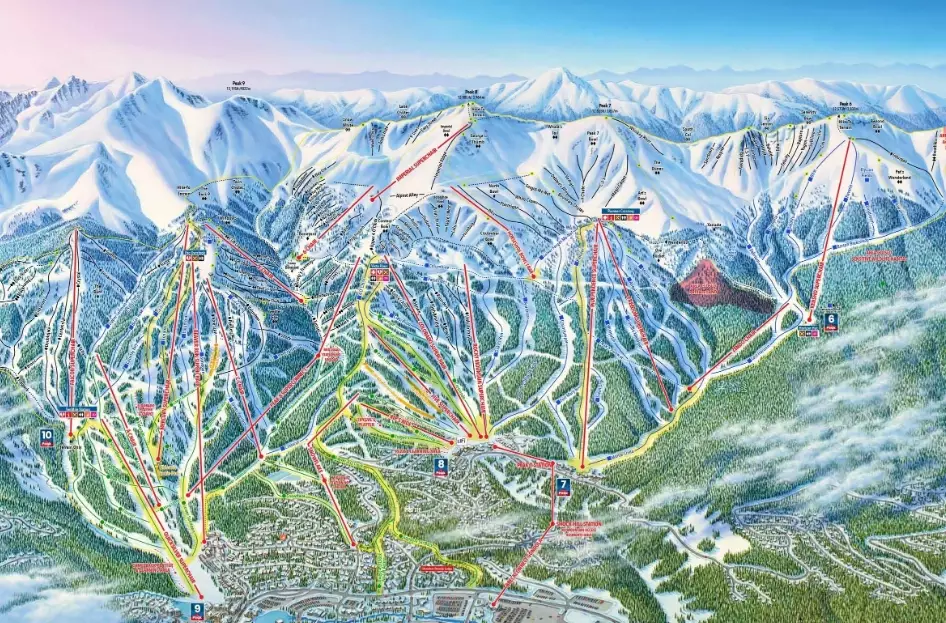
Lifts Are Your Highways
Lifts are shown as straight lines, usually with little bubbles or squares for the terminals. They will always have a name (like "Summit Express" or "Chair 4"). The map legend will have symbols for different types:
- Gondola / Cable Car: An enclosed cabin.
- Chairlift: The classic open-air chair.
- Surface Lift: Like a rope tow, T-bar, or magic carpet (the moving sidewalk for beginners).
Figuring out which lift serves which terrain is your key to planning loops. Can you take one lift up and ski several different runs down to its base? That's efficient skiing.
What Do the Squiggly Trail Lines Mean?
The path of the trail line tells a story about the run itself.
- Gentle curves: A wide, straightforward run.
- Tight, frequent squiggles: This run is likely narrow, winding through trees, or follows a natural gully. It might be more challenging than a straight shot of the same color.
- Dashed or Dotted Lines: This can mean a few things. Often, it means the trail is not groomed regularly (a "natural" or mogul run). It can also indicate a cat track or a very flat connector trail. Check the legend!
Essential Terrain Features (The Scary-Looking Stuff)
These symbols warn you of specific challenges. Ignoring them is a recipe for a bad day.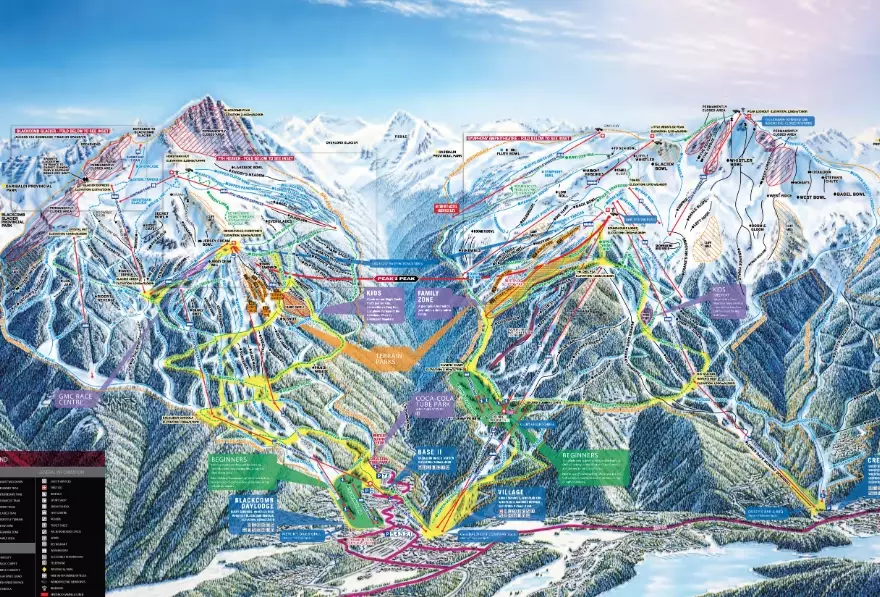
| Symbol | What It Means | Why It Matters for Beginners |
|---|---|---|
| Cliff Bands / Drop-offs (Often shown as hatch marks or jagged lines) | Steep, rocky areas that are un-skiable without expert skill. A genuine hazard. | These define the edges of safe terrain. Do not ski near them. A blue run might go around a cliff band, not over it. |
| Gladed Areas (Trees with space between them) | Wooded areas where you can ski between the trees. Difficulty varies wildly. | Even "easy" glades require good turning control and awareness. They are often marked a step harder than the open run next to them (e.g., a single black diamond glade next to a blue square open run). |
| Cliffs / Extreme Terrain (Solid black shapes or skull-and-crossbones in some regions) | Extreme, high-consequence terrain. For experts only. | Just look, don't touch. These areas are clearly marked for a reason. |
| Cat Tracks / Traverses (Thin, often flat lines) | Flat connector trails used to get from one area to another without losing elevation. | You need a bit of speed to make it across these without having to walk or skate. They can get congested. |
The Map's Supporting Cast: Lodges, Parking, and More
A good trail map isn't just about the skiing. It's about your whole day. Take a moment to locate these key spots before you head out.
- Base Area(s): Where you likely started. Find the main lodge, ticket windows, and ski school meeting spots.
- Mountain Restaurants / Lodges: Crucial for lunch, a warm-up, or a bathroom break. Nothing worse than being starving and not knowing where the nearest food is.
- First Aid / Ski Patrol: Marked with a red cross. Good to know, just in case.
- Parking Lots: So you remember where you left the car at the end of a long, tiring day.

Your Action Plan: How to Use the Map on the Mountain
So you've studied the map in the lodge. Now what? Here’s a practical, step-by-step approach to turning map knowledge into a great ski day.
Step 1: Orient Yourself
Find the "You Are Here" dot on the big map at the base. Look at the mountain in front of you. Identify a major landmark—a distinctive peak, a big chairlift, a lodge—and find it on the map. This connects the 2D paper to the 3D world.
Step 2: Pick a First Run Conservatively
Even if you're an intermediate skier, start with an easy green or a familiar-feeling blue. This lets you warm up your legs and get a feel for the snow conditions (icy? soft? choppy?), which the map can't tell you.
Step 3: Plan a Loop, Not a One-Way Trip
Don't just pick a run at random. Think in circuits. "I'll take the Sunshine Express lift up, ski the 'Meadow' green run down to its base, then take it again and try the 'Sunbeam' blue run that ends at the same place." This prevents you from getting stranded in a part of the mountain with only lifts that service scary-looking black diamonds.
Pro Tip: Use the lift lines as boundaries. If you stick to runs that end at the base of a lift you're comfortable with, you can always get back to familiar territory.
Step 4: Read the Signs, Not Just the Map
The trail map is your planning tool. The trail signs on the mountain are your real-time navigation. At every trail intersection, there will be a signpost. It will show the trail names and their difficulty symbols pointing in the correct direction. Trust these signs over your memory of the map. Trails can merge or fork in ways that are clearer on the ground than on paper.
I learned this the hard way. I was sure a particular blue run was the right way. The sign clearly said it was a black diamond. I went anyway, thinking the sign was wrong. The sign was not wrong.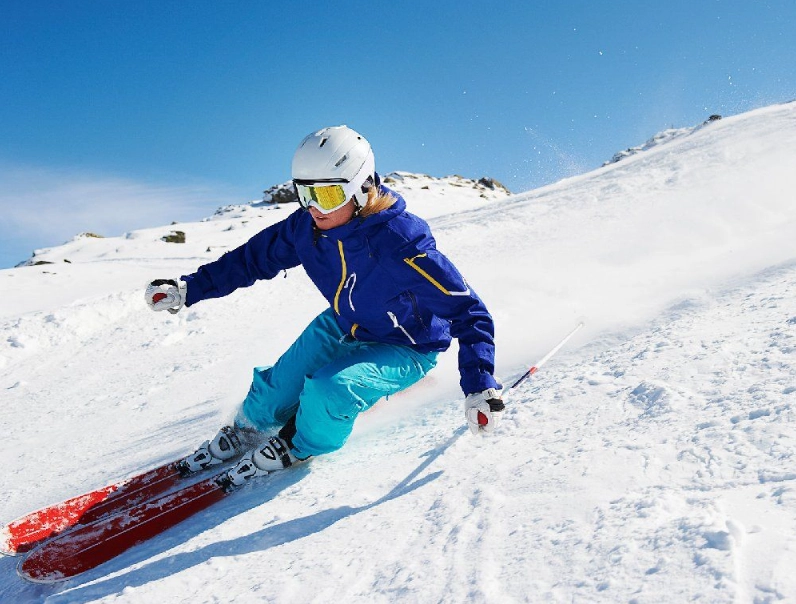
Step 5: Know Your Bail-Out Options
Before you head down a new run, especially a longer one, glance at the map to see if there are any easier alternative routes partway down. Sometimes a difficult run will have a cat track that peels off to an easier route. Knowing your escape plan builds confidence.
Answering Your Questions: The Beginner's Ski Map FAQ
Putting It All Together: A Quick Mental Checklist
Before you push off from the top of any new run, do a quick five-second check:
- Color Check: Does the trail sign match the difficulty I'm looking for?
- Name Check: Is this the trail name I intended to take?
- Terrain Glance: Can I see the top part of the run? Does it look as expected (wide, groomed, etc.)?
- Exit Check: Do I know where this run ends and what lift I'll be taking next?
That's really it. The whole process of learning how to read a ski trail map for beginners boils down to understanding a simple color code, recognizing a handful of symbols, and using the map to make a simple plan. It takes the guesswork and anxiety out of the day and puts the fun back in.
Grab a map from your resort, sit down with a hot chocolate, and trace some routes with your finger. You'll be surprised how quickly it starts to make sense. And on the mountain, that little bit of knowledge will make you feel more confident, in control, and ready to enjoy every run.
Now go out there and use that new skill. The mountains are waiting.
Related Articles
Comments
Join the discussion