Quick Navigation
- The Universal(ish) Color Code: From Green to Double Black
- What Actually Determines the Grade? It's Not Just Steepness
- The International Wildcard: It's Not the Same Everywhere
- Beyond the Basics: Other Symbols You Need to Know
- Your Action Plan: How to Use This Knowledge on the Mountain
- Common Questions About How Ski Runs Are Graded
You're standing at the top of a mountain, looking at a trail map. Green circles, blue squares, black diamonds... it can look like a secret code. I remember my first time trying to figure it out, squinting at the map while my gloves got soggy. It's not just about colors and shapes—it's a language that tells you what you're in for. A language that, frankly, isn't explained all that well when you're renting skis.
So, how are ski runs graded, really?
Let's cut through the confusion. The system exists for one main reason: safety. It's a universal (well, mostly) way to prevent a first-timer from accidentally dropping into a cliff zone. But it's also about managing expectations and fun. Knowing how are ski runs graded means you can pick terrain that matches your skill, challenge yourself safely, and avoid the kind of day that ends with you sidestepping down a mountain in sheer terror. I've been there. It's not fun.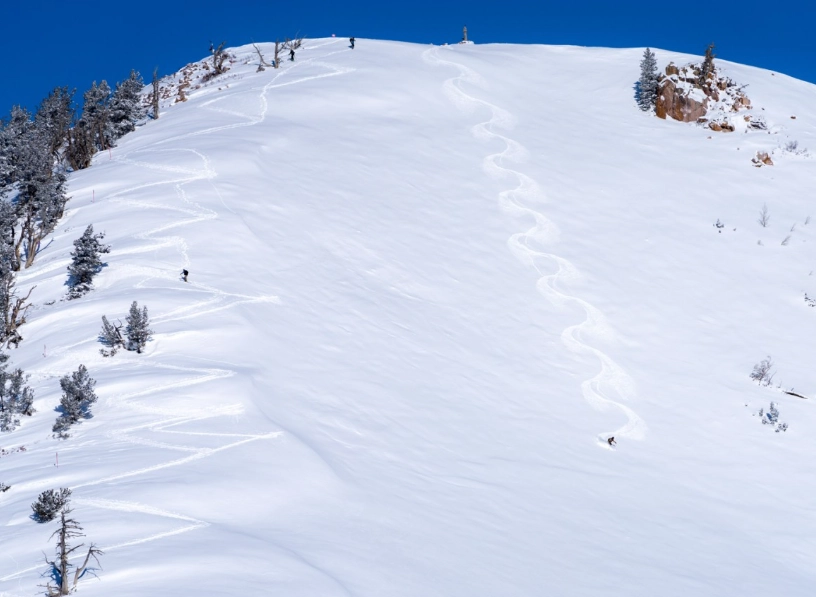
The Universal(ish) Color Code: From Green to Double Black
Most of the world uses a variation of the same basic system. It starts simple and gets more intense. Think of it like a video game difficulty selector, but with real-life consequences if you pick wrong.
Green Circle: The Beginner's Playground
These are the gentle slopes. We're talking wide-open, groomed runs with a very mild pitch—usually between 6% and 25% grade. If you can make a pizza slice (snowplow) and come to a stop, you belong here. Resorts design these to be forgiving and build confidence.
What you'll find on a green run:
- Wide corridors: Plenty of room to make turns without worrying about trees or other skiers.
- Consistent grooming: The snow is machine-packed and smooth, not bumpy or icy (in ideal conditions).
- Minimal obstacles: No sudden drops, cliffs, or tight tree sections.
- Mellow pitch: The slope is gentle enough that speed is easy to control.
My two cents? Don't rush off greens. I see so many people get bored after a day and jump to blues before they can link parallel turns. Bad move. Master controlling your speed and turning on greens first. It makes everything after so much more enjoyable.
Blue Square: The Heart of the Mountain
This is where most intermediate skiers live. Blues are the workhorse trails—groomed, but with a steeper pitch, typically ranging from 25% to 40%. This is where you start to feel the mountain's pull and need to link controlled turns to manage your speed.
Understanding how are ski runs graded as blue is key. It's not just about steepness. A blue might be narrower than a green, or have a few rolling bumps. It requires confident turning and the ability to stop on demand.
Here's the thing about blues: the range is huge. An "easy blue" at a small Midwest hill might feel like a green at a Rocky Mountain resort. And a "steep blue" at that same Rocky Mountain resort might feel like a black diamond back east. This variation is the biggest point of confusion in the whole grading system.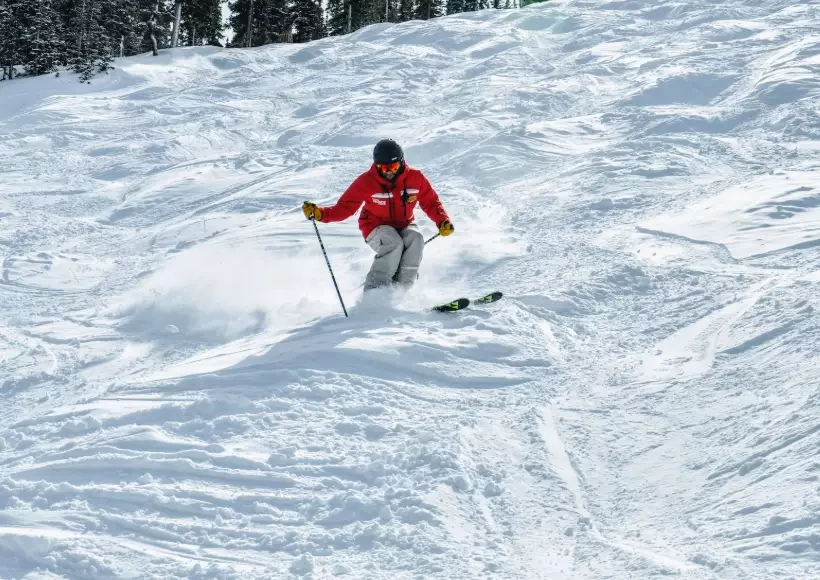
Black Diamond: Expert Territory
Now we're talking. Black diamond runs are for advanced skiers. They are steep (often 40% slope and up), may be narrow, and can feature challenging natural terrain like moguls (bumps), glades (trees), or ungroomed snow. Control is non-negotiable.
When resorts figure out how are ski runs graded as black diamonds, they're looking for terrain that demands technical skill. You need to be able to make short-radius turns on steep slopes, handle variable snow conditions (ice, crud, powder), and navigate obstacles.
- Groomed Black Diamonds: Sometimes called "cruiser blacks." These are just very steep, groomed trails. The challenge is the pitch and maintaining an edge on what can feel like a wall.
- Ungroomed/Moguled Blacks: These are the classic bump runs. They require rhythm, leg strength, and a completely different technique.
- Gladed Blacks: Trees are added to the mix. You need precision turning and the ability to pick a line through the forest.
Let's be honest: some resorts are notorious for over-grading their blacks to make the mountain seem tougher. Others are infamous for under-grading them, leading to nasty surprises. It's a local culture thing.
Double Black Diamond: The Extreme Limit
This is the pinnacle of in-bounds skiing. These runs feature the most extreme and committing terrain a resort manages: near-vertical chutes, mandatory cliffs or drops, dense trees, exposed rocks, and often a combination of all the above. They are not groomed. Avalanche control work is done, but natural hazards abound.
A double black is a serious undertaking. It requires expert-level skills in all conditions, mountain awareness, and often local knowledge. Falling can have serious consequences. Resorts use this rating to say: "You are on your own. We provide the lift access, but you assume all risk."
What Actually Determines the Grade? It's Not Just Steepness
So, when ski area managers sit down to decide how are ski runs graded on their mountain, what's on their checklist? It's a multi-factor equation.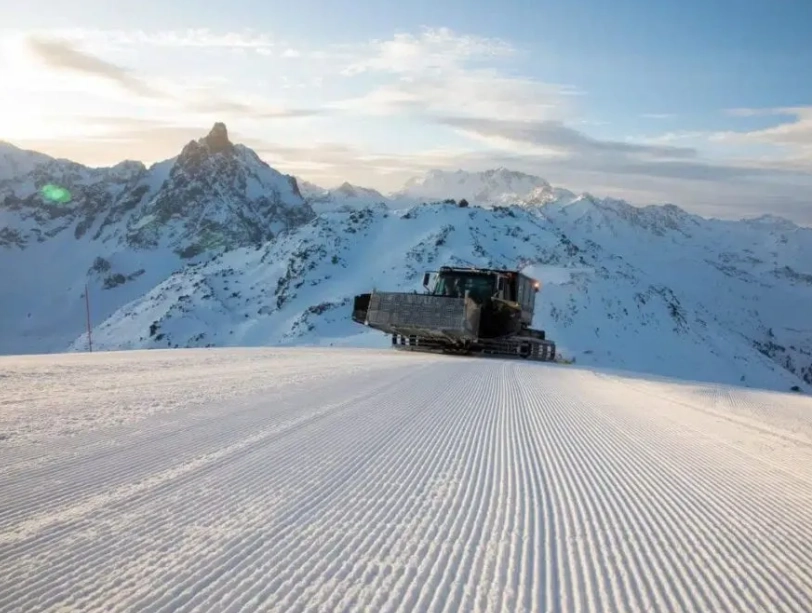
- Average Slope Gradient: This is the big one. Measured in percent, not degrees. A 100% slope is a 45-degree angle. Greens are shallow, blues are moderate, blacks are steep, double blacks are often 45 degrees or more.
- Terrain Features: Is it a smooth, wide boulevard? Or is it littered with moguls, rocks, trees, and cliff bands? The presence of natural obstacles instantly bumps up the difficulty.
- Width and Trail Configuration: A narrow trail on a steep slope is harder than a wide one at the same angle. There's less room for error and fewer escape routes.
- Snow Conditions & Grooming: A run is graded assuming "typical" conditions. A groomed blue becomes a different beast if it's icy. A moguled black is easier in soft spring snow than in frozen, rutted bumps. The grade is static, but the actual difficulty is dynamic.
- Exposure & Consequences: Is the run on an open face, or is it a chute with rock walls on both sides? Is there a cliff below if you fall? The mental factor and risk of a fall play a huge role, especially for double blacks.
Here's a quick comparison of how these factors stack up:
| Difficulty | Typical Slope | Terrain | Width | Grooming | Mental Factor |
|---|---|---|---|---|---|
| Green Circle | 6-25% | Open, smooth | Very Wide | Always groomed | Low stress |
| Blue Square | 25-40% | Mostly open, some rolls | Wide to Moderate | Usually groomed | Moderate focus needed |
| Black Diamond | 40%+ | Moguls, trees, variable | Moderate to Narrow | Often ungroomed | High focus, some anxiety |
| Double Black Diamond | Often 45%+ | Cliffs, tight trees, exposure | Often very narrow | Never groomed | High consequence, intense focus |
See? It's a mix. A super steep but wide, groomed run might be a black. A less steep but narrow, mogul-filled, tree-lined run might also be a black. They test different skills.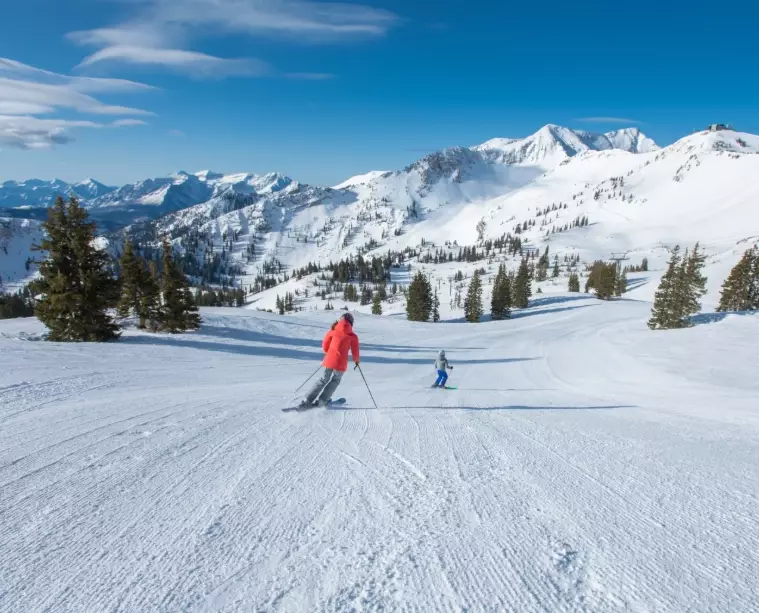
The International Wildcard: It's Not the Same Everywhere
This is where the "universal" system breaks down. If you travel to ski, pay close attention. The way how are ski runs graded in North America is different from Europe, which is different from Japan.
North America (USA & Canada)
This is the system we've been describing: Green, Blue, Black, Double Black. It's the most structured. The National Ski Areas Association (NSAA) provides guidelines, but each resort has final say. Generally, it's conservative—they'd rather over-rate a run than under-rate it for liability reasons.
Europe (France, Switzerland, Austria, Italy, etc.)
They use a color system too, but it's shifted. Their scale is typically:
- Green: Very rare, only for absolute beginners near the base.
- Blue: Easy. Similar to a North American easy blue or even a green.
- Red: Intermediate. This is the most common grade. A European red is roughly equivalent to a North American blue or easy black.
- Black: Difficult. Equivalent to a North American single or even double black diamond. They are less common and genuinely challenging.
The European philosophy is different. Trails are less manicured, more about following the natural fall line of the mountain. There's an expectation of more skill from the average skier. Also, off-piste (ungroomed, unmarked terrain between runs) is often not graded at all—you're expected to assess it yourself, which is a whole other level of responsibility.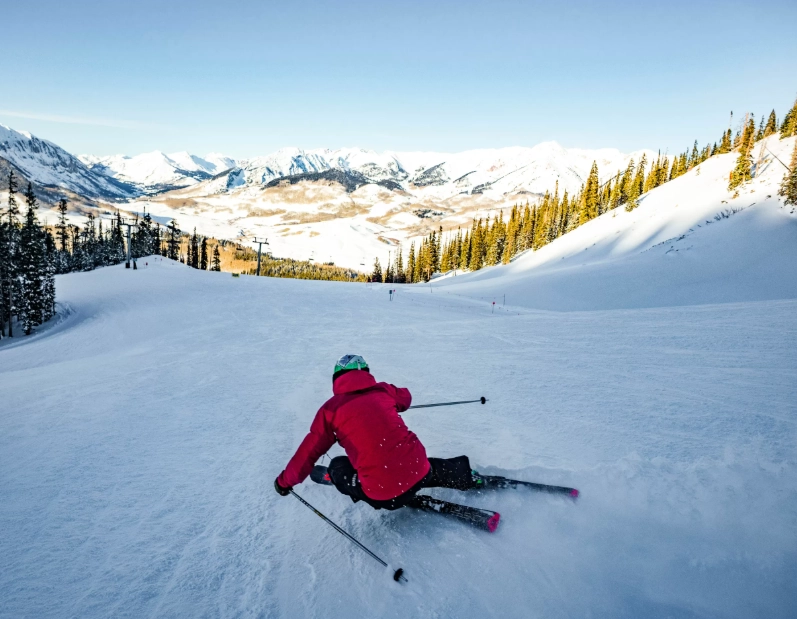
Japan
Japan uses a similar system to the West (Green, Red, Black), but with its own character. The snow is famously deep and light, which can make steep terrain more forgiving for advanced skiers but incredibly taxing for intermediates. A Japanese "Red" (intermediate) run in waist-deep powder can feel like an expert challenge if you're not used to it.
Beyond the Basics: Other Symbols You Need to Know
The trail map has more to say than just circles and diamonds. Here's a decoder ring:
- Orange Oval / Double Orange Diamond: Often used for Freestyle Terrain Parks. These are graded separately for features like small, medium, and large jumps, rails, and pipes. The size of the features is key.
- Yellow / Brown Lines: Sometimes indicates a "progressive" or "family" zone, or a slow-skiing area.
- Dashed Line vs. Solid Line: A dashed line often means the trail is not groomed regularly, or is a hiking access route to sidecountry.
- EX or E: Sometimes used instead of Double Black Diamond for "Extreme."
- Border Symbols: A run with a black diamond border but a green circle inside might be a beginner run that merges with or crosses an expert run. Pay attention!
Learning how are ski runs graded means learning this visual language. It prevents you from skiing into a terrain park by accident when you're just looking for a cruiser.
Your Action Plan: How to Use This Knowledge on the Mountain
Okay, theory is great, but what do you do with it? Here's a step-by-step guide for picking your runs.
Step 1: Be Brutally Honest About Your Skill Level. Are you a cautious beginner? A confident intermediate who can parallel turn on most blues? An advanced skier comfortable on most groomed blacks? Don't let ego write a check your legs can't cash.
Step 2: Read the Map Like a Pro. Look at the trail density. A mountain with mostly black diamonds is a different beast than one with a wide base of blues. Find the lifts that serve your preferred difficulty. See how the trails connect—you don't want to get funneled onto something over your head.
Step 3: Start Conservatively. On a new mountain, always warm up on a run you know will be easy for you. Get a feel for the snow conditions that day. Is it icy? Chunky? Perfect corduroy? This changes everything. A blue on ice can be harder than a black in soft snow.
Step 4: Scout from the Lift. This is the best free advice you'll get. As you ride up, watch the skiers on the runs below. How steep does it look? How bumped up is it? How are people handling it? You get a live preview.
Step 5: Ask Questions. Talk to the ski school, the lifties, or the folks at the rental shop. "I'm comfortable on blues, looking for a challenge but not a nightmare. What's a good stepping-stone black here?" Locals know the mountain's personality.
Step 6: Progress Gradually. Moving from blue to black? Don't pick the gnarliest one. Find the "easiest" black on the map—often the widest, most groomed one. Get a taste. Then work your way up.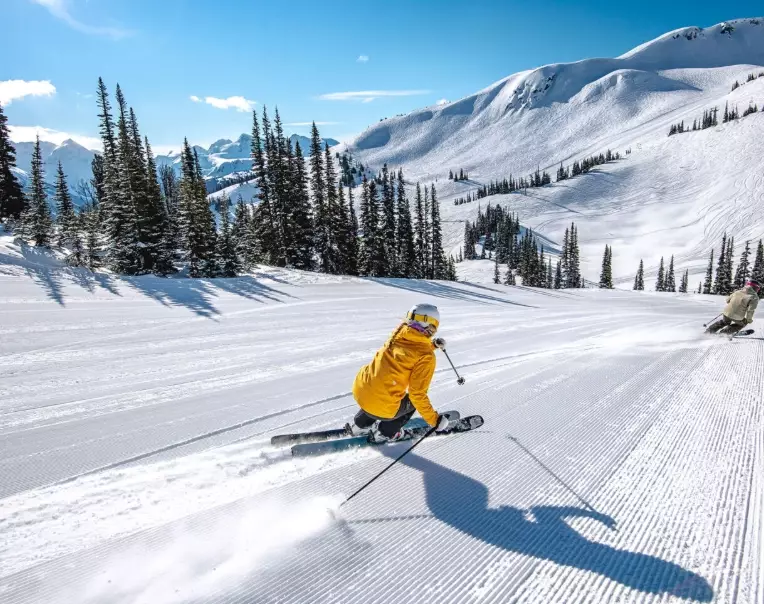
Common Questions About How Ski Runs Are Graded
The Final Word: Respect the System, But Trust Your Eyes
Understanding how are ski runs graded is one of the most useful bits of knowledge you can have as a skier or snowboarder. It's the framework for a safe, fun day. But don't become a slave to it.
The colored shapes on the map are a promise from the resort about the general nature of the terrain. But you are responsible for your own safety based on the actual conditions you find. If you get to the top of a blue and it looks terrifyingly icy and steep, it's okay to turn around and download on the lift or find another way down. No one will judge you (and if they do, they're idiots).
The goal is to have fun, not to collect trail symbols like Pokémon. Use the grading system as your guide, use your own judgment as your final authority, and you'll have a lifetime of great days on the mountain. Now go look at a trail map. It'll make a whole lot more sense.
Related Articles




Comments
Join the discussion