Quick Navigation
- Forget One Price. What's YOUR Skiing Profile?
- The Hidden Costs (It's Never *Just* the Skis)
- New vs. Last Season's Model vs. Used: The Value Play
- What Are You Actually Paying For? The Materials Breakdown
- Renting vs. Buying: The Break-Even Point
- Common Questions (The Stuff You're Secretly Searching)
- Putting It All Together: Your Decision Checklist
Alright, let's tackle the question that's probably bouncing around your head right now. How much should I spend on a pair of skis? Let's be real, that's a tough question. It's like asking "how much should I spend on a car?" The answer, frustratingly, is always "it depends." But here's the thing – I'm not going to leave you hanging with just that. We're going to unpack what "it depends" really means for you, specifically.
I remember my first time walking into a ski shop, eyes glazing over at the wall of colorful planks. The prices ranged from "okay, that's reasonable" to "you want HOW much for two sticks of wood and plastic?" I made a mistake back then. I went too cheap, thinking all skis were basically the same. They weren't. I spent a season fighting my equipment instead of enjoying the mountain.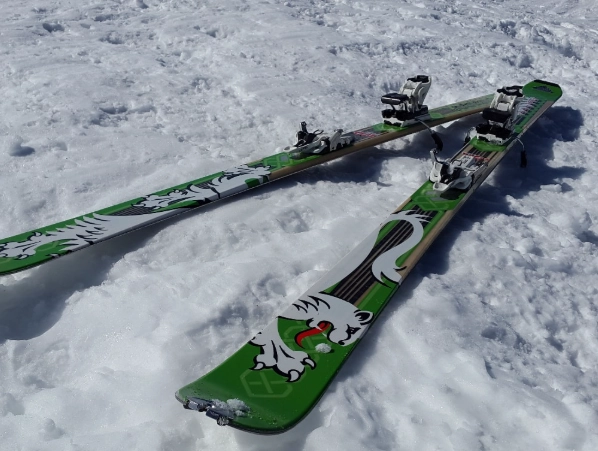
The Core Idea: The right amount to spend is the number that gets you the ski that matches your ability, your goals, and how often you'll use them, without paying for technology you can't utilize or don't need. It's about value, not just price.
So, let's break this down without the marketing fluff. We'll look at it from every angle – beginner, expert, weekend warrior, backcountry enthusiast. By the end, you'll have a solid number in mind, or at least a very clear range. And you'll know exactly why that's your number.
Forget One Price. What's YOUR Skiing Profile?
Before we talk dollars, we need to talk about you. Throwing out a number like "$700 is the sweet spot" is useless if you ski three days a year versus thirty. The single biggest factor in deciding how much you should spend on a pair of skis is how you'll use them.
Ask yourself these questions honestly:
- How many days per season do I actually ski? (Be realistic, not optimistic!)
- What's my current skill level? Not what I hope to be next year, but what I am now.
- Where do I ski most? Icy East Coast groomers? Deep powder in Utah? A bit of everything at a local hill?
- What do I want out of my ski? Forgiveness? Stability at high speed? Playfulness in the trees?
Your answers here will do more to narrow down your budget than anything else. A ski for 50+ days a year in variable conditions is a different financial category than a ski for a single annual trip.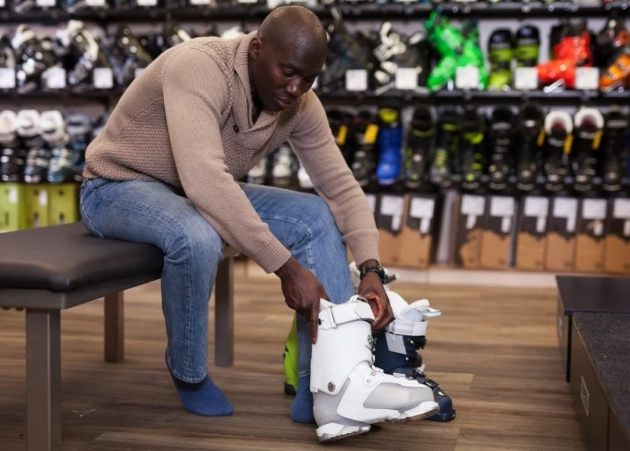
The Big Budget Breakdown: From First-Timer to Fanatic
Okay, here's a practical table. This is where we start to translate your profile into actual numbers. These are estimated price ranges for skis only (bindings often add $200-$400). Prices are in USD and reflect typical new, current-season models from major brands.
| Skier Profile | Typical Experience Level | Key Needs | Estimated Ski Price Range (New) | Why This Range? |
|---|---|---|---|---|
| The Newbie / Casual Vacationer | Beginner to Low-Intermediate. Skis 1-7 days/year. | Forgiveness, ease of turning, confidence-building. | $300 - $500 | You need a friendly, durable tool to learn on. High-performance materials aren't necessary yet. This range offers great value-focused beginner/intermediate models. |
| The Developing Intermediate / Weekend Regular | Solid Intermediate. Links parallel turns, explores blue runs. Skis 8-20 days/year. | Versatility, all-mountain performance, progression. | $500 - $750 | The most competitive and popular segment. You're paying for better construction (lighter wood cores, some metal laminates) that offers more stability and performance across more conditions. |
| The Advanced All-Mountain Skier | Advanced. Confident on all groomed terrain, ventures off-piste. Skis 20+ days/year. | Power, stability at speed, dampening, precision. | $750 - $1,100 | Here you get sophisticated multi-material layups (metal, carbon, various cores) that provide the damp, powerful feel experts demand. You're paying for advanced engineering that handles speed and chop. |
| The Specialist / Expert | Expert to Pro. Seeks specific conditions: deep powder, hardcore carving, backcountry. | Top-tier materials, niche design, ultra-lightweight (for touring). | $1,000 - $1,400+ | Peak R&D and exotic materials (high-grade carbon, complex titanal layouts, specialized core profiles). For the skier who needs a specific, uncompromising tool. |
See how that works? Your frequency and skill level funnel you into a bracket. Now, that bracket isn't a prison. You might find a last-season model for less, or a great sale. But it gives you a realistic target. If you're a weekend regular, dropping $1,200 on skis is probably overkill. Conversely, if you're charging hard every weekend, a $400 ski will hold you back and may not last.
So, how much should I spend on a pair of skis? Look at the table. Find yourself.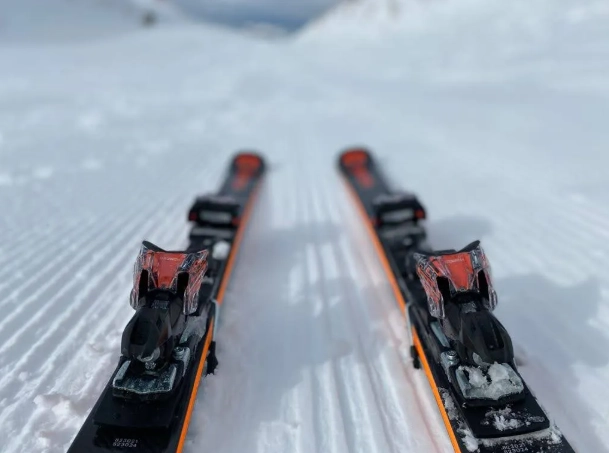
The Hidden Costs (It's Never *Just* the Skis)
This is where budgets get blown. You see a ski for $699 and think "great, that's my budget." Not so fast. A ski without a binding is just a fancy decoration. You need to factor in the complete package.
- Bindings: Plan on $200 to $400 for a quality pair of alpine bindings. They're crucial for safety and performance. Don't cheap out here. A good shop will help you match the binding's din range and functionality to your ski and ability.
- Mounting: Usually costs $50-$80 to have the bindings professionally mounted to the skis. Do not skip this. A poor mount can ruin a ski's feel and is a safety risk.
- Skis + Bindings Packages: Often the best value. Many brands and shops sell "system skis" or package deals where the binding is integrated or discounted. This can save you $100+ versus buying separately.
Budget Pitfall: If your total budget is $800, you cannot buy an $800 ski. You need an $800 ski package. That means the ski itself likely needs to be in the $500-$600 range to leave room for bindings and mounting. This is the #1 mistake people make when planning their spend.
And let's not forget boots. I'll say it loud: Spend your money on boots first. The best ski in the world feels terrible with a bad, ill-fitting boot. If your total gear budget is tight, allocate more to a professional boot fitting and a quality boot. You can often get a better deal on a previous season's ski model than you can on boots.
New vs. Last Season's Model vs. Used: The Value Play
Here's a secret: ski technology does not have a yearly revolution. The changes from the 2024 model to the 2025 model of the same ski are often cosmetic—a new top sheet graphic. Sometimes there's a slight tweak in construction, but rarely a game-changer.
This is your biggest lever for value.
- Buy Last Season's Model: You can routinely save 20-40%. The ski is functionally identical 99% of the time. I almost always buy the previous year's model. It's the smartest way to answer "how much should I spend on a pair of skis?" with "less than I thought."
- Pre-Season Sales (Spring): Shops clear out inventory in April/May. This is the golden hour for deals.
- Used Skis: A minefield, but can yield gems. Be extremely cautious. Check for core shots (deep gouges into the wood), delamination (layers separating), and base damage. A heavily tuned ski may have lost a lot of its base material and life. Best for a beater pair or a project ski, not your primary ride.
My personal strategy? I decide on the exact model I want, then I hunt for last year's version online or at local shop clearance sales. I've easily saved $300+ per pair doing this.
What Are You Actually Paying For? The Materials Breakdown
Ever wonder why one ski costs $400 and another costs $900? It's not just brand name. It's what's inside. Knowing this helps you see the value (or lack thereof) in a price tag.
Quick Material Guide: - Wood Core (Poplar, Paulownia, Ash): The soul of the ski. Lighter woods (Paulownia) are more expensive and used in higher-end/touring skis. Denser woods (Ash) add dampness and power. - Metal Layers (Titanal): The big differentiator. Adds massive dampening (quieting vibrations), stability, and power. Skis with metal are almost always in the $700+ range. If you ski fast or on hard snow, you want some metal. - Carbon Fiber: Adds stiffness and "pop" (energy) while being very light. Often used in racing or lightweight freestyle/powder skis. - Fiberglass Layers: The standard. Provides flex and torsional stiffness. In almost every ski. - Base Material (Sintered vs. Extruded): Sintered bases are more porous, hold wax better, and are faster. They're on better skis. Extruded bases are slower but more durable and cheap, common on entry-level models.
So, when you move up a price bracket, you're often paying for the addition of metal, higher-quality/lighter core materials, and better base material. The question is: do you need those things? An intermediate skier on soft snow might not need metal—it could make the ski too demanding. But an advanced skier on firm snow will feel the difference immediately and find it worth every penny.
That's the real heart of the question, "how much should I spend on a pair of skis?" You're spending on the materials that match the forces you generate.
Renting vs. Buying: The Break-Even Point
This is pure math, and it's clarifying. Let's say a decent daily rental package (skis & boots) costs you $60 per day at a resort.
If you buy a solid intermediate setup (ski + binding package for $700, boots for $500 = $1,200 total), your break-even point is 20 days of skiing ($1,200 / $60 = 20).
If you ski more than 20 days over the life of the gear (which can easily be 5+ years with care), buying is cheaper. You also get the huge benefits of consistent, well-fitting equipment.
If you ski one week a year? Renting high-performance demos might be the smarter financial and experiential play. You get to try the latest gear every time.
Common Questions (The Stuff You're Secretly Searching)
Is it worth spending over $1,000 on skis?
For most recreational skiers, no. The law of diminishing returns kicks in hard above that point. You're paying for marginal gains in weight, ultra-niche designs, or pro-level construction that you might not fully appreciate. The $600-$900 range is where the sweet spot lives for advanced skiers who will actually use the performance.
Can I spend too LITTLE on skis?
Absolutely. A sub-$300 new ski is often a "rental fleet" construction. Heavy, dead-feeling, with a basic extruded base that doesn't hold wax. It will hinder your progress and make skiing less enjoyable. It's a false economy. If your budget is truly that low, look for a high-quality used ski in the $300-$500 *original* price range.
Should skis or boots cost more?
Boots, boots, boots. I can't stress this enough. A $1,000 ski with a $300 boot will feel worse than a $600 ski with a $700 boot. Your connection to the ski is through the boot. Prioritize a professional fitting and a quality boot from a dedicated boot fitter. Resources like the guidelines from FIS (the International Ski Federation) emphasize equipment safety and proper fit, which starts with the boot. A good shop will be your best resource here.
How long do skis last?
With proper care (storage, edge tuning, base repairs), a good pair of skis can last 100-150 ski days before they start to feel "dead" (the materials lose their pop). For a typical skier, that's 5-8 seasons. This makes the investment easier to stomach when spread over many years of use.
Putting It All Together: Your Decision Checklist
So, you're ready to pull the trigger. Let's walk through the final steps to lock in your answer to "how much should I spend on a pair of skis?"
- Set Your TOTAL Package Budget: Skis + Bindings + Mounting.
- Identify Your Profile: Use the table above. Be brutally honest.
- Research Models in That Range: Read reviews from sources like Outside or Blister Review that do deep, long-term gear tests. Look for last year's versions of those models.
- Find a Reputable Shop: Even if you buy online, consider paying a local shop for a mounting and a consultation. Their expertise is worth it.
- Buy for Now: Don't "buy up" two skill levels hoping to grow into it. That's a recipe for a frustrating season. You can always sell and upgrade in a few years.
The Final Answer (as much as there can be one): For the vast majority of skiers—the developing intermediates and advanced recreational skiers who hit the slopes 10-30 days a year—planning to spend $600 to $900 on a new ski/binding package (or the equivalent for a last-season model) will get you a fantastic, versatile, and durable tool that will elevate your skiing for years. That's the true sweet spot where performance, quality, and value intersect.
There you have it. No magic number, but a clear framework. How much should I spend on a pair of skis? However much it costs to get the right tool for the job you're asking it to do. Don't overbuy. Don't underbuy. Just buy smart. Now go find your sticks.
Related Articles
Comments
Join the discussion