In This Guide
Let's get straight to it. You're standing at the top of a run, maybe it's a bit steeper than you're comfortable with, or maybe the snow is that weird, choppy stuff from yesterday. You push off, and that thought flashes through your mind: I wish these skis were just a bit easier to turn. We've all been there. The quest for that effortless, flowing carve isn't just about buying the most expensive pair. It's a puzzle, and the pieces are a mix of the gear under your feet and the person standing on top of them.
So, what makes skis easier to turn? If I had to give you the one-second answer, I'd say it's a combination of ski design (things like sidecut and flex) and your technique (how you pressure and steer them). But that's selling it short. It's like asking what makes a car handle well – the engine matters, but so do the tires, the suspension, and, crucially, the driver.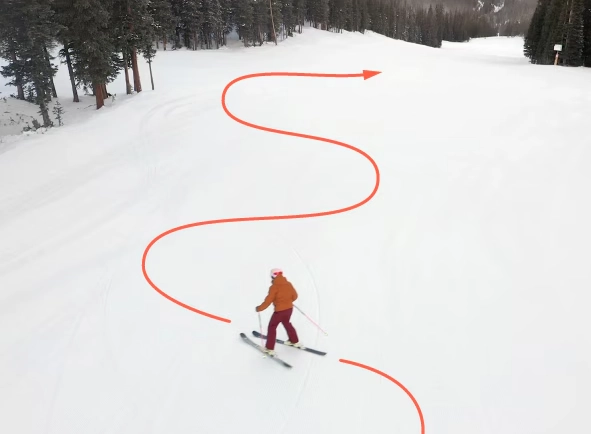
I remember renting a pair of ultra-stiff, racing skis as an intermediate skier years ago. Big mistake. They felt like planks of wood bolted to my boots. Every turn was a battle. That experience taught me that "easy turning" is relative. What's easy for a pro racer is a nightmare for someone still linking their parallel turns. This guide is here to unpack all of it, from the physics in the ski factory to the finesse in your ankles.
The Ski Itself: Design Factors That Answer "What Makes Skis Easier to Turn?"
This is where most people start looking, and for good reason. The ski's construction is the foundation. Manufacturers tweak these variables to create skis for different purposes. A powder ski and a slalom ski turn differently because they're built differently. Let's break down the big ones.
Sidecut Radius: The Arch-Nemesis of the Straight Line
The sidecut is that hourglass shape – wider at the tip and tail, narrower at the waist. It's the single most important design feature for initiating a turn. When you roll the ski onto its edge, this shape forces it to bend into an arc. A deeper sidecut (a bigger difference between tip/waist/tail widths) creates a tighter, more pronounced arc.
Think of it like this:
A ski with a short sidecut radius (say, 12 meters) is like a sports car. It wants to turn sharply and quickly. It's nimble. This is classic for slalom skis or many frontside carvers. A ski with a long sidecut radius (18 meters or more) is like a luxury sedan on the highway. It prefers longer, sweeping, more gradual turns. It feels stable at speed but isn't as quick to flick side-to-side.
Key Takeaway: Generally, a shorter sidecut radius makes a ski easier to initiate into a turn, especially at lower speeds and on groomed snow. It gives you that "hooky" feeling where the ski seems to want to turn for you. For beginners or those who stick to groomed runs, a ski with a moderate to short radius (14-17m) is often a friendlier choice.
Waist Width: The Platform for Your Edge
The waist width, measured at the ski's narrowest point underfoot, dictates how far you have to lean to get the ski up on its edge. A narrower waist (e.g., 75-85mm) requires less angulation and effort to get the ski up on a high edge angle. This makes carving on hard snow feel more direct and, yes, easier.
A wider waist (100mm+), common in all-mountain and powder skis, provides more float in soft snow. The trade-off? You need a more pronounced body movement to roll that wider platform onto its edge on firm snow. It can feel a bit more sluggish when you're trying to make quick, short turns on a groomer. So, while width helps in powder, it can be a factor that makes skis less easy to turn on hardpack if you're not used to it.
Camber & Rocker: The Ski's Personality Profile
This is about the ski's profile when it's lying flat on the ground.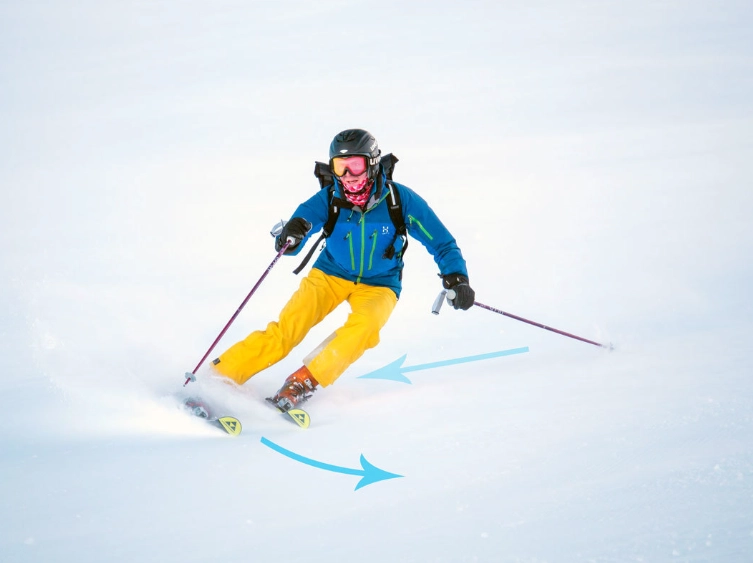
- Traditional Camber: The middle of the ski is off the snow, with contact points at the tip and tail. This is like a drawn bow. When you pressure it in a turn, it stores energy and snaps back, giving you powerful, energetic carves. It provides great edge hold on hard snow. However, a full camber ski can feel "hooky" and less forgiving if you're not centered – it wants to turn now.
- Rocker (or Reverse Camber): The tips and tails rise off the snow, with the middle making contact. This design makes initiating a turn incredibly easy. The raised tip prevents it from diving in soft snow and reduces the chance of catching an edge. It creates a pivot point underfoot, so the ski feels looser and more surfy. The downside? It can feel less stable at very high speeds and doesn't have the same energetic "pop" out of a turn as camber.
Most modern skis use a hybrid. Something like "camber with rocker tips and tails" is the sweet spot for many. The camber underfoot gives you edge hold and power, while the rockered ends make initiation smoother and improve float. This combo is a huge part of what makes modern all-mountain skis so versatile and, frankly, easier to handle in mixed conditions than skis from 20 years ago.
Flex: The Conversation Between You and the Snow
Flex is how stiff or soft the ski is. It's not uniform – a ski can have a soft tip, medium stiffness underfoot, and a stiff tail, or any other combination.
- Softer Flex: Easier to bend and twist. This makes the ski more forgiving and easier to initiate into a turn, especially at slower speeds. It's more tolerant of imperfect technique (like being in the backseat). Great for beginners, lighter skiers, or those who enjoy a playful, surfy style.
- Stiffer Flex: Requires more force to bend. It provides more stability at high speeds, better grip on ice, and more powerful energy transfer. However, it demands more precise, aggressive input from the skier. A ski that's too stiff for your ability or weight will feel unresponsive and hard to turn – just like my rental nightmare.
My personal rule of thumb? When in doubt, err on the side of slightly softer. A ski that's a bit too soft will still be fun and manageable. A ski that's too stiff can ruin your day until your legs are strong enough to drive it.
It's Not Just the Ski: The Skier's Role in the Equation
You can have the most perfectly designed, easy-turning ski on the planet, and if your technique is working against it, you'll struggle. This is the part that often gets less attention in gear reviews, but it's just as critical. Understanding what makes skis easier to turn involves understanding what you need to do.
Pressure Management: The Gas and Brake Pedal
Turning a ski isn't just about steering it with your feet. It's about loading and unloading it. At the start of a turn, you gently release pressure (unweight) to allow the ski to pivot onto its new edge. As you cross the fall line, you progressively increase pressure on the outside ski, bending it into that arc defined by the sidecut. At the end of the turn, you release pressure again to transition to the next one.
If you're constantly leaning back (in the backseat), all your weight is on the tails. The tips are light and can't initiate or grip properly. The ski feels unstable and hard to control. Getting forward, with pressure on the front of your boots, allows the shovel of the ski to engage and start the turn for you. This is fundamental.
Edging vs. Skidding: The Clean Turn
A clean, carved turn where the edge slices through the snow requires less effort to maintain than a skidded turn where you're pushing the tails out to slow down. Skidding is a useful braking tool, but it's inefficient and tiring if you do it all the time. Learning to trust your edges and commit to the carve is a game-changer. It feels smoother, faster, and yes, easier on your legs once you get the hang of it.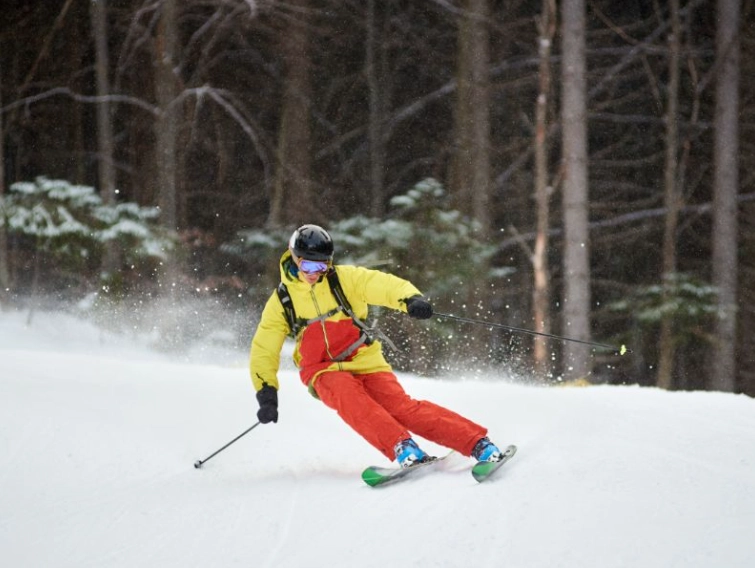
Pro Tip: A great drill is to try linking turns on a gentle slope using only your edges – no skidding at all. Focus on rolling your ankles and knees inward to set the edge, not swinging your hips. You'll feel the ski lock in and propel you across the hill. That's the feeling of a ski working with you.
Boots and Bindings: The Critical Middlemen
Your boots are your direct interface with the ski. If they don't fit properly or have a flex that doesn't match your ability, nothing else matters. A boot that's too stiff won't allow you to flex forward easily to pressure the tips. A boot that's too loose will create a lag between your movement and the ski's response.
Bindings also play a subtle role. Their job is to release during a crash, but their elasticity and stand height affect how directly you feel the snow and transmit energy to the ski. A binding with good elasticity allows the ski to flex and rebound naturally without causing a premature release in a bumpy turn.
The Third Player: Snow Conditions and Tuning
Ever notice your skis feel amazing one day and terrible the next? The snow is a huge variable. What makes skis easier to turn on hard, icy corduroy is different from what makes them easy in deep powder.
| Snow Condition | What Makes Turning Easier | Ski Design/Setup Preference |
|---|---|---|
| Hardpack/Ice | Sharp edges, precise edging, confident pressure. | Narrower waist, traditional camber, sharp edges (1-3 degree side bevel). |
| Soft/Groomed Snow | Smooth pressure transitions, balanced stance. | Most skis perform well here. A versatile all-mountain profile shines. |
| Deep Powder | Floatation, pivotability, balanced stance. | Wider waist, significant tip rocker, set bindings slightly back. |
| Crud/Chopped Up Snow | Stability, damping, power to punch through. | Stiffer flex, some rocker in the tip to deflect obstacles. |
| Slush/Wet Snow | Aggressive base structure to shed water, stable platform. | A ski that isn't too soft, well-waxed base. |
And then there's tuning. Dull edges on hard snow make turning a terrifying slip-fest. A dry, unwaxed base in sticky spring snow will feel like you have anchors on your feet. Regular maintenance – keeping edges sharp and bases waxed – is non-negotiable if you want predictable, easy performance. The American Society for Testing and Materials (ASTM) sets standards for ski safety, which indirectly influences how bindings are calibrated and how equipment performs predictably.
Putting It All Together: Choosing Skis for Easier Turning
So, you're in the market. Based on everything we've talked about, here's a simplified cheat sheet for what to look for if your primary goal is a ski that feels accessible and easy to turn:
- For Beginners/Intermediates: Look for a ski with a moderate sidecut radius (14-17m), a waist width between 75-85mm for on-piste, or up to 90-95mm for some all-mountain versatility. Prioritize a soft-to-medium flex and a profile that includes some rocker in the tip (camber/rocker hybrid). This combo forgives mistakes and helps initiation.
- For Advanced Skiers Wanting Playfulness: You might go for a slightly softer flex than a pure race ski, a mid-90s waist width, and a rocker-camber-rocker profile. This gives you easy turn initiation and pivotability in bumps or trees while still holding a good edge.
- For Hardpack Carving Enthusiasts: Here, you lean towards performance. A shorter radius (12-15m), narrow waist (65-75mm), traditional camber or camber with slight early rise tip, and a stiffer flex. This setup demands good technique but rewards it with laser-precise, energetic turns.
Remember, demoing is king. A ski's feel on snow is the ultimate test. What the spec sheet says and what your legs feel can be different.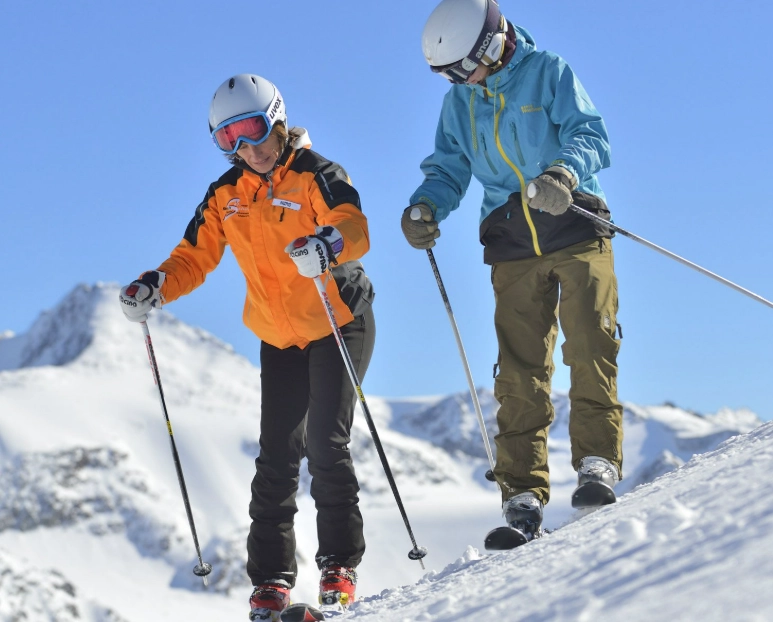
Common Questions About What Makes Skis Easier to Turn
Let's tackle some of the specific questions that pop up in forums and lift lines.
Are shorter skis easier to turn?
Generally, yes – to a point. A shorter ski has a shorter turning radius (all else being equal) and is physically easier to pivot and maneuver, especially at slow speeds. This is why beginners often start on shorter skis. However, a ski that's too short for your height and weight will become unstable and chattery as you gain speed. Modern ski design, with rocker, has also changed this rule. A longer ski with rocker can have a similar effective edge length to a shorter traditional ski, offering both stability and ease of initiation.
Do lighter skis turn easier?
Lighter skis are easier to swing around in the air and can feel quicker from turn to turn, which can create a sensation of easier turning. However, lightweight construction can sometimes come at the cost of damping and stability. A heavier ski might feel more planted and smooth through rough snow, making it feel easier to control at speed, even if it requires more muscle to flick around. It's a trade-off.
How does binding placement affect turning?
Most skis have a "recommended" or "boot center" line. Mounting your bindings on this line gives you the ski's designed balance. Mounting them forward (towards the tip) makes the ski feel more nimble and quicker to initiate turns, as you're putting more ski behind you. Mounting them back can improve float in powder but may make the tips feel light and harder to initiate on hard snow. Unless you're experimenting for a specific reason, stick to the recommended line.
Can my technique make any ski easy to turn?
Good technique can make a huge range of skis perform well. A world-class skier can make a stiff, long-radius ski dance. But for the rest of us, there's a limit. Poorly matched equipment will fight you. Good technique maximizes what a ski is designed to do. It's the synergy between the two that creates that magical, easy feeling. Investing in a lesson is often more effective than buying new skis if your technique is the limiting factor.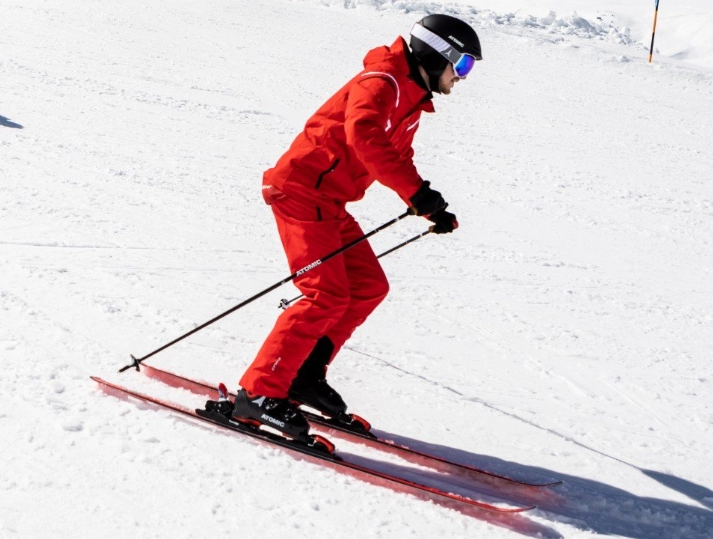
Final Reality Check: There's no single magic bullet. The quest to understand what makes skis easier to turn reveals that it's a system. The ski's design (sidecut, flex, profile) sets the potential. The skier's technique (pressure, edging, stance) unlocks that potential. And the snow conditions and equipment tune define the daily reality. Ignore any one piece, and the system breaks down.
Focus on finding a ski that matches your typical terrain and ability level. Get boots that fit perfectly. Keep them tuned. And work on the fundamentals of your skiing – getting forward, managing pressure, and committing to the edge. When all those pieces click, that's when you stop thinking about what makes skis easier to turn, and you just… turn.
Related Articles

Comments
Join the discussion