Your Ski Fitness Roadmap
- Why Bother with Ski Fitness? (It's Not Just About Looking Good)
- The Pillars of Ski-Specific Fitness
- Your 8-Week Beginner's At-Home Ski Fitness Blueprint
- The Essential At-Home Ski Exercise Library
- Common Beginner Mistakes (I've Made Most of These)
- How Do You Know It's Working?
- Answering Your Burning Questions (FAQ)
- Final Thought: Just Start
Let's be real. The idea of ski fitness training at home for beginners can sound a bit… optimistic. You picture yourself needing a full gym, fancy machines, maybe even a personal trainer shouting encouragement. I thought the same thing. But after tweaking my back one season from being totally unprepared (a classic beginner mistake), I realized I couldn't afford to skip it anymore. And guess what? You don't need any of that fancy stuff.
What you really need is to understand what skiing asks of your body, and then meet those demands with simple, targeted moves. This isn't about getting beach-ready; it's about building a body that can handle variable terrain, absorb bumps, and keep you upright and having fun all day long. Forget the complex jargon. This guide is about actionable ski fitness training at home for beginners who just want to ski better and hurt less.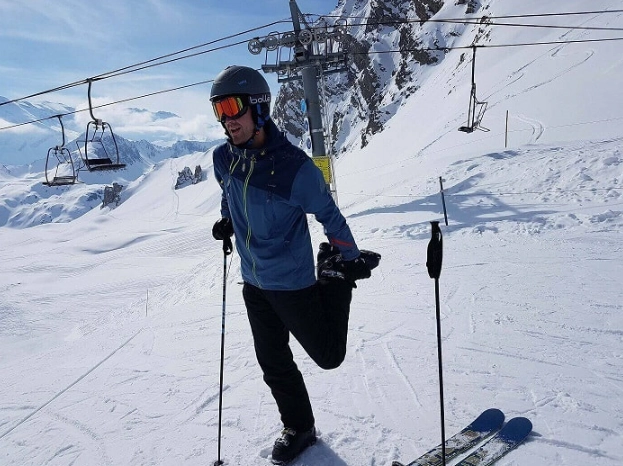
The Core Idea: Skiing is a dynamic sport. It's not just strong legs. It's legs that can hold a bent position for minutes (endurance). It's a core that stays tight while your lower body moves (stability). It's ankles and hips that can adjust to every little bump (balance). Your home ski fitness training needs to mimic these demands.
Why Bother with Ski Fitness? (It's Not Just About Looking Good)
You could just show up and ski, right? Sure. But the difference between doing that and showing up prepared is night and day. Think about it. Skiing puts you in an athletic stance for long periods. Your quads burn. Your heart pounds at altitude. A sudden icy patch demands a quick, balanced reaction.
Without some basic conditioning, day one ends with you exhausted by lunch, and day two… well, you might be walking like a cowboy. Worse, you're way more prone to injury. A strong, conditioned body is a resilient one. It can handle a fall better. It recovers faster. It lets you focus on the joy of carving turns, not on surviving the next run.
I learned this the hard way. My first "fitness" attempt was just running. While cardio is great, it did nothing for the specific side-to-side stability I needed. I'd get to the mountain with decent stamina but still feel wobbly and insecure. That's when I switched to a ski-specific approach.
The Pillars of Ski-Specific Fitness
Break down what you need, and training becomes less vague. We're focusing on four key areas. You don't need to be an expert in any one, but a little work in each goes a massively long way.
Lower Body Strength & Endurance
This is the big one. Your legs are your shock absorbers and your engines. But it's a special kind of strength. It's not about lifting the heaviest weight once. It's about holding a moderate weight (your body) in a challenging position (something like a squat) for many, many repetitions over time. We call this muscular endurance. When your quads scream on a long blue run, that's endurance failing.
Core Stability (Not Just Six-Pack Abs)
Here's where people get confused. A strong core for skiing isn't about doing a hundred crunches. It's about anti-movement. Its job is to keep your upper body quiet and stable while your legs work independently underneath you. If your core is weak, your upper body rotates or collapses, throwing off your balance and wasting energy. A stable core is your secret weapon for control.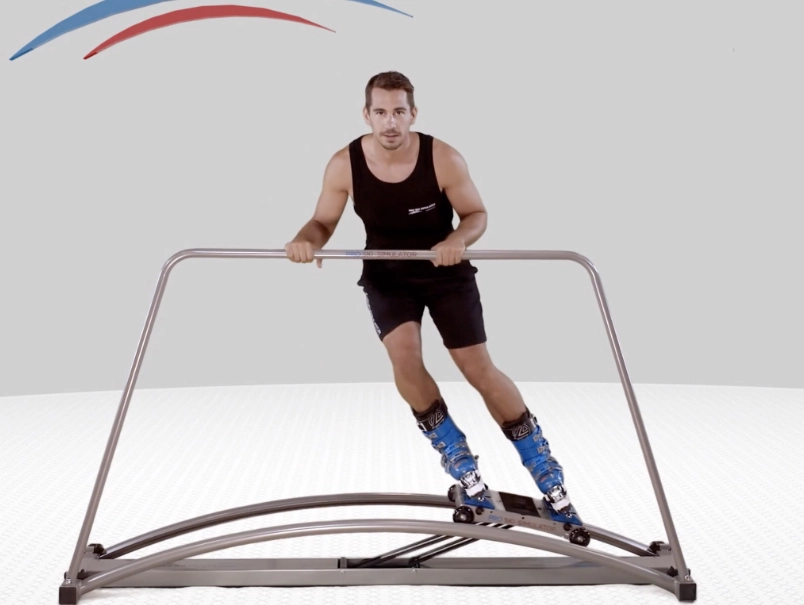
Balance & Proprioception
Fancy word, simple idea. It's your body's awareness of where it is in space. On skis, your feet are locked in, so your balance adjustments come from your ankles, knees, and hips. Improving this means training those joints to make tiny, automatic corrections. This is what keeps you upright when you hit a surprise bump or patch of crud.
Cardiovascular Endurance
Skiing is work, especially at high altitude where the air is thin. Good cardio fitness means you get less winded, recover faster between runs, and have the energy to ski all day. It also helps clear lactic acid from those burning muscles. You don't need to be a marathon runner, but having a baseline is crucial.
Stop Before You Start: The Non-Negotiable Safety Talk
Listen, I'm not a doctor or a physio. If you have any existing injuries or health concerns, please, talk to a professional before starting any new fitness routine. The goal is to get fit for the slopes, not injured on your living room rug. Always, always warm up for 5-10 minutes before you begin (light jogging in place, arm circles, torso twists). And cool down with some gentle stretching afterwards. This isn't optional—it's what keeps you in the game.
Your 8-Week Beginner's At-Home Ski Fitness Blueprint
Okay, let's get practical. This is a sample framework for your ski fitness training at home. The beauty? You can adjust it. Feel beat up? Take an extra rest day. Finding it too easy? Add a few more reps or hold that lunge a bit longer. Consistency beats intensity every time.
Aim for 3 sessions per week, with at least a day of rest in between for recovery. Each session should take 30-45 minutes.
| Week Focus | Strength Focus | Balance/Cardio Add-On | Key Goal |
|---|---|---|---|
| Weeks 1-2: Foundation | Learn proper form for basic exercises. 2 sets of 10-12 reps. | 5 mins of simple balance (e.g., standing on one leg). 10 mins of brisk walking/jogging in place. | Wake up the right muscles. No pain, just familiarity. |
| Weeks 3-5: Build | Increase to 3 sets of 12-15 reps. Introduce longer holds (e.g., wall sit for 30-45 sec). | Add unstable surfaces (cushion). 15 mins of cardio intervals (30 sec high effort, 60 sec low). | Build muscular endurance. Introduce instability. |
| Weeks 6-8: Integrate & Simulate | Combine movements (e.g., squat to overhead press). 3-4 sets of 15-20 reps. Focus on time under tension. | Balance exercises with eyes closed. 20 mins of sustained cardio (jump rope, dancing, stair climbs). | Mimic ski fatigue. Improve recovery between efforts. |
See? It's progressive. You're not just throwing yourself at the hardest thing on day one. That's a recipe for quitting. Start slow, build smart.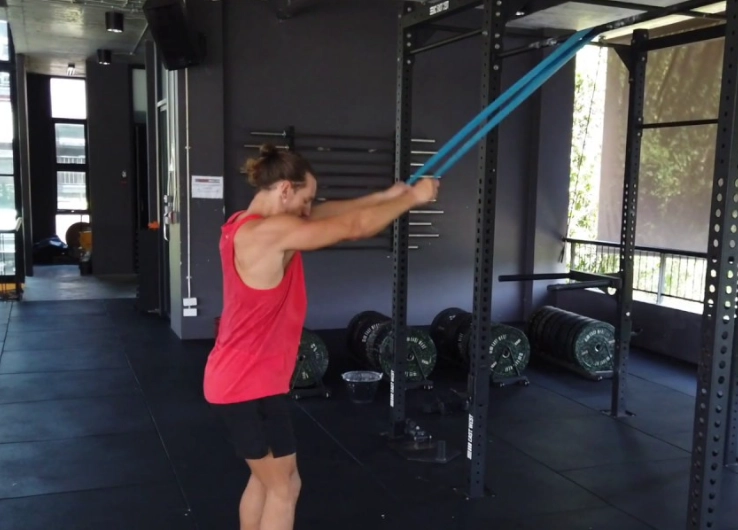
The Essential At-Home Ski Exercise Library
Here’s your toolkit. You might know some of these, but the magic is in how you do them for skiing. I'll point out the common pitfalls I see (and have done myself).
Lower Body Powerhouses
Bodyweight Squats: The king. Stand feet shoulder-width, send your hips back and down as if sitting in a chair. Keep your chest up and knees tracking over toes (don't let them cave in!). Go as low as you comfortably can. The ski-specific tip? Pause for 2 seconds at the bottom. That's where your muscles are working hardest on the mountain.
Reverse Lunges: I prefer these to forward lunges for beginners—easier on the knees. Step one foot back, lower your hips until both knees are bent at 90 degrees. Push through the front heel to return. This single-leg work is gold for skiing, where you often weight one leg more than the other.
Wall Sit: Pure, unadulterated quad burn. Back flat against a wall, slide down until thighs are parallel to the floor. Hold. Time yourself. Try to add 5-10 seconds each session. This is mental grit training as much as physical.
Glute Bridges: Lie on your back, knees bent, feet flat. Drive through your heels to lift your hips toward the ceiling, squeezing your glutes at the top. Strong glutes protect your knees and power your turns. Don't neglect these.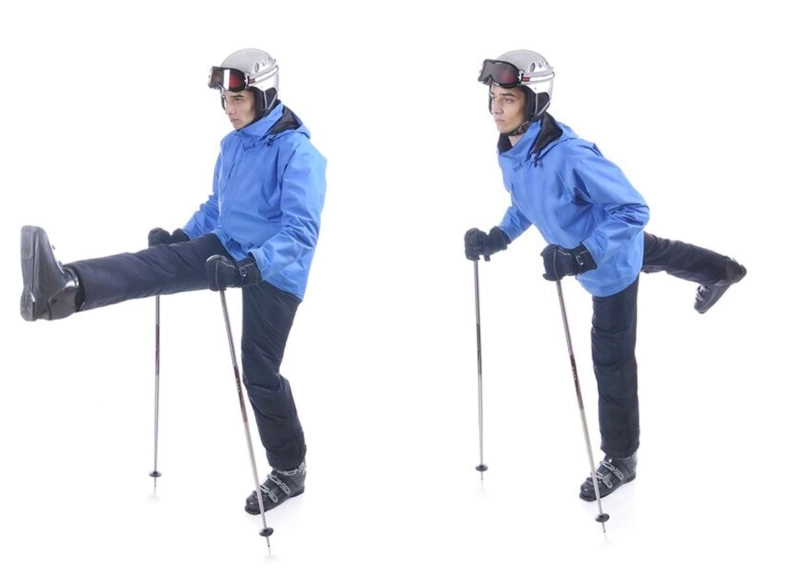
Core Stabilizers (The Real Ones)
Plank & Side Plank: Forget crunches. Get into a push-up position but on your forearms (plank). Body should be a straight line from head to heels. Don't let your hips sag or hike up! Hold. For side plank, roll to one side, stack your feet, and lift your hips. Start with 20-30 second holds. This builds the rigid core you need.
Bird-Dog: On all fours. Slowly extend your right arm forward and left leg back, keeping your hips level. Hold for a second, return. Alternate. This challenges your core to resist rotation—exactly what it does skiing.
Dead Bug: Lie on your back, arms extended to ceiling, knees bent at 90 degrees (like a bug on its back). Slowly lower your right arm and left leg toward the floor without arching your back. Return. Alternate. It looks easy but teaches incredible core control.
My Personal Hack: I do my planks and dead bugs while watching TV. It makes the time go by and ensures I actually do them. Three episodes a week, and my core stability improved dramatically.
Balance & Agility Drills
Single-Leg Stands: Just stand on one leg while brushing your teeth. Seriously. Try 30 seconds per leg. Then try it with your eyes closed (hold onto something at first!). This directly trains your ankle and hip stabilizers.
Lateral Hops: Stand on one leg, hop gently side-to-side over an imaginary line. Focus on a soft, quiet landing, knee slightly bent. This builds the lateral power and control for linking turns.
You can get a balance cushion or a folded yoga mat to make any standing exercise harder. The wobble forces your stabilizers to work overtime.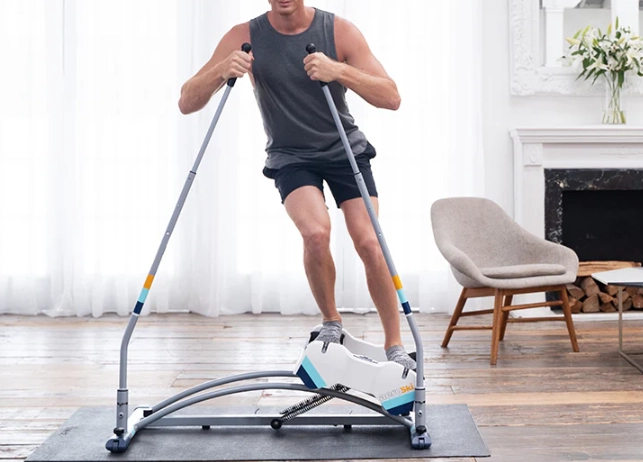
Common Beginner Mistakes (I've Made Most of These)
Let's save you some time and frustration.
Mistake 1: Skipping the Warm-Up/Cool-Down. I get it, you're busy. But pulling a muscle because you jumped into cold squats will set you back weeks. Five minutes. That's all it takes.
Mistake 2: Only Training Legs. If your core is a wet noodle, your powerful legs are useless on skis. They need a stable platform to push from. Balance your routine.
Mistake 3: Going Too Hard, Too Fast. The goal of ski fitness training at home for beginners is to build a foundation, not to annihilate yourself so you can't walk for three days. Consistent, moderate effort beats one heroic, painful session.
Mistake 4: Ignoring Flexibility. Tight muscles are weak muscles and are more injury-prone. After your workout, spend 5 minutes stretching your quads, hamstrings, glutes, and hips. Hold each stretch gently for 30 seconds.
Mistake 5: Forgetting the Fun Factor. If you hate it, you won't stick with it. Put on music you love. Follow a fun dance cardio video on YouTube. Mix it up. The best routine is the one you'll actually do.
How Do You Know It's Working?
You'll feel it before you see it. That wall sit you could only hold for 20 seconds? Now it's 45. Those single-leg stands are rock solid. You can bound up a flight of stairs without getting winded.
But the real test is on the snow. You'll notice it on your first run. Less fatigue in the legs by mid-morning. More confidence to try a steeper pitch because your body feels responsive. Faster recovery in the lift line. You might not be the fastest skier, but you'll be the one still smiling and charging at 3 PM when others are wiped out.
The point of this whole ski fitness training at home for beginners journey isn't to become a gym rat. It's to become a better, safer, more resilient skier. It's about investing in your own fun and longevity on the mountain.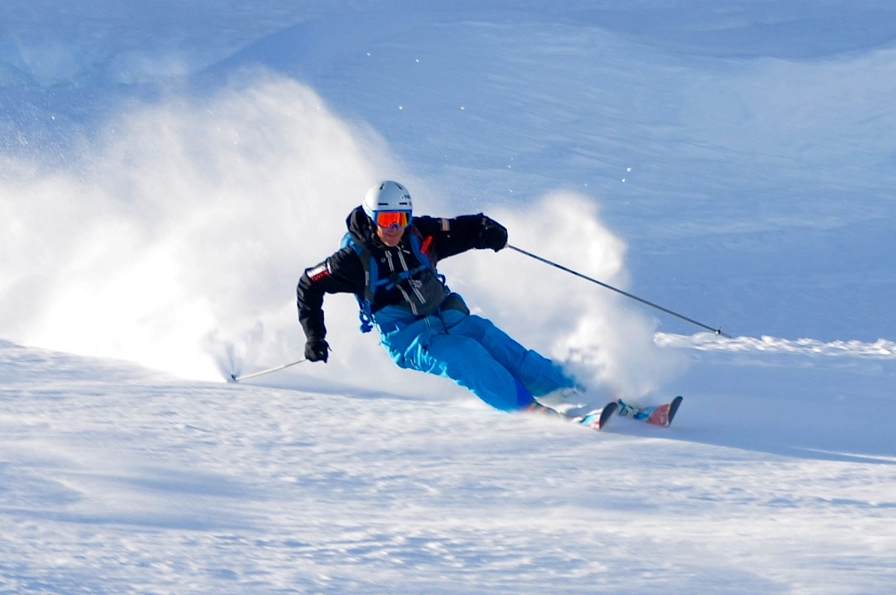
Answering Your Burning Questions (FAQ)
Final Thought: Just Start
Don't overthink it. Don't wait for the perfect time or the perfect plan. Clear a little space in your living room today. Put on some comfortable clothes. Do 10 squats. Hold a plank for as long as you can. Stand on one leg.
That's it. You've begun your ski fitness training at home for beginners. The mountain will thank you for it.
The feeling of being strong and prepared when you click into your skis for the first time that season? It's unbeatable. It turns anxiety into anticipation. It transforms a vacation into an adventure you're truly ready for. You've got this.
Related Articles


Comments
Join the discussion