Your Ski Selection Roadmap
- Forget the Fancy Stuff: What a Beginner Ski Actually Is
- The Most Important Factor: Getting Your Ski Length Right
- Ski Width: It's Not Just for Powder
- Navigating the Different Types of Skis
- The Boots and Bindings Are NOT an Afterthought
- Rent, Demo, or Buy? The Big Decision
- Putting It All Together: A Step-by-Step Checklist
- Common Questions Beginners Actually Ask
- Final Thoughts: Trust the Process
Alright, let's talk about something that trips up almost every new skier: picking your first pair of skis. You're standing there, online or in a shop, faced with a wall of plastic and graphics, and the question hits you: how do I choose the right skis for beginners? It feels like you need a physics degree just to understand the product descriptions.
I remember my first time. I was so overwhelmed I nearly bought a pair of super-wide powder skis because I liked the tiger graphic on them. For the icy, hard-packed slopes I was learning on, that would have been a disaster. A friendly shop employee saved me from myself. That's the goal here—to save you from the confusion and get you on gear that actually helps you learn, not hinders you.
This isn't about the "best" ski in some magazine's list. It's about the right ski for you. Your height, your weight, where you'll ski, and even your fitness level all play a part. Forget the marketing hype for a minute. Let's break down what actually matters.
Forget the Fancy Stuff: What a Beginner Ski Actually Is
Before we dive into specifics, you need to know what you're looking for. When experts talk about a ski being "good for beginners," they're talking about a specific set of characteristics. These features work together to make your life easier.
Think of it like training wheels, but for skiing. You wouldn't learn to ride a bike on a professional racing bike, right? Same principle.
The Big Three: Flex, Shape, and Camber
These are the technical terms you'll hear. Don't worry, they're simple once explained.
- Soft Flex: This is non-negotiable. Flex is how stiff the ski is. A soft ski bends easily. Why does this matter? A soft ski requires less force to initiate a turn. When you're just learning to shift your weight, a stiff ski will fight you. A soft ski says, "Okay, I feel that little movement, let's turn." It's more forgiving if your stance isn't perfect.
- Shaped / Sidecut: Modern skis are wider at the tip and tail, narrower at the waist (under your boot). This hourglass shape is called sidecut. A pronounced sidecut means the ski wants to turn. You lean it on its edge, and the shape carves an arc almost automatically. Beginner skis have a strong, consistent sidecut to make turning intuitive.
- Rockered Tip (and Maybe Tail): Camber is the arch under your foot when the ski is flat. Traditional camber is great for carving but can feel catchy. Many beginner skis now have "rocker"—meaning the tip (and sometimes tail) curves up off the snow even when the ski is unweighted. This makes the ski feel less hooky, easier to pivot, and better in soft snow. It helps prevent the dreaded tip dive.
So, when you're figuring out how do I choose the right skis for beginners, you're essentially looking for a ski that is soft-flexing, has a clear sidecut for easy turning, and likely has some rocker in the tip to be forgiving. That's the holy trinity.
The Most Important Factor: Getting Your Ski Length Right
This is where most people get it wrong. The old rule of "skis should come up to your chin" is outdated and overly simplistic. It's a starting point, but a rough one. Ski length is a balancing act between stability and maneuverability.
Too long, and the ski will feel like a canoe—stable in a straight line but a nightmare to swing around. Too short, and it'll feel twitchy and unstable as you pick up a bit of speed.
Here’s a more nuanced way to think about it. Your ideal beginner ski length is influenced by three things:
- Your Height: The baseline. A chart is helpful here.
- Your Weight: This is crucial and often ignored. A heavier person will flex and control a longer ski more easily than a lighter person of the same height. If you're on the heavier side, you might go a bit longer. If you're very light, go shorter.
- Your Skiing Style & Ambition: Are you cautious and just want to cruise green runs? Go shorter. Do you have a sports background, learn fast, and dream of tackling blue runs by the end of the week? You can consider the upper end of the recommended range.
Let's put this in a table. This is a general guide for all-mountain beginner skis. Always check the manufacturer's specific recommendations, as they know their ski's personality best.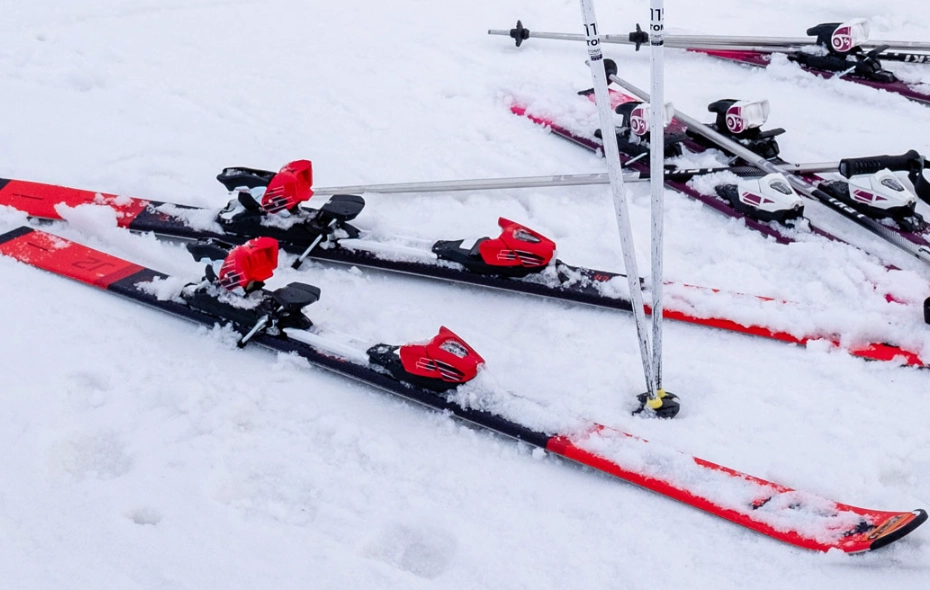
| Skier Height | Suggested Beginner Ski Length Range | Notes & Rationale |
|---|---|---|
| 5'0" - 5'4" (152-163 cm) | 140 cm - 155 cm | Err on the shorter side for easier turn initiation. A 150cm ski is a very common, manageable length here. |
| 5'4" - 5'8" (163-173 cm) | 150 cm - 165 cm | The sweet spot for most adult beginners. A 160cm ski offers a great blend of control and stability. |
| 5'8" - 6'0" (173-183 cm) | 160 cm - 175 cm | Don't feel pressured to go over 170cm unless you're heavier or very aggressive. 165-170cm is often perfect. |
| 6'0" - 6'4" (183-193 cm) | 170 cm - 180 cm | It's tempting to go long, but a ski around 175cm will be much more fun to learn on than one at 185cm. |
When in doubt, go shorter. Always.
Ski Width: It's Not Just for Powder
You'll see a number like "76-82-72mm". This refers to the width of the ski at the tip, waist (underfoot), and tail. For beginners, the key number is the waist width.
- Narrow (Under 80mm waist): The classic carve ski width. Excellent on hard-packed, groomed snow. They are quick from edge to edge, making learning to turn precisely easier. This is what I recommend for most first-timers who will be on resort groomers 99% of the time.
- Mid-Width (80mm - 90mm waist): The modern "all-mountain" standard. A great compromise. They still carve well on groomers but offer more float and stability if you venture into a bit of soft snow or chopped-up powder. A safe choice if you're unsure.
- Wide (Over 90mm waist): Leave these for later. They are designed for deep powder and variable conditions. On hard snow, they require more effort to get up on edge and can feel sluggish. They're the wrong tool for learning fundamental carving skills.
My take? A waist width between 75mm and 85mm is the Goldilocks zone for a new skier. It's focused on the task at hand: learning to ski on groomed runs.
Navigating the Different Types of Skis
Okay, you've got length and width. Now, what about all these categories? Frontside? All-Mountain? Carving? Let's simplify.
Frontside / Carving Skis
These are your best bet. They are designed explicitly for skiing on groomed resort trails (the "front side" of the mountain). They are typically narrower (that 75-85mm waist), have a strong sidecut for easy turning, and are light and responsive. When someone asks me how do I choose the right skis for beginners, I point them to this category first. Brands like Elan, Head, and Rossignol make fantastic beginner-to-intermediate carving skis.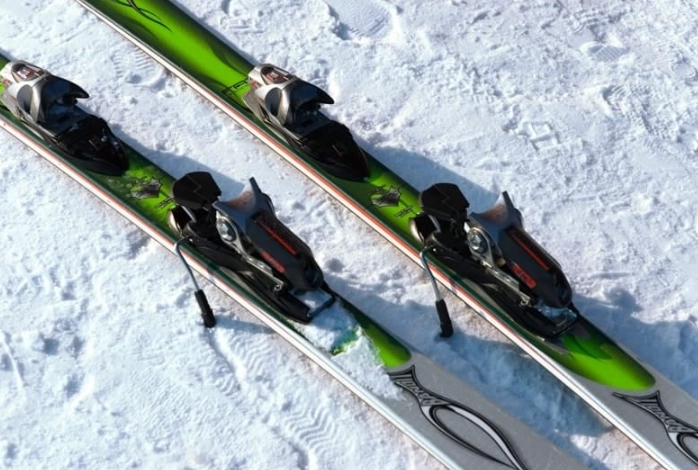
All-Mountain Skis
These are the SUVs of the ski world. They do everything okay, nothing exceptionally. For a true beginner, they can be a bit of a compromise. They might be slightly wider and stiffer than a pure carving ski, which can make the initial learning phase a tad harder. However, if you know you'll be at a mountain with frequent snowfalls or you progress very quickly, a softer-flexing all-mountain ski in the low 80mm waist range can be a good long-term investment.
What About Twin Tips?
Skis with turned-up tails (twin tips) are for park and pipe skiing, where you ski backwards (switch). As a beginner, you have zero need for this feature. It often comes with a more centered mount point, which can make the ski feel less stable at speed for a novice. Focus on traditional directional skis.
The Boots and Bindings Are NOT an Afterthought
I can't stress this enough. The ski is important, but the boot is critical. A good boot that fits properly is the single most important piece of gear for control and comfort. A bad boot will make you miserable and hinder your progress.
Do not buy boots online as a beginner. Go to a reputable ski shop with a certified bootfitter. They will measure your foot, assess your arch and calf, and recommend boots. A proper boot should be snug—not painfully tight—with your toes just brushing the front when you stand up straight. When you flex forward into a skiing position, your heel should pull back and your toes should have room.
As for bindings, they are the safety device that releases your boot in a fall. They must be adjusted to your weight, height, age, and skiing ability (a "DIN" setting). This is not a DIY job. If you buy a "ski package" (ski with binding included) or buy skis separately, a shop must mount the bindings and set the DIN for you. This is non-negotiable for safety. Reputable binding manufacturers like Marker, Salomon, and Tyrolia provide detailed charts to technicians to ensure correct settings.
Rent, Demo, or Buy? The Big Decision
This is the practical heart of the matter. What should you actually do?
- Rent for Your First Few Trips: Seriously. Rent from a quality shop, not the cheapest place in town. Tell them you're a beginner. This lets you ski on appropriate gear with zero commitment. It also lets your body and skills develop—you might find you prefer a slightly different feel after a few days. The professional ski instructors' association, PSIA-AASI, always recommends starting with rentals.
- Demo Before You Buy: Once you've skied 5-10 days and are linking turns on green and easy blue runs, consider demoing. Demo shops let you try high-quality, current-season skis for a daily fee. Try a carving ski and a softer all-mountain ski. See what feels better. This is the best way to answer how do I choose the right skis for beginners for yourself.
- Buy Last Season's Model: Ski technology doesn't change radically every year. Last year's top beginner ski is 99% as good as this year's, but often at a 30-50% discount. Look for sales in spring or fall.
- Buy Used (Carefully): Can be a great deal, but be wary. Check the bases and edges for major damage or repairs. Most importantly, the bindings must be checked by a shop. Old bindings may no longer be indemnified (approved for use) by the manufacturer, meaning no shop will touch them for liability reasons.
Putting It All Together: A Step-by-Step Checklist
Feeling overwhelmed? Let's boil it down to a simple action plan.
Your Beginner Ski Selection Checklist:
- Step 1: Know Your Stats. Have your height and weight ready.
- Step 2: Pick the Category. Focus on Frontside / Carving Skis or soft All-Mountain Skis.
- Step 3: Nail the Specs. Look for:
- Length: Use the chart above. Shorter is safer.
- Waist Width: 75mm - 85mm.
- Flex: Described as "soft," "forgiving," or "easy." - Step 4: Prioritize Boots. Visit a bootfitter. Spend your money here first.
- Step 5: Get Bindings Set by a Pro. Never skip this safety step.
- Step 6: Consider the Source. Rent first, then demo, then buy last year's model or a careful used pair.
Common Questions Beginners Actually Ask
Let's tackle some real-world stuff that doesn't always make it into the specs sheet.
Can I just use my friend's old skis?
Maybe, but it's risky. Are they the right length? Are they beginner-friendly, or are they old, straight, racing skis (a nightmare to learn on)? Most importantly, are the bindings still indemnified and can they be adjusted to your specific settings? A shop visit is mandatory if you go this route.
Do I need different skis for the East Coast vs. the West Coast?
For a beginner, the difference is minimal. You're learning on groomed runs regardless. An East Coast beginner might appreciate a slightly narrower ski (78mm) for harder snow, while a West Coast beginner might lean toward the wider end of our range (85mm) for more variable conditions. But a ski in the low 80s will work perfectly for both. Don't overthink it.
What about skis for women or kids?
Women's-specific skis are often designed with a different flex pattern and mount point to accommodate a typically lower center of gravity. They are a great option but not a strict rule—some women prefer unisex skis. The best advice is to try both if demoing. For kids, it's simple: get them junior skis that come up to their chin or nose. Kids' skis are very soft and forgiving by design.
How long will these "beginner" skis last me?
A good beginner-to-intermediate ski can last you 2-4 seasons, depending on how often you ski and how fast you progress. You'll know it's time to upgrade when you feel the ski chattering at higher speeds, or you want to ski more varied terrain (deep powder, moguls) that the ski isn't designed for. Many people ski their first pair for years.
Final Thoughts: Trust the Process
Look, the process of learning how do I choose the right skis for beginners seems technical, but the philosophy is simple: seek forgiveness, not performance. Your first ski should feel like a helpful friend, not a demanding coach.
Don't get paralyzed by the search for the one perfect ski. There are dozens of great options out there from trusted brands like K2, Salomon, Atomic, and Nordica. If you follow the guidelines here—soft flex, right length, narrow-to-mid width, from the frontside category—you will end up with a ski that makes learning faster and more fun.
Remember, the best ski in the world is the one that gets you excited to go to the mountain and helps you come down with a smile. Start there. Everything else is just details.
Now go get fitted for those boots.