Quick Guide
You're standing at the top of a mountain, cold air biting at your cheeks, looking down at a sprawling network of trails cut into the snow. One is marked with a green circle, another with a blue square, and a steep-looking one disappearing into the trees has a ominous black diamond. That question pops into your head, the same one thousands of skiers and snowboarders ask every day: what do the ski trail colors mean? It's not just about picking a pretty path; it's the fundamental language of the ski resort, a code that tells you exactly what you're in for before you push off. Getting it wrong can turn a dream day into a stressful, or even dangerous, ordeal. Getting it right is the key to unlocking fun, progression, and confidence on the slopes.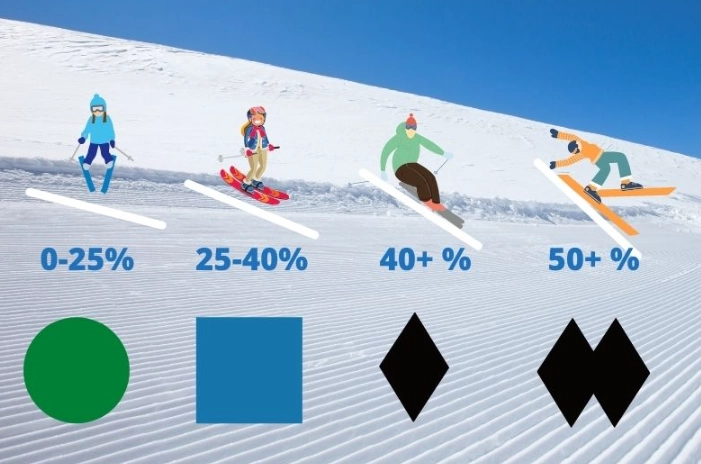
I remember my first real ski trip as a young adult, thinking a blue square sounded nice and easy. Let's just say the reality was a humbling series of linked snowplow turns and a few unplanned sits down. I had no idea what the ski trail colors actually meant in practical terms. This guide is the one I wish I'd had. We're going to break down that color code—green, blue, black, and the dreaded double black—not just with textbook definitions, but with the real-world details that matter when you're looking down the fall line. We'll also tackle the variations you might see in Europe or Japan, and answer all those niggling questions about safety, kids, and how these ratings are even decided.
The Universal Language of Ski Trail Colors
Before we dive into each color, let's establish the foundation. This color-coded system is primarily used in the United States and Canada, and it's managed by the ski resorts themselves. There's no single, overarching government body that dictates the exact steepness of a blue run nationwide. Instead, it's a consensus-based system that creates a generally reliable expectation. The National Ski Areas Association (NSAA) provides guidelines that most resorts follow, which helps maintain consistency. You can think of it like movie ratings (G, PG, PG-13, R)—they give you a good idea of the content, but individual films within a rating can still vary.
The primary factors that determine a trail's color are:
- Steepness (Gradient): This is the big one. Measured in percent grade, it's the single most obvious factor.
- Width: A wide, gentle slope is easier than a narrow, gentle chute.
- Terrain Features: Is it a smooth groomer, or is it littered with bumps (moguls), trees, rocks, or sudden drops?
- Overall Challenge: This is the subjective blend of the above. A trail might not be super steep, but if it's icy, narrow, and has a scary cliff on one side, it's getting a higher rating.
Resorts use signs and trail maps to display these colors. The trail map is your bible—study it. But also know that conditions change. A blue run on a day of perfect packed powder can feel like a black run if it's transformed into a sheet of ice by afternoon. So, what do the ski trail colors mean on a practical, turn-by-turn level? Let's get specific.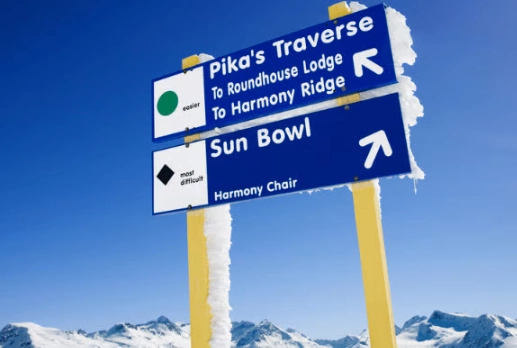
Decoding the Colors: A Detailed Breakdown
Green Circle: The Beginner's Playground
Ah, the green circle. Your sanctuary, your learning ground. When people ask "what do the ski trail colors mean," they often just want to find the easy stuff, and this is it. A green circle trail is designed for first-timers and those still mastering the basic snowplow (or wedge) turn. These are the gentlest slopes on the mountain.
- Typical Gradient: Usually between 6% and 25%. For perspective, a 10% grade means you drop 10 feet vertically for every 100 feet you travel horizontally. It feels very gentle.
- Terrain: Almost always wide-open slopes, meticulously groomed to be smooth and predictable. You won't find moguls, trees, or steep drop-offs here. They are often located near the base area or are served by specific beginner-friendly chairlifts (sometimes called "magic carpets" or slow-moving surface lifts).
- What to Expect: A relaxed pace. You'll see ski and snowboard schools here. It's a place to practice linking turns, controlling your speed, and building confidence without intimidation. The biggest hazard is often other beginners, not the terrain itself.
Great examples of classic green runs are the "Bunny Slope" at any resort, or longer cruising greens like "Schoolmarm" at Keystone in Colorado. These trails are the foundation of the sport.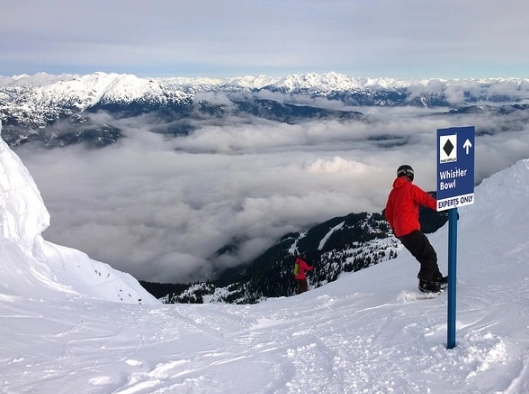
Blue Square: The Intermediate Cruiser
This is where the real fun begins for most recreational skiers and riders. The blue square represents intermediate terrain. It's the bread and butter of most resorts, making up a large percentage of their trails. If you can confidently link parallel turns (skis parallel, not in a wedge) and control your speed on a steeper pitch, you're ready for blues.
- Typical Gradient: Ranges from about 25% to 40%. This is where you start to feel the mountain's pitch. A 35% grade gets your attention.
- Terrain: Usually groomed, but they can be narrower than greens. You might encounter the occasional rolling terrain or a section that feels steeper than the rest. Some blues are left to develop moguls, especially later in the day or season. Always check the trail map or grooming report.
- What to Expect: More sustained steepness. You need to be able to turn at will, not just when the terrain allows it. Blues require constant, rhythmic turning to manage speed. They are immensely satisfying when you get it right—the feeling of carving a nice turn on a consistent blue run is hard to beat.
But here's a personal gripe: the consistency of blue squares is the widest of any category. One resort's easy blue might feel like a green, while another resort's tough blue might have me questioning my life choices. At a big mountain like Jackson Hole, a blue will demand more from you than a blue at a smaller, family-oriented hill. Context matters.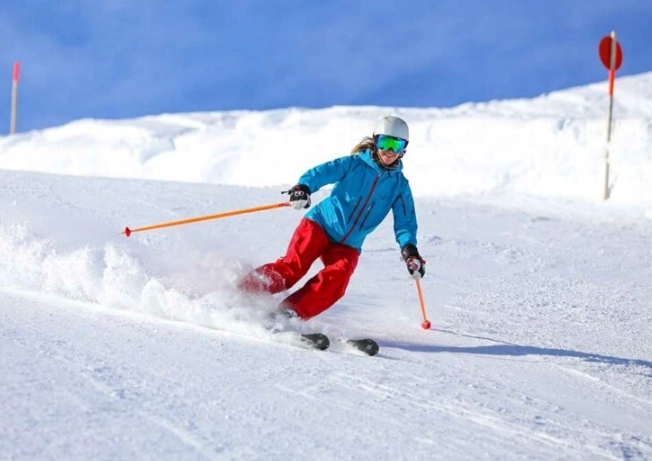
Black Diamond: Advanced Terrain
The black diamond. It sounds serious, and it is. This is advanced terrain for skiers and riders with solid technique, good physical fitness, and the ability to handle whatever the mountain throws at them. These trails are not groomed as frequently (or at all) and often feature natural challenges.
- Typical Gradient: Generally 40% and steeper. A 40% slope is a significant commitment. Some can be much, much steeper.
- Terrain: This is where you find mogul fields, gladed tree runs (spaced-out trees), exposed ridges, cornices, and variable snow conditions like crud, powder, or ice. Grooming is less common; you're dealing with the mountain's natural state.
- What to Expect: A physical and mental challenge. Black diamonds require aggressive, precise turning. Falls are more consequential. You need to be able to read the terrain ahead and pick your line carefully. There's often less room for error.
My first real black diamond was a mogul run. I thought I was hot stuff on the blues. I was humbled within three turns. My legs burned, my rhythm was off, and I took a couple of spectacular tumbles. It was a brutal but valuable lesson: don't venture onto a black unless you're truly ready. They are not for "trying out."
Double Black Diamond: Expert/Extreme Terrain
This is the pinnacle of in-bounds resort skiing. The double black diamond (or, in some resorts like Aspen, an orange oval) is reserved for the most extreme, challenging terrain. These are often called "expert only" for a reason. They may involve mandatory air (cliffs you must jump off), extremely steep couloirs (narrow gullies), dense trees, or exposed no-fall zones.
- Typical Gradient: Often exceeding 45%, with sections that can be near-vertical. We're talking serious angles.
- Terrain: All of the above, plus. Terrain is almost never groomed. You will encounter rocks, cliffs, tight chutes, and complex snowpack. Avalanche control work is done, but the risk of sliding in a no-fall zone is real. These runs often require specific entry points and careful route-finding.
- What to Expect: The highest level of commitment. You need expert-level skills in all conditions. This is not terrain for learning. A fall could lead to a long, dangerous slide or impact with obstacles. Ski patrol may not even routinely sweep these areas—you are responsible for yourself.
I'll be honest, I ski a lot of double blacks now, but I still approach each one with immense respect. The margin for error is tiny. The reward, however, is an unparalleled sense of adventure and access to snow and lines that few ever experience. Resorts like Jackson Hole or Palisades Tahoe are famous for their extreme double diamond terrain. If you have to ask if you're ready, you're not.
| Trail Color | Symbol | Difficulty | Typical Gradient | Key Characteristics | Who It's For |
|---|---|---|---|---|---|
| Green Circle | ● | Beginner | 6% - 25% | Wide, groomed, gentle, obstacle-free | First-timers, those learning basic turns and stops. |
| Blue Square | ■ | Intermediate | 25% - 40% | Groomed, can be narrow, may have rolling terrain or moguls. | Skiers who can link parallel turns and control speed on steeper pitches. |
| Black Diamond | ◆ | Advanced | 40%+ | Often ungroomed, moguls, trees, variable conditions, steeper. | Strong skiers with advanced technique who can handle unpredictable terrain. |
| Double Black Diamond | ◆◆ | Expert | 45%+ (often much more) | Extreme: cliffs, chutes, no-fall zones, mandatory features, complex snow. | Experts only. Requires mastery of all conditions and high risk assessment. |
International Variations and Important Exceptions
Now, if you're planning a ski trip to the Alps, you might get confused. The European system is similar but has a key difference: they often use a red trail rating between blue and black.
- Green: Very easy (similar to US).
- Blue: Easy (often comparable to an easier US blue).
- Red: Intermediate/Advanced. This is a crucial category. A European red run is typically more challenging than a US blue square but less severe than a typical US single black diamond. It's the perfect step up for a confident intermediate. Think of it as a "hard blue" or "easy black."
- Black: Difficult/Expert. Comparable to a US single or even double black, depending on the resort.
So, if you're a solid blue-square skier in the States, you'll likely be comfortable on European blues and cautious on reds. Always start with a blue on a new mountain to calibrate.
Japan has its own quirks. Some resorts use the Western color system, while others might use a different set of symbols or rely more on Japanese text. Australia and New Zealand generally follow the US/Canada system. When in doubt, ask at the ski school or information desk. A great resource for checking international trail maps and standards is the resort's own website, like the detailed interactive map for Verbier in Switzerland, which clearly shows their green/blue/red/black system.
Other exceptions include terrain parks (which have their own difficulty ratings for jumps and rails, usually S, M, L, XL) and special designations for off-piste or backcountry access gates, which are a whole different ballgame and require avalanche safety gear and training.
How to Choose the Right Trail for You
Understanding what the ski trail colors mean is one thing; applying that knowledge to yourself is another. Here's a practical, step-by-step approach to avoid biting off more than you can chew.
- Be Brutally Honest About Your Ability: Are you a true beginner, a cautious intermediate, or an aggressive advanced skier? What was the hardest run you comfortably skied last time out, and in what conditions?
- Warm Up: Always start your day on a run you know is well within your ability—a familiar green or easy blue. Your legs, balance, and brain need to wake up.
- Check the Conditions Report: Was it groomed last night? Is it icy? Is there fresh powder? Powder can make a blue feel easier but can hide obstacles on a black. Ice can make a blue feel like a black.
- Scout from the Lift: As you ride the chairlift, look at the trails below. Can you see skiers making turns on it? Does their technique look similar to yours? Does the trail look manageable?
- Ask a Local: Lift attendants, ski patrollers, or friendly locals in the lift line can give you the best, most current beta. "How's Upper XYZ running today? Is it bumped up or skied off?"
- Know Your Exit Strategy: Look at the trail map. Does the difficult trail have an easier bail-out option partway down, or are you committed to the whole thing?
Your Ski Trail Color Questions, Answered
Final Thoughts: More Than Just Colors
So, what do the ski trail colors mean? They are an essential, life-saving, fun-enhancing language. They are your first and most important tool for navigating the mountain safely. But they are a guide, not a guarantee. The green circle promises gentleness, the blue square offers cruising fun, the black diamond warns of a real challenge, and the double black diamond demands respect and expertise.
The real skill comes in learning to read between the lines—to understand that a blue at a rugged mountain is different from a blue at a mild one, that conditions trump the sign every time, and that your own honest assessment is the final judge. Start easy, work your way up gradually, and don't let ego push you onto terrain that makes you terrified instead of thrilled.
The mountain will always be there. The goal is to ski it again tomorrow. Now that you truly understand what the ski trail colors mean, you're equipped to make better choices, find more fun, and build a lifelong love for sliding on snow. Grab your map, find a friendly blue square, and make some turns.
Related Articles
Comments
Join the discussion