Your Quick Ski Guide
So you've decided to learn how to ski. That's awesome. Seriously, you're in for a treat. But I get it, standing at the top of a slope (or even on the flat bit near the lodge) for the first time can feel like you're about to climb Everest in swimming trunks. It's equal parts excitement and pure "what have I done?" terror.
Let's cut through the noise. Forget the Instagram reels of people flying off cliffs. Real skiing, the kind you and I start with, is about control, feeling the glide, and not spending more time on your butt than on your skis. This guide is your no-nonsense map. We're going to break down beginner skiing techniques step by step, in a way that actually makes sense before you even click into those bindings.
I remember my first time. I rented gear that was too long, wore jeans (a classic, terrible mistake), and spent the first hour doing an impression of a newborn giraffe on an ice rink. I wish someone had laid it out for me like this. So, let's save you some of that comedy.
Before You Even Touch Snow: The Prep Work
Most guides jump straight to the snowplough. That's putting the cart before the horse. How you prepare mentally and physically is half the battle.
Mindset & Expectations: Ditch the Ego
You will fall. It's not a sign of failure; it's a sign you're learning. The goal of your first day isn't to get down a black diamond. It's to learn how to stop reliably and make a few gentle turns. That's a huge win. Comparing yourself to others is a surefire way to have a miserable time. Focus on your own progress, step by step.
Gear: Don't Buy, Rent!
For your first few times, renting is the smart move. A good rental shop will set you up with the right gear. Here's what you need to know about each piece:
| Gear | What It Does | Beginner Tip |
|---|---|---|
| Ski Boots | Your single most important connection to the ski. They transfer your movements. | They should be SNUG, not tight. Your toes should just brush the front when you stand up straight, then pull back slightly when you flex your knees into a skiing stance. Unbuckle them on the lift! |
| Skis | Shorter is better for beginners. They're easier to turn. | Rental techs will set you up with short, soft, forgiving skis. Tell them it's your first time. These are often called "all-mountain" or "beginner" skis. |
| Poles | For rhythm and balance, not for stopping or propelling yourself. | As a total newbie, you might not even use them for the first few hours. That's okay. If you get them, hold them correctly—strap goes between your palm and the grip. |
| Helmet | Non-negotiable. Protects your head. | Rent or buy one that fits snugly. This isn't the place to save money or worry about helmet hair. |
Why is a helmet non-negotiable? The National Ski Areas Association (NSAA) has been a strong advocate for helmet use, and it's just common sense. Your brain is kind of important.
The Clothing Layering System
Cotton is the enemy. It gets wet and stays wet. You want synthetic or wool layers that wick moisture away.
- Base Layer: Thermal top and bottom (think long underwear). Merino wool or polyester.
- Mid Layer: A fleece or insulated jacket for warmth.
- Outer Layer (Shell): A waterproof and breathable jacket and pants. This keeps the snow and wind out.
- Accessories: Waterproof gloves or mittens (mittens are often warmer for beginners), goggles (essential for any weather—they protect from wind and UV), and a neck gaiter or balaclava.
Ever tried to walk in ski boots on a flat surface? It's a comedy show waiting to happen. Walk with your knees slightly bent, taking heel-to-toe steps. Don't try to walk normally. Embrace the waddle.
Your First Day on Snow: The Real Beginner Skiing Techniques Step by Step
Okay, you're dressed, geared up, and on the snow. Let's start from absolute zero. I strongly, strongly recommend at least one lesson from a certified instructor. It's the fastest and safest way to learn. Organizations like the Professional Ski Instructors of America & American Association of Snowboard Instructors (PSIA-AASI) set the standard for teaching these skills. A good instructor will save you hours of frustration.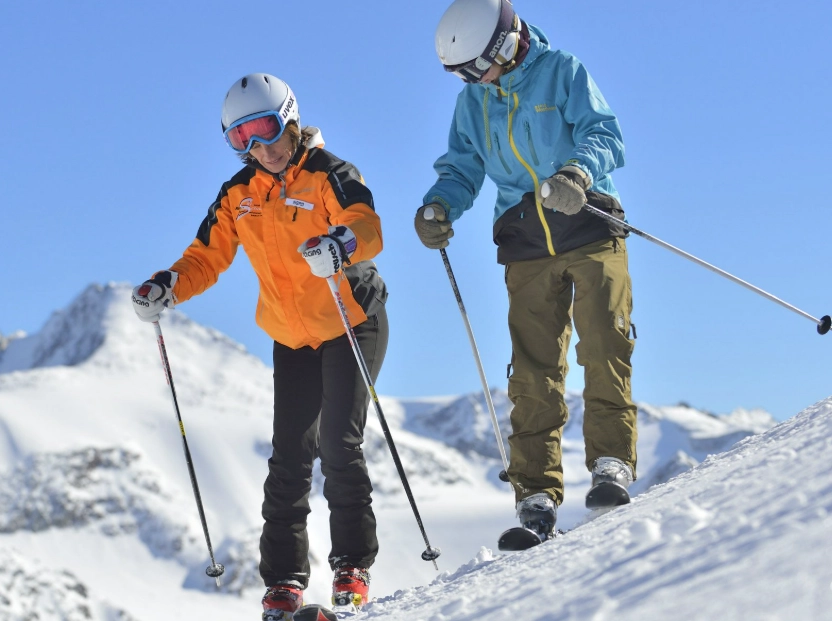
Step 1: The Basic Stance (The Athletic Position)
This is your home base. Everything comes back to this.
- Feet shoulder-width apart.
- Knees bent! Imagine you're sitting back slightly into a chair.
- Weight centered over the middle of your feet, not your heels.
- Back straight, chest up, looking ahead (not down at your skis!).
- Hands forward and visible, as if you're holding a tray.
Practice this on flat ground. It feels awkward at first, but it's the foundation for balance and control.
Step 2: Gliding & The Magic Carpet
Before you turn, you need to feel comfortable moving. Most resorts have a "magic carpet"—a conveyor belt for beginners.
- Stand at the base in your basic stance.
- Let the carpet carry you up. Just stand there, relaxed.
- At the top, simply step off gently to the side.
Now, point your skis slightly downhill on a very gentle slope. Don't try to do anything. Just let gravity pull you a few feet. Feel the skis glide. Get used to the sensation. To stop, just let yourself coast to a stop on the flat.
Step 3: The Snowplough (Pizza!) - Your Best Friend
This is the cornerstone of all beginner skiing techniques step by step. It's how you control speed and, most importantly, STOP.
- On a gentle slope, start gliding in your basic stance.
- Slowly push your heels out, making the backs of your skis spread apart. The tips should stay closer together, forming a triangle or a slice of pizza.
- Press your knees inward slightly. This engages the inside edges of your skis, which creates friction and slows you down.
- The harder you push your heels out and press your knees in, the more you'll slow down and stop.
Practice this over and over. Glide a bit, make your pizza, stop. Glide, pizza, stop. This builds muscle memory. The goal is to be able to stop on command, every time.
Step 4: Turning in a Snowplough (French Fries with a Little Pizza)
Once you can stop reliably, you can start directing that stop into a turn.
- To turn left, put a little more weight on your right foot. Press that right knee in a bit more. You'll naturally start arcing to the left.
- To turn right, put a little more weight on your left foot.
- Keep your snowplough shape the whole time. Look where you want to go—your body will follow.
Think of it as steering your pizza slice. You're not making sharp, carved turns yet. You're making wide, gentle arcs across the slope. This is how you control your descent on a beginner (green circle) run.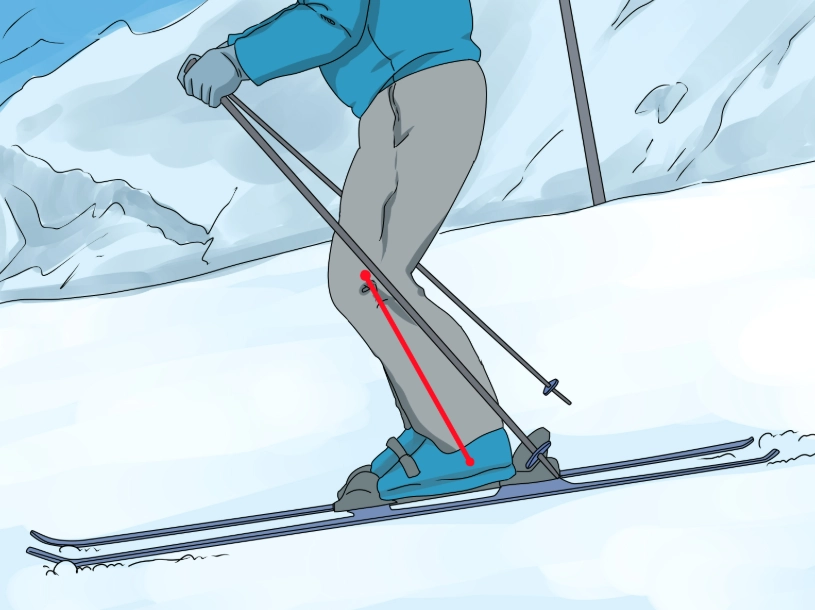
Leveling Up: Linking Turns and Building Confidence
You can snowplough stop and make gentle turns. That's huge. Now let's connect the dots.
Linking Snowplough Turns
This is the first big "aha!" moment. You're no longer going straight down the fall line; you're zig-zagging across the slope.
- Start traversing (going across) the slope in a small snowplough.
- To initiate a turn, gently shift your weight to the downhill ski. Want to go left? Weight your right ski.
- As you come around and start pointing more downhill, you might pick up a bit of speed. That's okay.
- As you finish the turn and start heading across the slope the other way, re-establish your snowplough to control speed.
- Immediately shift your weight to the other foot to start the next turn in the opposite direction.
It's a rhythm: across the hill, weight shift, turn, control speed, weight shift, turn the other way. Practice this on a wide, gentle green run until it feels less like a series of panic maneuvers and more like a slow, controlled dance.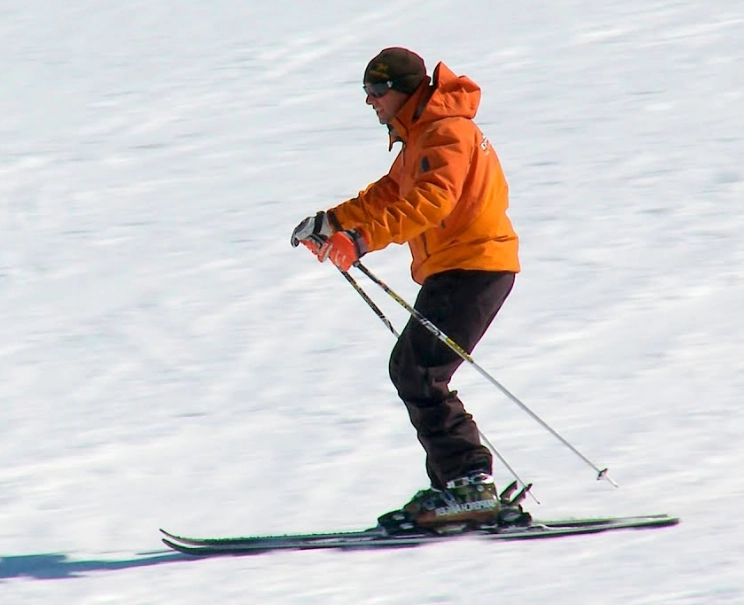
Riding the Chairlift (Without the Fear)
It seems intimidating, but it's simple if you follow the steps.
- Wait in line with your skis on, poles in one hand.
- Look behind you as the chair approaches. Sit down as it touches the back of your legs.
- Once seated, pull the safety bar down. Enjoy the ride! Don't swing your skis.
- As you approach the top, lift the bar. Have your ski tips up.
- Stand up as your skis touch the snow at the top, and simply ski straight off down the gentle ramp. Keep your poles up so they don't get caught.
- Move away from the unloading area immediately.
The unloading area is usually flat or has a very gentle slope. If you stop there, you'll cause a pile-up. Just take a few confident glides and move to the side.
Beyond the Basics: What Comes Next?
Mastering the snowplough turns on green runs is a massive accomplishment. Where do you go from here? The natural progression involves refining your movements and learning to carve.
Transitioning from Snowplough to Parallel Turns
This is the next major step. You start to bring your skis parallel to each other through the turn. It's more efficient and looks/feels smoother.
- Start your turn in a slight snowplough (sometimes called a "stem christie").
- As you commit to the turn and your edges grip, allow your inside (uphill) ski to come parallel to your outside (downhill) ski.
- The turning force comes more from rolling your knees and ankles into the hill, using your edges, and less from pushing your heels out.
This takes time and practice. Don't rush it. A lesson at this stage is incredibly valuable to avoid developing bad habits.
Understanding Edging and Pressure
As you progress, skiing becomes less about muscling your skis around and more about finesse—managing the two fundamental forces: edging and pressure.
- Edging: Tilting your skis onto their metal edges to grip the snow. More edge = more grip, less edge = more slide.
- Pressure: Flexing and extending your legs to load (press) and unload (release) the skis, which helps initiate and complete turns.
Think of it like riding a bike. You lean to turn (edging) and you pedal to control speed and power (pressure).
Safety, Etiquette, and Making it a Habit
Skiing isn't just about technique; it's about being part of the mountain community safely.
The Responsibility Code
This is the law of the mountain, endorsed by the NSAA. Know it, live by it.
- Always stay in control and be able to stop or avoid other people or objects.
- People ahead of you have the right of way. It's your responsibility to avoid them.
- Don't stop where you obstruct a trail or are not visible from above.
- When starting downhill or merging, look uphill and yield.
- Use devices to help prevent runaway equipment (ski brakes work!).
- Observe all posted signs and warnings.
- Know how to use the lifts safely.
Fitness and Off-Season Training
Skiing is a sport. Being in decent shape makes it more fun and less exhausting. Focus on:
- Leg Strength: Squats, lunges, wall sits.
- Core Stability: Planks, Russian twists.
- Cardio: Cycling, running, stair climbing.
- Balance: Yoga, using a balance board.
Resources like REI's expert advice on ski fitness offer great, detailed plans. A little prep goes a long way in preventing fatigue-induced mistakes.
Your Beginner Skiing Questions, Answered
Look, learning to ski is a journey. Some days will feel magical—the sun, the glide, the feeling of nailing a turn. Other days you'll be frustrated and sore. That's all part of it.
The most important thing is to break it down. Don't look at the whole mountain. Just focus on the next step. Get your stance right. Master the stop. Link one turn, then two. Before you know it, you'll be looking back up that green run you just cruised down, with a grin that won't quit.
That feeling is worth every wobbly moment. Now get out there and give it a go. Take it step by step.
Related Articles


Comments
Join the discussion