Quick Guide
- Before the Quiz: Understanding Your Skiing Profile
- The Heart of the Matter: Decoding Ski Specs & Types
- The Interactive Part: Your Personal "How Do I Choose the Right Skis" Quiz
- Final Steps: Length, Flex, and the Human Touch
- Taking Action: From Quiz Results to Purchase
- Common Questions This Quiz Answers (And Some It Raises)
Let's be honest. Walking into a ski shop or scrolling through endless online listings can feel like trying to read a foreign language. Camber, rocker, waist width, turning radius... it's enough to make your head spin. You just want skis that feel good and make skiing more fun, not a degree in engineering. That's where a good old-fashioned quiz comes in—but not just any quiz. We're talking about a detailed, step-by-step guide that acts like your personal ski sherpa.
I remember my first time buying skis without help. I listened to a shop guy who was clearly more interested in clearing last season's stock. The skis were too stiff and demanding for my intermediate legs. I spent more time on my backside than carving turns. It was frustrating and, frankly, a waste of money. I don't want that to happen to you.
So, forget the confusing jargon for a minute. This isn't about selling you the most expensive pair. This is about breaking down the "how do I choose the right skis" question into bite-sized, understandable pieces. Think of this entire article as your comprehensive ski selector quiz. By the end, you'll have a crystal-clear idea of what to look for.
The Core Idea: The best "how do I choose the right skis quiz" doesn't just spit out a model name. It teaches you why certain skis are recommended for you. That knowledge is power, whether you're buying online or walking into a shop.
Before the Quiz: Understanding Your Skiing Profile
Any worthwhile ski selector tool starts with you. The skis are just tools; you're the craftsman. We need to profile you, the skier, before we even glance at ski specs.
What's Your Skiing Personality?
Be brutally honest with yourself. There's no shame in any category—this is about matching gear to reality, not fantasy.
- The Beginner/Novice: You're focusing on linking turns on green and easy blue runs. You want stability, forgiveness, and something that makes learning easier, not harder. You probably ski a week or two a year.
- The Confident Intermediate: You cruise blue runs all day and venture onto groomed black diamonds. You can parallel turn comfortably and are starting to play with speed and shorter turns. You're looking for a ski that helps you progress.
- The Advanced Skier: You tackle all groomed terrain with confidence and regularly venture off-piste into chopped snow and easy moguls. You understand edge control and pressure management.
- The Expert/All-Mountain Crusher: You seek out variable conditions—steep, deep, bumpy, you name it. You drive the ski aggressively and want a tool that responds with precision and power.
Most people overestimate their level. If you're between two, lean towards the easier ski. A ski that's too demanding will hold you back and punish every small mistake.
Where Do You Actually Ski?
The "where" is just as important as the "how well." A ski perfect for icy Vermont groomers will feel like a submarine in Utah's deep powder.
East Coast / Midwest / Europe (Alps): You face more hardpack and icy conditions. Prioritize skis with good edge grip (traditional camber is your friend), a narrower waist (under 90mm), and a construction that provides stability on firm snow.
West Coast / Rockies / Japan: You get more fresh powder and softer snow. You'll want a wider ski (95mm-110mm for all-mountain) with some rocker in the tip to stay afloat. Hard snow performance is still important, but floatation is key.
The True Powder Hound: If you live for deep days and seek out untracked lines, you're looking at dedicated powder skis (115mm+ underfoot, significant rocker). These are specialists, not daily drivers for most.
The Heart of the Matter: Decoding Ski Specs & Types
Now let's translate the tech. This is the core knowledge any effective "how do I choose the right skis quiz" is based on. Don't worry, we'll keep it practical.
Ski Category: What's Your Main Goal?
Skis are built with a primary purpose in mind. Choosing the right category is half the battle.
| Category | Best For | Waist Width (approx.) | Key Features | Compromise |
|---|---|---|---|---|
| Frontside / Carving | Groomed runs, hard snow, high-speed cruising, making precise turns. | 65mm - 85mm | Narrow, deep sidecut, traditional camber. Loves to be on edge. | Poor in deep powder, unforgiving off-piste. |
| All-Mountain | The versatile workhorse. Does everything reasonably well: groomers, bumps, some powder. | 85mm - 105mm | Mixed camber/rocker profiles. Balanced sidecut. The "jack of all trades." | Not the best at any one thing, but very good at most. |
| All-Mountain Wide / Freeride | For those who prioritize off-piste, powder, and variable conditions but still ski groomers to get there. | 105mm - 115mm | More rocker, wider platform. Stable at speed in soft snow. | Can feel sluggish and hard to pivot on hardpack. |
| Powder | Deep snow days. Flotation is the only goal. | 115mm+ | Massive rocker, very wide, often tapered. Surfs on snow. | A chore to use on anything firm. |
| Freestyle / Park | Jumps, rails, skiing switch (backwards). Playfulness is key. | 85mm - 100mm | Twin-tip shape, softer flex, center-mounted stance. Forgiving for landings. | Not very stable at high speeds or for powerful carving. |
See? It's starting to make sense. If you're an intermediate skiing mostly in Colorado, an All-Mountain ski in the 95mm-100mm range is probably your sweet spot. An East Coast advanced skier who loves carving might look at a beefy Frontside ski or a narrower All-Mountain.
Key Terms Demystified
Let's tackle three big ones that every quiz will ask about.
Camber vs. Rocker: This is the ski's profile, viewed from the side.
- Camber: The traditional arch. Middle of the ski is off the snow when unweighted. Provides great edge grip and pop on hard snow. Think of it like a bow and arrow—it stores energy.
- Rocker (or Reverse Camber): The tips and/or tails curve up. Makes initiating turns easier, improves float in powder, and makes the ski feel more playful and forgiving. Better in soft snow.
Most modern all-mountain skis use a hybrid: rocker in the tip (for turn initiation and float), camber underfoot (for edge grip), and sometimes rocker in the tail (for looseness). This is often called "rocker-camber-rocker."
Quick Tip: Beginners and those who ski a lot of powder benefit from more rocker. Aggressive carvers and ice skiers benefit from more traditional camber.
Waist Width: This is the narrowest point of the ski, under your boot. It's measured in millimeters. It's the single biggest number determining where the ski excels.
- Narrow (<85mm): Quick edge-to-edge on groomers.
- Mid (85-105mm): The all-mountain sweet spot. Balances groomer performance with off-piste ability.
- Wide (>105mm): For float in soft snow. Gets harder to maneuver on firm snow as width increases.
Turning Radius: This number (in meters) tells you how "tight" or "long" the ski naturally wants to turn. A lower number (e.g., 12m) means a short, quick-turn ski. A higher number (e.g., 20m) means a longer, more stable turn at speed. Don't overthink this—most all-mountain skis are in the 16m-20m range, which is a good, versatile medium.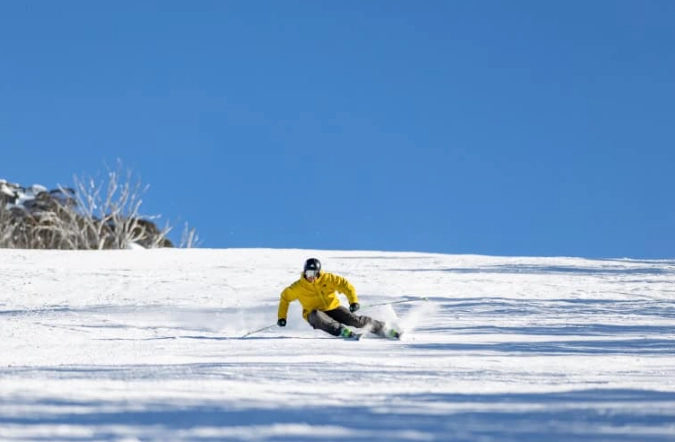
The Interactive Part: Your Personal "How Do I Choose the Right Skis" Quiz
Okay, time to put it all together. Answer these questions honestly. Grab a notepad.
Question 1: Skill Level. Where do you spend 80% of your time on the mountain?
A) Learning to turn on green runs.
B) Comfortably cruising blue runs, dabbling in easy blacks.
C) Confidently skiing all groomed terrain, including blacks.
D) Seeking out the steepest, deepest, most challenging lines on and off-piste.
Question 2: Terrain & Snow. What's your typical playground?
A) Mostly groomed runs, often on harder snow/ice.
B) A 50/50 mix of groomers and off-piste (bumps, trees, crud).
C) Mostly off-piste, powder, and variable conditions.
D) Primarily the terrain park and pipes.
Question 3: Skiing Style. Describe your ideal run.
A) Making smooth, medium-radius turns at a controlled pace.
B) A mix—some carving, some playing in the bumps, exploring the sides of the trail.
C) Charging hard, making aggressive, powerful turns at higher speeds.
D) Spins, jumps, rails, and skiing backwards.
Question 4: Priority. What's most important?
A) Forgiveness and ease of use. I want to build confidence.
B) Versatility. I want one ski to do it all reasonably well.
C) Stability and power in challenging conditions.
D) Playfulness and being able to mess around.
Quiz Result Interpretation
Let's match your answers to a ski profile. This is the essence of a personalized ski selector quiz.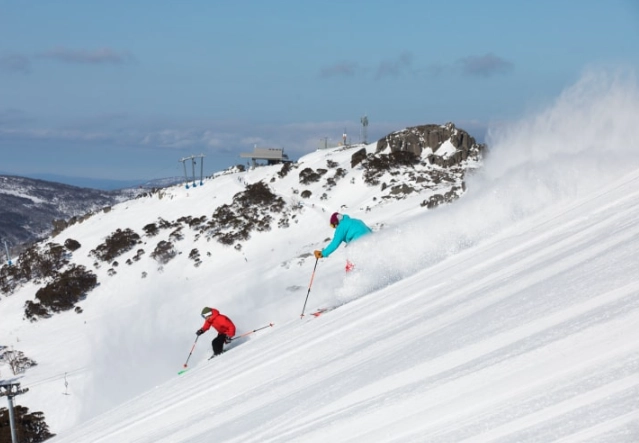
Mostly A's: You're a beginner/early intermediate who values control. Look for: A forgiving Frontside or easy-going All-Mountain ski. Waist width: 75mm-85mm. Look for rocker in the tip to help initiate turns. Flex should be soft to medium. Brands often call these "Sport" or "Easy" collections. A great resource to understand skill progression is the Professional Ski Instructors of America & American Association of Snowboard Instructors (PSIA-AASI) website—they define the standards.
Mostly B's: You are the classic all-mountain skier. This is the most common result. Look for: A true All-Mountain ski. Waist width: 90mm-105mm. Profile: Rocker-Camber-Rocker hybrid. Flex: Medium. This ski will be your reliable daily driver. It won't be the best powder ski or the best carver, but it will handle everything you throw at it with competence.
Mostly C's: You're an advanced/expert who drives the ski. Look for: An All-Mountain Wide or performance-oriented All-Mountain ski. Waist: 100mm-110mm+. Flex: Medium-Stiff to Stiff. It will have metal laminates (titanal) for dampness and stability at speed. It might be less forgiving but will reward powerful, precise skiing. For insights on high-performance gear, sites like Blister offer incredibly deep, unbiased reviews.
Mostly D's: You live for the park. Look for: A Freestyle/Park ski. Twin-tip shape is essential. Flex: Soft to Medium-Soft. Waist: 85mm-100mm. Often lighter construction for easy spinning.
Mixed Bag (e.g., A, B, B, C): This is very common. Your priority answers (Q4) break the tie. If you answered C for priority, lean towards the more advanced ski in your category. If you answered A for priority, lean towards the more forgiving model.
Watch Out: Don't buy a ski for the skier you hope to be in five years. Buy for the skier you are today, who skis the conditions you actually face. Progressing on appropriate gear is faster and more fun.
Final Steps: Length, Flex, and the Human Touch
You've narrowed the category and width. Now let's fine-tune.
How Long Should My Skis Be?
The old "chin to nose" rule is outdated. Modern shape and rocker change everything.
- Beginners: Skis between your chin and nose. Shorter is more manageable.
- All-Mountain Skis (with rocker): Go for skis at your height or even 5cm taller. The rocker reduces the effective edge on snow, so a longer ski provides more stability without being harder to turn.
- Frontside/Carving Skis: Between your nose and forehead. You want more edge in contact for grip.
- Powder Skis: Often even longer, sometimes 5-10cm+ over your head, for maximum float.
Your weight is also a huge factor. A heavier skier might need a longer or stiffer ski than a lighter skier of the same height. Always check the manufacturer's recommended height/weight range—it's more accurate than a generic rule.
The Importance of Flex
Flex is how stiff the ski is. You can't see it on a spec sheet, but you can feel it in the shop.
- Softer Flex: Easier to bend, more forgiving, better for slower speeds and lighter/less aggressive skiers.
- Stiffer Flex: More stable at high speeds, handles hard snow and crud better, requires more input to bend. Better for aggressive/heavier skiers.
Press the ski against the floor. If it bends easily, it's soft. If it resists, it's stiff. Match it to your aggression level, not just your skill.
Taking Action: From Quiz Results to Purchase
You have your target profile. Now what?
1. Research Specific Models: Use your profile (e.g., "Intermediate, All-Mountain, 95mm, medium flex, rocker-camber-rocker") to find 3-5 specific ski models. Read professional reviews and user reviews from skiers who sound like you.
2. The Boot is the Boss: This is non-negotiable. The right ski with the wrong boot is a disaster. Invest in a professional boot fitting from a certified fitter. It's the single most important piece of gear. A good fitter will also understand how your boot choice interacts with your ski selection. The International Ski Federation (FIS) maintains equipment standards, but for boots, a local expert is worth their weight in gold.
3. Demo, Demo, Demo: If possible, rent your shortlist of skis for a day. A demo day is the ultimate "how do I choose the right skis quiz" in real life. Feel how they turn, how they handle ice, how they float. It's the only way to know for sure.
4. Talk to a Shop (The Right Way): Walk in armed with your quiz results. Say, "I'm an intermediate, I ski 70% groomers in Colorado, I want a versatile all-mountain ski around 98mm underfoot. What do you recommend?" This shows you've done your homework and will get you better advice.
Common Questions This Quiz Answers (And Some It Raises)
Look, choosing skis is part research, part self-knowledge, and a little bit of feel. It shouldn't be a source of anxiety. Use this guide, answer the questions for yourself, and you'll cut through 90% of the confusion out there.
The goal isn't to find the "best" ski in the world. It's to find the best ski for you. The one that disappears under your feet and just lets you ski. That's what a proper "how do I choose the right skis quiz" journey should lead you to.
Now go get 'em. And maybe I'll see you out there, finally enjoying turns on skis that actually make sense.
Related Articles

Comments
Join the discussion