Quick Navigation
- Why Vintage K2 Skis? The Allure of the Older Models
- The Golden Era: K2's Classic Decades & Signature Tech
- Top Vintage K2 Ski Models: A Collector's Breakdown
- The Practical Guide: Buying Vintage K2 Skis
- Restoring & Maintaining Your Vintage K2 Skis
- Skiing on Vintage K2 Skis: What to Really Expect
- Frequently Asked Questions (The Stuff You Actually Want to Know)
Let's talk about old skis. Not just any old skis, but the ones that make your heart skip a beat when you spot them in a dusty corner of a garage sale or listed online with terrible photos. I'm talking about vintage K2 skis. You know, the ones with the iconic graphics, the ones that defined entire eras on the mountain. If you're here, you're probably like me – caught between nostalgia for skiing's golden age and a genuine curiosity about whether these old boards are still worth anything, either as collectibles or as something you can actually ride.
It's a rabbit hole, I warn you. Once you start looking into vintage K2 skis older models, you find stories, innovations, and a whole community of people who appreciate them. This isn't just about buying old gear; it's about connecting with the history of the sport. But where do you even start? Which models are the gems, and which are best left as wall decorations? How do you know if a 30-year-old ski is safe to ride? I've spent more time than I'd like to admit digging through forums, talking to shop veterans, and even buying a few pairs myself (some great, some... lessons learned). Let's break it all down.
Why Vintage K2 Skis? The Allure of the Older Models
So, why K2? And why the older stuff? For a lot of us, it's sentimental. Maybe your dad had a pair, or you remember pros ripping on them in VHS ski movies. But beyond nostalgia, there are real reasons these vintage K2 skis hold value.
K2 was a true innovator, especially from the late 1970s through the 1990s. They pushed materials and design in ways that shaped modern skiing. Their older models represent specific technological leaps. Skiing on a vintage K2 is like driving a classic car – you experience the sport in a different, more raw way. You feel the design choices, for better or worse.
Then there's the collectibility factor. The graphics from the 80s and 90s are works of art. Bold colors, wild patterns, and models tied to legendary athletes like Scot Schmidt and Glen Plake. A mint-condition pair of certain vintage K2 skis older models can be a centerpiece of a room. But here's the thing nobody tells you upfront: the market is weird. Some models are surprisingly expensive, while other equally cool ones can be had for a song. It all depends on rarity, condition, and that elusive "cool factor."
The Golden Era: K2's Classic Decades & Signature Tech
To make sense of the models, you need a quick history lesson. K2's rise was built on a few key technologies that you'll hear about constantly when discussing their vintage skis.
The K2 5500 and the Foam Core Revolution: This is where it really took off. In the early 70s, K2 moved away from wood cores and pioneered the use of polyurethane foam cores wrapped in fiberglass. The K2 5500, followed by the 5500 CM (for Christin Cooper), became iconic. They were lighter, livelier, and more consistent than wood skis. When you're looking at vintage K2 skis from the mid-70s to early 80s, you're often looking at foam-core descendants.
The Introduction of the Kevlar Braid: This was a game-changer in the mid-80s. K2 started weaving a braid of Kevlar (yes, the bulletproof vest material) around the foam core before adding the fiberglass layers. This was called the "K2 Kevlar Braid" or sometimes just the "K Braid." It was marketed for incredible torsional stiffness and durability. Skis like the K2 255 Comp, 710, and the early Extremes featured this. You can usually spot them by a distinctive chevron or braid pattern under the top sheet near the bindings.
The Extreme Series and the Asymmetrical Design: In 1988, K2 dropped the K2 Extreme, designed with big mountain legend Scot Schmidt. It wasn't just a stiff, wide ski for the time. Its most famous (and controversial) feature was its asymmetrical design. The idea was that your inside and outside edges have different jobs, so why should the ski be symmetrical? The sidecut was deeper on the inside edge. It was wild. People loved it or hated it. The Extreme (and its sibling, the Extreme MX for moguls) defined the early 90s and is perhaps the most sought-after vintage K2 ski today.
Other notable tech includes their various sidecut evolutions (like the Radical Chassis on the K2 Fours) and their experiments with different core materials and laminates. The International Skiing History Association has fantastic archives that provide context for these innovations within the broader timeline of ski development.
Top Vintage K2 Ski Models: A Collector's Breakdown
Alright, let's get to the good stuff. Here are the vintage K2 skis older models that consistently generate buzz, why they're special, and what to look for. Think of this as a field guide.
The Holy Grails (High Collectibility & Value)
These are the ones that make collectors' eyes light up. Finding these in good condition is a major score.
- K2 Extreme (1988-1993ish): The king. The asymmetrical design, the Scot Schmidt association, the aggressive graphics. The first-year models (1988/89) with the simple "Extreme" logo and the later ones with the screaming eagle are all desirable. Bindings are often integral (the K2 BOSS system), which can be a complication. A pristine pair can fetch several hundred dollars, easily.
- K2 5500 CM: The signature model for Olympic medalist Christin Cooper. It's a piece of women's skiing history with beautiful, pastel-heavy graphics from the mid-80s. More than just a pink ski, it was a top-performance women's model in its day.
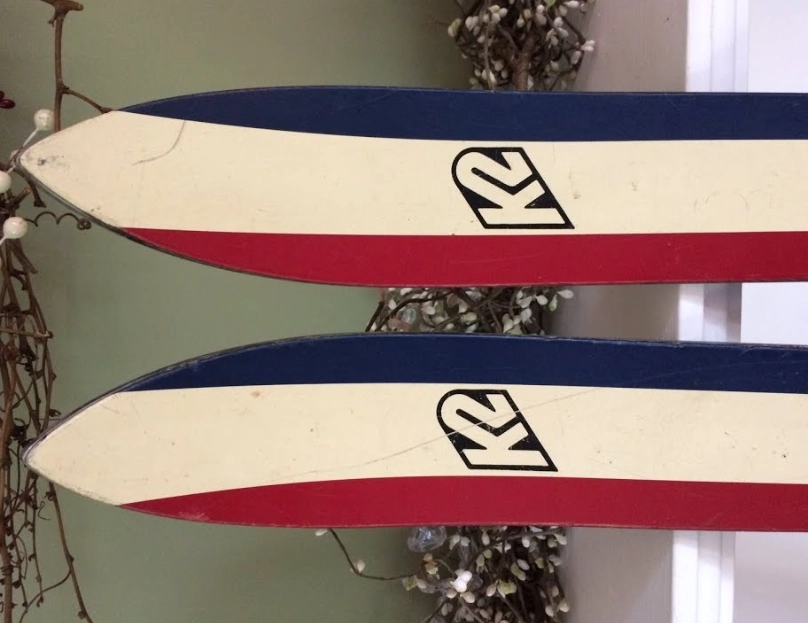
- K2 244 Comp (The "Pepsi" Ski): From the late 70s/early 80s, this ski is iconic for its red, white, and blue circular graphic that looks like a Pepsi logo. It's pure 80s nostalgia on a stick. The foam core construction is classic early K2.
The Fan Favorites (Great Performance & Style)
These models are loved for how they skied and how they look. They're more findable than the Grails but no less cool.
- K2 710: The precursor to the Extreme. A stiff, powerful, Kevlar-braided charger from the mid-80s. It has a cleaner, more technical look than the Extreme and is revered by those who skied it hard.
- K2 VO Slalom/GS: Part of the "Vector Series" from the early 90s. These were serious race-inspired skis with killer graphics (often a bold, abstract splatter paint look). They're stiff, precise, and represent the peak of that era's frontside ski technology.
- K2 Fours: From the mid-90s, these were K2's answer to the new shaped-ski revolution started by Elan. They had a radical sidecut for the time and were marketed as "the world's first 4-dimensional ski." They look and feel like a direct bridge between old and new ski design. I have a pair, and on hard snow, they still hook up a turn like nothing else from that period.
The Sleepers (Underrated Gems)
These vintage K2 skis older models often fly under the radar but are fantastic finds for someone looking to get into the hobby without breaking the bank.
- K2 TNC Series (Tough New Core): From the late 80s. These were durable, all-mountain workhorses. The graphics are often simpler, but the construction is solid K2. A great "first" vintage pair to actually ski on.
- K2 Merlins: A popular, softer-flexing ski from the early 90s. They were accessible and fun. You see a lot of them around, often in decent shape because they were owned by casual skiers who didn't trash them.
- K2 Axis X: A later 90s model, but one that's now solidly "vintage." It was a do-everything shaped ski. It's not as collectible as an Extreme, but it's a fantastic representation of where mainstream ski design was heading.
The table below sums up the vibe and key details of some of these top contenders.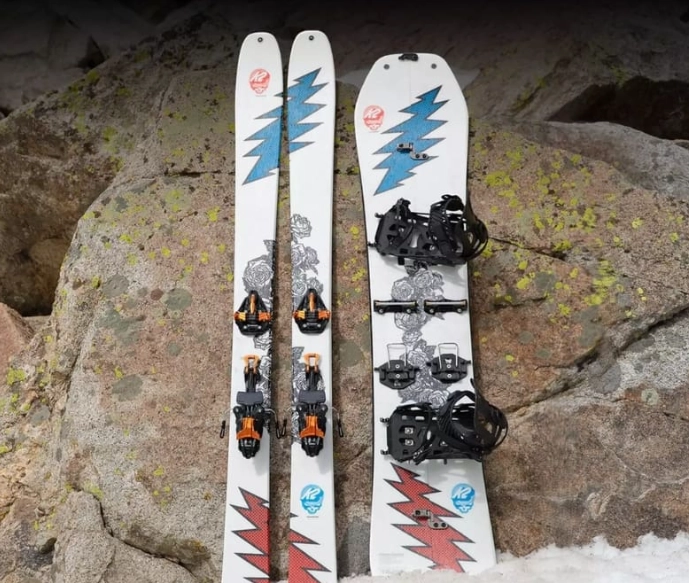
| Model (Era) | Key Technology/Signature | Collector Status & Best For | Typical Condition Challenges |
|---|---|---|---|
| K2 Extreme (88-93) | Asymmetrical Design, Kevlar Braid, Scot Schmidt | Holy Grail. Wall art or advanced collection. | Delaminating edges, worn integrated BOSS binding tracks. |
| K2 5500 CM (Mid-80s) | Foam Core, Women's Racing Heritage | High Collectibility. Historical display. | Top sheet chipping, foam core compression/rot. |
| K2 710 (Mid-80s) | Kevlar Braid, Pre-Extreme Charger | Fan Favorite. For skiers who appreciate power. | Base gouges, metal edge rust/separation. |
| K2 Fours (Mid-90s) | Early Radical Sidecut ("4-Dimensional") | Fan Favorite/Bridge Ski. For experiencing the shaped ski revolution. | Sidewall cracking, binding compatibility. |
| K2 TNC (Late 80s) | Tough All-Mountain Construction | Sleeper. Ideal first pair to actually ski. | General wear, outdated bindings. |
The Practical Guide: Buying Vintage K2 Skis
Let's say you're sold on the idea and want to hunt down a pair. Here's the real-world, unglamorous part. Buying vintage K2 skis older models isn't like buying new gear. It's part detective work, part negotiation, and part risk assessment.
Where to Look:
- eBay & Facebook Marketplace: The main marketplaces. Search terms are key. Try "vintage K2 skis," "old K2 skis," "K2 Extreme," and also misspellings like "vintange K2" or just "K2 skis." Be patient.
- Local Thrift Stores & Garage Sales: The ultimate treasure hunt. You'll find mostly junk, but the one time you find a gem makes it worth it.
- Ski Swaps: Often hosted by local ski clubs or shops in the fall. Physical inspection is possible, which is a huge advantage.
- Specialty Forums/Groups: Places like the "Vintage Ski Gear" Facebook group or niche ski collector forums. Sellers here know what they have, but prices can be fairer, and condition is usually described accurately.
The Critical Inspection (What to Ask For & Look At):
- Top Sheet: Cracks, deep gouges, or major delamination? Minor scratches are fine, but structural damage is a red flag.
- Edges: Are they rusted solid? Are they separating from the core? Run your finger along them. Significant separation means the ski is dead for skiing.
- Base: Is it dry and white (bad), or does it still have some wax/sheen? Are there core shots (deep gouges that expose the interior)? A professional base grind can fix a lot, but core shots are serious.
- Core & Camber: Lay the skis base-to-base. Is there still camber (a gap in the middle), or are they completely flat or reverse-camber? Some loss is expected over 30 years, but total flatness affects performance. Press down in the middle. Does it feel spongy or sound crunchy? That could mean a broken or waterlogged foam core.
- Bindings: This is the biggest safety issue. Never, ever ski on old bindings. Their indemnification (the manufacturer's guarantee that they will release reliably) lapsed decades ago. The plastics become brittle, and the springs lose tension. Factor in the cost of completely new bindings mounted by a professional shop. Some shops may refuse to mount on very old skis due to liability, so call ahead!
It's the single most important safety consideration. A reputable source like Tognar Toolworks, a well-known ski maintenance supplier, has articles and forums that delve into the risks of aging ski equipment, which is worth reading to understand the mechanics of failure.
Restoring & Maintaining Your Vintage K2 Skis
You've got them home. Now what? Whether you plan to hang them or ski them, some TLC is needed.
For Display/Wall Hangers:
- Give them a gentle clean with a damp cloth and mild soap. Avoid harsh chemicals that can damage old graphics.
- Treat any surface rust on edges with a light application of a rust inhibitor (like CorrosionX) or even just some light oil on a cloth. Don't go crazy sanding them.
- Get proper wall mounts that support the ski across its length, not just at the tips, to prevent warping over time.
For Skiing (The Ambitious Route):
This is a project. Assume you are mounting new bindings.
- Take them to a trusted, experienced ski tech. Explain your plan. Show them the skis. Get their honest opinion on whether the core and edges are sound enough to hold a modern binding.
- Base & Edge Tune: The shop will likely recommend a full base grind to level out the base and remove oxidized material. They'll sharpen and de-tune the edges. This can make an astonishing difference.
- Multiple Hot Waxes: Old bases are thirsty. They need several cycles of hot waxing (let the wax cool, scrape, repeat) to re-hydrate the polyethylene. A dry base is slow and prone to damage.
- Mounting: The tech will use a modern jig and carefully drill for your new bindings. They'll likely use epoxy in the holes for a stronger bond with the older core material.
Skiing on Vintage K2 Skis: What to Really Expect
Okay, you've restored a pair of vintage K2 skis older models. You're heading to the hill. Temper your expectations. You are not getting on a modern ski.
You'll feel everything more. The snow texture, the vibrations, the need to actually steer the ski through the turn instead of just letting the sidecut do the work. It's more physical, more engaging, and honestly, more rewarding when you nail a turn. They demand good technique. They will not be forgiving in crud or ice compared to today's models. They're often heavier. They have a much longer turning radius (even the "shaped" K2 Fours).
Pick your day. A soft, groomed corduroy day is your friend. Hardpack, ice, or deep powder are not where these skis shine. It's a niche experience, but for a certain type of skier, it's a fantastic way to reconnect with the fundamentals and appreciate just how far equipment has come. It makes you a better skier on your modern sticks.
Frequently Asked Questions (The Stuff You Actually Want to Know)
Let's tackle the common head-scratchers that come up in every forum thread about vintage K2 skis.
Are old K2 skis worth any money?
It's a huge range. Most are worth $50-$150 as decorative items or projects. The iconic models (Extreme, 5500 CM, pristine 244s) can go for $300-$600+ to the right collector. Condition, graphics variation, and originality (especially with bindings) are everything. A beat-up pair of common models is worth very little.
Is it safe to ski on 30-year-old skis?
With new, modern bindings mounted by a professional on a structurally sound pair, the ski itself is generally safe to ride at moderate speeds on appropriate terrain. The risk isn't that the ski will snap in half (though it's possible if the core is rotten), but that the performance limits are much lower. The bindings are the critical safety component—old ones are not safe.
What's the deal with the K2 BOSS system?
BOSS (Binding On Ski System) was K2's integrated binding track system from the late 80s/early 90s. The binding screwed into metal tracks inside the ski. It's cool tech, but it's obsolete. Finding parts is hard, and no shop will certify them. To ski a BOSS-equipped vintage K2, you usually have to fill the old track holes with epoxy and have a shop mount a standard binding plate over it, which can look clunky.
How can I tell how old my K2 skis are?
It's tricky. K2 didn't use consistent serial numbers for dating. Your best bet is to identify the model and then match the graphics to online photo archives, collector groups, or old catalog scans. The Ski-It-Again.com forums, though primarily for selling, have a deep knowledge base where users often help with identification.
What's the best vintage K2 ski for actually skiing on?
For a beginner to vintage skiing, I'd recommend looking for a later model, early-shaped ski from the mid-to-late 90s like the K2 Axis, Fours, or even an early 2000s model like the K2 Public Enemy. They provide a more familiar feel. If you want the true "old school" experience, a K2 TNC or a Merlin from the early 90s is a more forgiving entry point than a stiff charger like the 710.
So there you have it. The world of vintage K2 skis older models is deep, filled with history, cool tech, and beautiful objects. It can be a fun hobby, a connection to skiing's past, and for the brave, a unique way to experience the sport. Just go in with your eyes open, your wallet guarded, and a healthy respect for the safety basics. Happy hunting. You might just find a piece of skiing soul leaning against a garage wall.