You check the avalanche forecast. It says "Considerable." What does that actually mean for your tour tomorrow? Should you cancel, modify your route, or proceed as planned? The answer isn't in the danger rating alone. It's in the conversation between that forecast and the specific terrain you want to travel through. Most backcountry users know they should check the forecast, but the real skill—the one that keeps you safe—is learning how to adjust your terrain choices based on that number. This guide breaks down that critical link.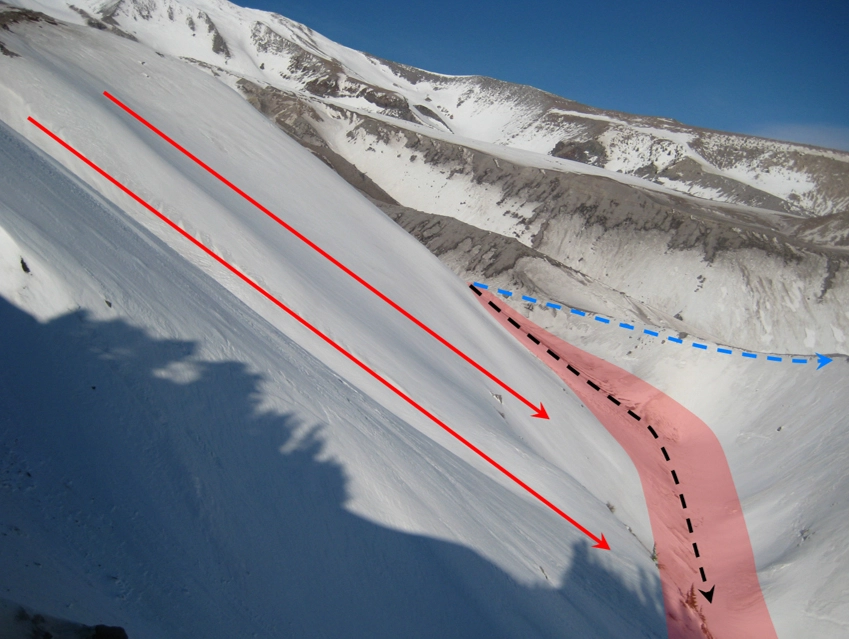
What’s Inside This Guide
The 5-Point Avalanche Danger Scale Decoded
The North American Avalanche Danger Scale is a standardized tool used by forecast centers like the Colorado Avalanche Information Center (CAIC) and Avalanche Canada. It's not just a "how bad is it" meter. It's a communication device that tells you about the likelihood of triggering an avalanche and the expected size. The problem is, people often misinterpret the middle ratings.
| Danger Rating (Color) | Likelihood of Triggering | Expected Avalanche Size & Distribution | What It Means for Your Terrain Choices |
|---|---|---|---|
| Low (Green) | Unlikely | Small, isolated to specific terrain features. | Generally safe travel conditions. Basic caution on very steep, extreme terrain. |
| Moderate (Yellow) | Possible | Small to medium, primarily on specific steep slopes. | The "trap" rating. Natural avalanches unlikely, but you can still trigger one on steep slopes. This is where terrain assessment becomes critical. |
| Considerable (Orange) | Possible to Likely | Medium to large, on many steep slopes. | The most dangerous rating. Dangerous avalanche conditions. Requires careful route-finding, conservative terrain selection, and expert-level decision-making. Many accidents happen here. |
| High (Red) | Likely to Very Likely | Large to very large, on most steep slopes. | Travel in avalanche terrain is not recommended. Natural and triggered avalanches are likely. Stick to low-angle, forested terrain. |
| Extreme (Maroon) | Certain | Large to very large, widespread across all steep terrain. | Avoid all avalanche terrain. Even valley bottoms and runout zones are extremely dangerous. |
Here's the non-consensus part: "Moderate" is not moderate risk. It's a moderate danger rating, which still means you can easily trigger a fatal avalanche on the wrong slope. I've seen more groups get complacent on a "Yellow" day than any other. They think it's a green light for anything, when it's really a yellow caution light for steep, complex terrain.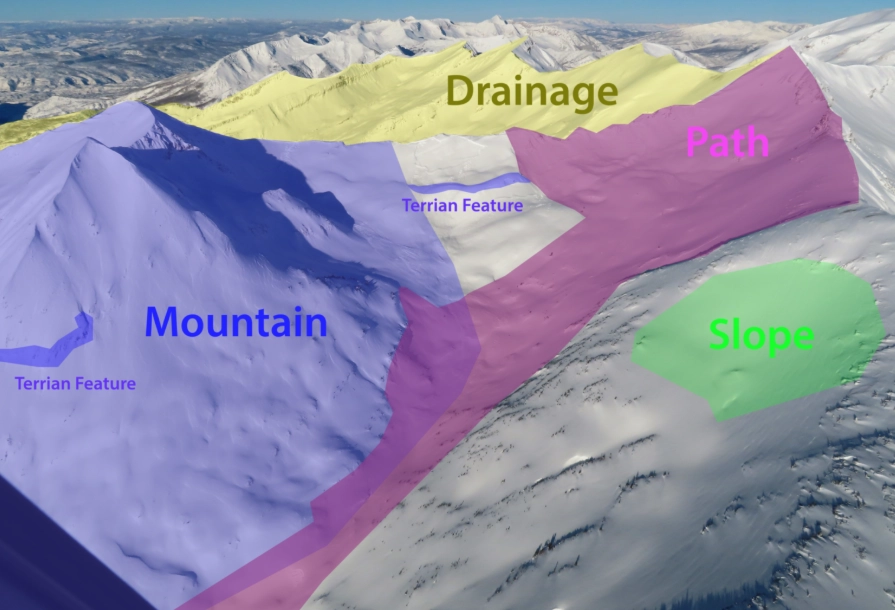
Terrain Assessment: The Tools You Actually Need
Terrain is the only factor in the avalanche equation you have 100% control over. You can't control the snowpack or the weather, but you can choose where you go. Effective assessment isn't about memorizing a checklist; it's about developing a spatial awareness of consequences.
Slope Angle: The 30-38-45 Rule
Most avalanches occur on slopes between 30 and 45 degrees. A slope meter (in your compass or phone app) is non-negotiable. Here’s how I think about it:
- Below 30 degrees: Generally safe from avalanches. Your highway for travel and escape routes.
- 30-35 degrees: The "sweet spot" for skiing, and the prime avalanche trigger zone. This is where you need to be most vigilant.
- 35-38 degrees: Maximum frequency for slab avalanche release. High consequence terrain.
- Above 38 degrees: Slopes often sluff (shed loose snow) more easily but may not hold the cohesive slabs that are most dangerous. Still, a slide here will be fast and deadly.
On a Considerable day, I might avoid sustained slopes over 35 degrees. On a Moderate day, I'd still look carefully at anything over 32.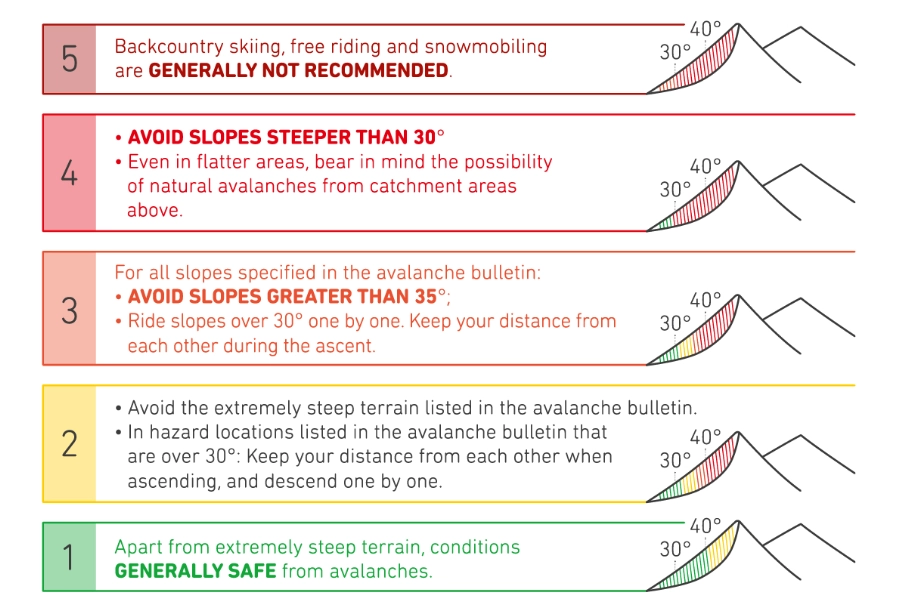
Terrain Traps: The Consequence Multipliers
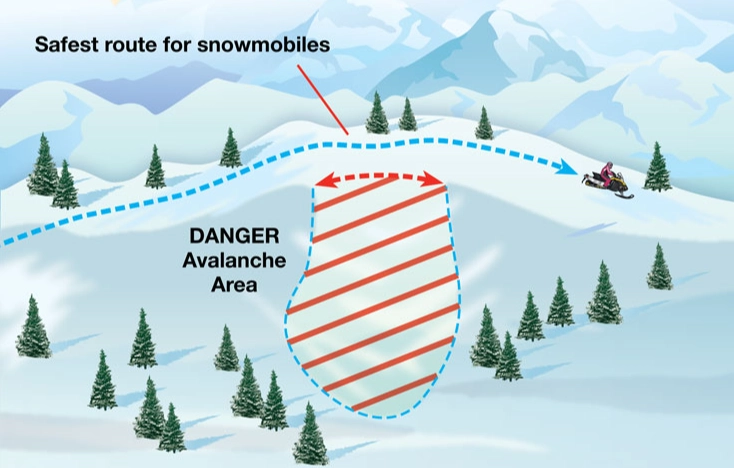
This is the concept most beginners miss entirely. A terrain trap is any feature that increases the consequences of a small avalanche. You could trigger a relatively small slide, but if it pushes you into a trap, the outcome is severe.
I once watched a group ski a short, 33-degree slope on a Moderate day. The slide was small, maybe 6 inches deep. But the slope funneled into a narrow gully with a 10-foot rock drop. The skier was buried up to his chest in the gully and had a broken leg from the impact. The avalanche wasn't huge, but the terrain trap made it a major rescue. Always ask: "If something slides here, where does it go?"
Aspect and Elevation: Matching the Forecast
The forecast bulletin will say things like "Persistent Slabs on Northeast to Southeast aspects near and above treeline." Your job is to look at your map and your surroundings and avoid those specific aspects and elevations. On that day, a north-facing slope at treeline might be a no-go zone, while a west-facing slope below treeline could be fair game. This is the direct application of the forecast to your map.
Putting It All Together: A Real-World Scenario
Let's walk through a decision. Forecast: Considerable (3/5). Avalanche Problem: Wind Slab on West, Northwest, North, Northeast, and East aspects at Alpine and Treeline elevations. Recent wind from the south.
Your planned tour goes up a valley, gains a ridge on a southeast aspect, then skis a north-facing bowl around 11,000 feet.
Analysis:
- Danger Rating: Considerable. We need to be conservative.
- Aspect/Elevation Match: The north-facing bowl at 11,000ft is a direct hit on the forecast—Wind Slab on a North aspect at Alpine. This is the primary hazard zone.
- Terrain Trap Check: The bowl funnels into a tight gully at the bottom. Major terrain trap.
- Decision: The objective is too high-consequence. We need a Plan B.
Plan B: We look at the map. We see a series of south-facing slopes at treeline (around 10,000ft). South aspects aren't mentioned in the problem. The wind was from the south, so it likely stripped snow from south faces and loaded north faces. The slope angles are 28-32 degrees. The runout is open, rolling terrain with no cliffs or creeks.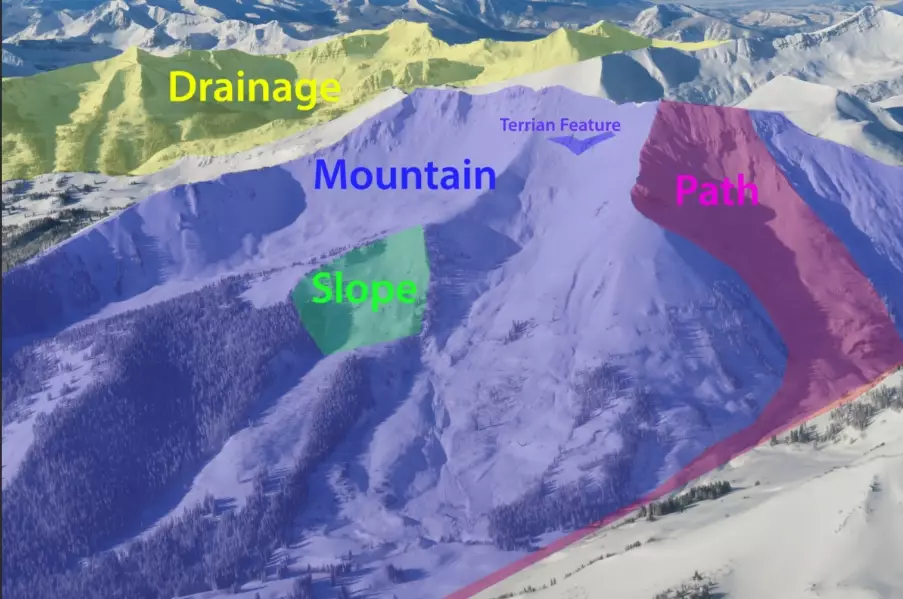
This Plan B avoids the specific avalanche problem, uses lower-consequence terrain (slope angle under 35 degrees, no traps), and directly applies the forecast information. This is the essence of terrain management.
Common Mistakes Even Experienced Skiers Make
After years of guiding and observing, here are the subtle errors I see smart people make.
Ignoring the transition zones. Everyone checks the steep slope they want to ski. But avalanches can be triggered from flatter areas above, or can run onto flat areas below. Pay as much attention to your approach and your exit route as you do to the main attraction.
Falling in love with the line. Summit fever isn't just for mountaineers. You've been staring at that beautiful couloir on Instagram for weeks. You drive four hours. The forecast is sketchy, but... maybe it's okay? This is how people die. You must be willing to walk away, to have a boring day skiing low-angle trees. The mountain doesn't care about your Instagram feed.
Over-relying on "Low" danger. A Low rating doesn't mean no avalanches. It means they are unlikely and typically small. But if you combine an unlikely, small slide with a massive terrain trap (like a cliff band), the outcome is still catastrophic. Terrain traps matter on every single day.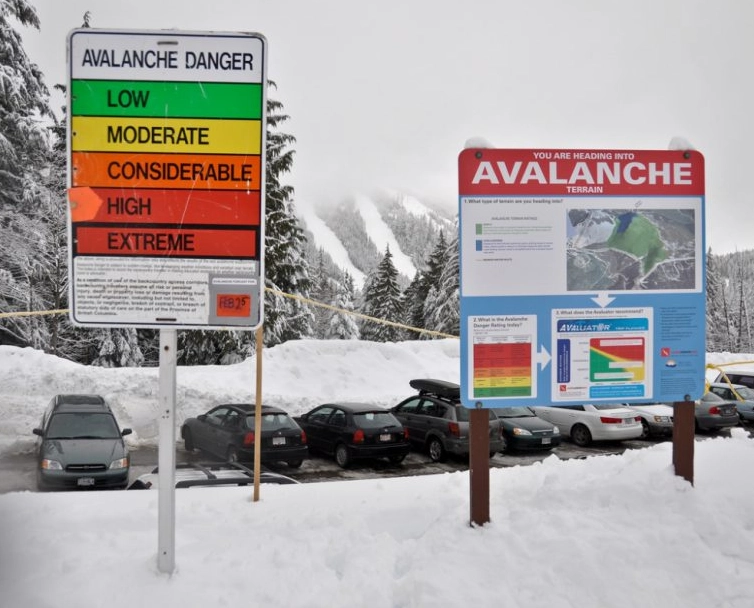
Your Avalanche Safety Questions Answered
On a Moderate (2/5) danger day, is it safe to ski a 35-degree slope if there are no terrain traps?
"Safe" is the wrong word. It's safer than if there were traps, but the danger rating tells you triggering is "Possible." You are rolling the dice. The key is exposure management. Don't expose the entire group at once. Ski one at a time, from safe spot to safe spot (islands of safety). Have your rescue gear ready and your partners watching. It's a calculated risk, not a free pass.
How do I actually identify terrain traps from a map or while touring?
On a topo map, look for tightly spaced contour lines that suddenly spread out (a steep slope ending in a flat bench is good), versus contours that stay tight or converge into a V-shape (a gully or choke point = trap). In the field, pause at the bottom of a slope before climbing it. Look up. Ask: "If the whole thing slid, where would the snow pile up?" If the answer is "in that narrow creek bed" or "against those cliffs," you've found a trap. Train your eye to see the runout zone first.
 The forecast says "Considerable" but the problem is only on specific aspects we're avoiding. Why should we still be extra cautious?
Because forecasts aren't perfect. Snowpack variability is huge. You might have misjudged the aspect by 20 degrees due to magnetic declination or a winding ridge. Also, a Considerable rating often indicates a generally unstable snowpack. While the primary problem is on north aspects, the snow on other slopes might be more touchy than usual. The elevated rating is a signal of overall system instability. Dial back your aggression across the board, not just on the listed aspects.
What's the single most important piece of gear for terrain assessment, besides my brain?
A modern smartphone with a good mapping app (like Gaia GPS, CalTopo, or Fatmap) and a slope meter app. The ability to see your line in 3D, measure slope angle from the map, and track your exact aspect in real-time is a game-changer that wasn't available 15 years ago. That said, it's a supplement to, not a replacement for, a physical compass with a slope meter and a paper map. Electronics fail. Your analog tools shouldn't.
Understanding avalanche danger scales and terrain assessment is a continuous practice, not a one-time lesson. It's about building a habit of cross-referencing the forecast's abstract information with the concrete, physical landscape in front of you. Start simple: next time you're out, pick one thing to focus on. Maybe it's just measuring every slope angle with your phone. Or maybe it's identifying every terrain trap you see. This skill grows over time, turning anxiety into informed confidence. The mountains are always there. Make sure you are too.
Related Articles


Comments
Join the discussion